
Wednesday, March 18, 2026
No Result
View All Result
  • Media
Macdonald-Laurier Institute
  • Home
  • About
    • Who We Are
    • Who Makes MLI Work
    • Fifteenth Anniversary
  • Experts
    • Experts Directory
    • In Memoriam
  • Issues
    • Domestic Policy
      • Economic Policy
      • Justice
      • Rights and Freedoms
      • Assisted Suicide (MAID)
      • Health Care
      • COVID-19
      • Gender Identity
      • Canada’s Political Tradition
      • AI, Technology and Innovation
      • Media and Telecoms
      • Housing
      • Immigration
      • Agriculture and Agri-Food
      • Competition Policy
    • Energy Policy
      • Energy
      • Environment
    • Foreign Policy
      • Israel-Hamas War
      • Ukraine
      • Taiwan
      • China
      • Europe and Russia
      • Indo-Pacific
      • Middle East and North Africa
      • North America
      • Foreign Interference
      • National Defence
      • National Security
      • Foreign Affairs
    • Indigenous Affairs
  • Projects
    • CNAPS (Center for North American Prosperity and Security)
    • Justice Report Card
    • The Promised Land
    • Voices that Inspire: The Macdonald-Laurier Vancouver Speaker Series
    • Dragon at the door
    • Canada on top of the world
    • Letter to a minister
    • The Great Energy Crisis
    • DisInfoWatch.org
    • Managing Indigenous Prosperity
    • Judicial Foundations
    • Landmark Cases Council
    • Defending The Marketplace of Ideas
    • Reforming the University
    • Past Projects
      • Digital Policy & Connectivity
      • Double Trouble
      • Canada and the Indo-Pacific Initiative
      • The Transatlantic Program
      • COVID Misery Index
        • Provincial COVID Misery Index
        • Beyond Lockdown
        • COVID and after: A mandate for recovery
      • Speak for Ourselves
      • The Eavesdropping Dragon: Huawei
      • Talkin’ in the Free World with Mariam Memarsadeghi
      • An Intellectual Property Strategy for Canada
      • Munk Senior Fellows
      • A Mandate for Canada
      • Confederation Series
      • Fiscal Reform
      • The Canadian Century project
      • Fixing Canadian health care
      • Internal trade
      • From a mandate for change
      • Size of government in Canada
      • Straight Talk
      • Labour Market Report
      • Leading Economic Indicator
      • Centre for Advancing Canada’s Interests Abroad
      • Indigenous Prosperity at a Crossroads
        • Aboriginal Canada and Natural Resources
  • Events
    • Upcoming Events
    • Past Events
      • MLI Dinners
      • Great Canadian Debates
  • Latest News
  • Libraries
    • Columns
    • Commentary
    • Papers
    • Books
    • Video
  • Donate
  • Home
  • About
    • Who We Are
    • Who Makes MLI Work
    • Fifteenth Anniversary
  • Experts
    • Experts Directory
    • In Memoriam
  • Issues
    • Domestic Policy
      • Economic Policy
      • Justice
      • Rights and Freedoms
      • Assisted Suicide (MAID)
      • Health Care
      • COVID-19
      • Gender Identity
      • Canada’s Political Tradition
      • AI, Technology and Innovation
      • Media and Telecoms
      • Housing
      • Immigration
      • Agriculture and Agri-Food
      • Competition Policy
    • Energy Policy
      • Energy
      • Environment
    • Foreign Policy
      • Israel-Hamas War
      • Ukraine
      • Taiwan
      • China
      • Europe and Russia
      • Indo-Pacific
      • Middle East and North Africa
      • North America
      • Foreign Interference
      • National Defence
      • National Security
      • Foreign Affairs
    • Indigenous Affairs
  • Projects
    • CNAPS (Center for North American Prosperity and Security)
    • Justice Report Card
    • The Promised Land
    • Voices that Inspire: The Macdonald-Laurier Vancouver Speaker Series
    • Dragon at the door
    • Canada on top of the world
    • Letter to a minister
    • The Great Energy Crisis
    • DisInfoWatch.org
    • Managing Indigenous Prosperity
    • Judicial Foundations
    • Landmark Cases Council
    • Defending The Marketplace of Ideas
    • Reforming the University
    • Past Projects
      • Digital Policy & Connectivity
      • Double Trouble
      • Canada and the Indo-Pacific Initiative
      • The Transatlantic Program
      • COVID Misery Index
        • Provincial COVID Misery Index
        • Beyond Lockdown
        • COVID and after: A mandate for recovery
      • Speak for Ourselves
      • The Eavesdropping Dragon: Huawei
      • Talkin’ in the Free World with Mariam Memarsadeghi
      • An Intellectual Property Strategy for Canada
      • Munk Senior Fellows
      • A Mandate for Canada
      • Confederation Series
      • Fiscal Reform
      • The Canadian Century project
      • Fixing Canadian health care
      • Internal trade
      • From a mandate for change
      • Size of government in Canada
      • Straight Talk
      • Labour Market Report
      • Leading Economic Indicator
      • Centre for Advancing Canada’s Interests Abroad
      • Indigenous Prosperity at a Crossroads
        • Aboriginal Canada and Natural Resources
  • Events
    • Upcoming Events
    • Past Events
      • MLI Dinners
      • Great Canadian Debates
  • Latest News
  • Libraries
    • Columns
    • Commentary
    • Papers
    • Books
    • Video
  • Donate
No Result
View All Result
Macdonald-Laurier Institute

Canada is protecting a dictatorship. It’s time to stop: Michael Lima, Isabelle Terranova and Sarah Teich in The Hamilton Spectator

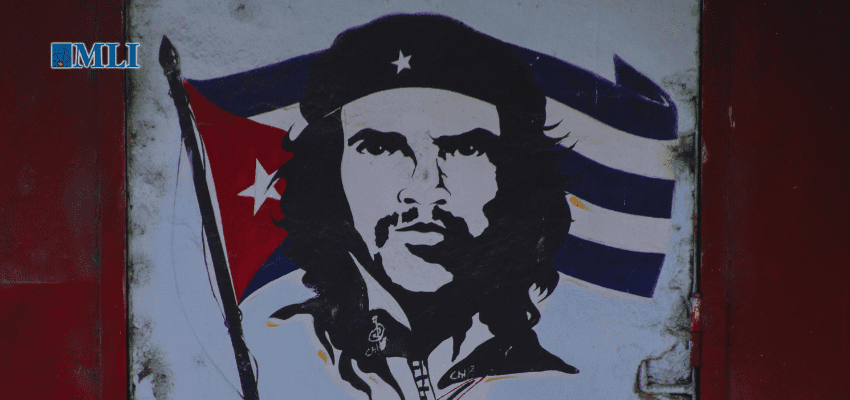
Canadians say they stand for universal human rights and democratic governance, but Ottawa’s Cuba policy suggests otherwise.

March 18, 2026
in Foreign Affairs, Foreign Policy, Latest News, Columns, In the Media, Rights and Freedoms, Sarah Teich
Reading Time: 3 mins read
A A
Canada is protecting a dictatorship. It’s time to stop: Michael Lima, Isabelle Terranova and Sarah Teich in The Hamilton Spectator

Image via Canva.

This article originally appeared in The Hamilton Spectator.

By Michael Lima, Isabelle Terranova and Sarah Teich, March 18, 2026

When U.S. forces captured Venezuelan dictator Nicolás Maduro, 32 Cuban soldiers died protecting him.

Havana declared two days of national mourning. For anyone paying attention, the episode was clarifying: Cuba is an active participant in a global authoritarian project, and Canada has spent decades looking the other way.

A new report from Human Rights Action Group and Democratic Spaces documents what this project actually looks like. The findings should alarm anyone who believes Canada stands for universal human rights and democratic governance, because our Cuba policy suggests otherwise.

Canada has sanctioned 124 Venezuelans and 35 Nicaraguans in response to human rights violations, yet not a single Cuban official despite long-standing and ongoing human rights abuses. While Canada banned Russian state broadcaster RT from Canadian airwaves in 2022, Cuba’s state-owned propaganda channel — Cubavisión Internacional — remains authorized for distribution despite formal complaints to the CRTC regarding its rebroadcasting of RT content.

And although former prime minister Justin Trudeau testified at Canada’s foreign interference inquiry that he believes Canada engages with Cuban civil society like it does everywhere else, pro-democracy activists on the island report the Canadian Embassy has not engaged with their organizations in more than a decade.

These are not minor policy inconsistencies. These double standards reflect a fundamental failure to reckon with Cuba’s authoritarianism.

As our report documents, the interrelationships between Cuba and other dictatorships are extensive, and the cost of failing to address them high.

For instance, Ukrainian intelligence estimates 20,000 Cuban nationals have been recruited for Russia’s war in Ukraine in a process amounting to human trafficking. By facilitating the recruitment of Cuban mercenaries for Russia, Havana helps Moscow replenish its forces while limiting domestic political costs, deepening authoritarian co-operation, and undermining international law with serious consequences for global security.

Meanwhile, China has provided Cuba with surveillance technology and has access to signals intelligence facilities on the island capable of reaching the U.S. Further, Cuban intelligence personnel deployed to Venezuela have been instrumental in training Venezuelan security forces in surveillance and crowd control and in co-ordinating crackdowns on protesters.

This collaboration is well-documented and available to anyone willing to look. The question is why Canada has preferred not to.

Part of the answer is historical. Canada maintained relations with Cuba throughout the Cold War, positioning itself as an alternative to American isolation and arguing that engagement would foster reform. However, 65 years later Cuba’s human rights record has not improved, its authoritarian alliances have not weakened, and its political prisoners are more numerous than ever. Even Lloyd Axworthy, a principal architect of constructive engagement during his tenure as Canada’s foreign minister, later acknowledged its shortcomings, admitting Canada “gave (Cuba) an opportunity but they didn’t come through the door.”

This does not mean that targeted engagement is futile. In the current humanitarian crisis, Canada must distinguish between delivering critical aid to the Cuban people and sustaining a military elite that represses dissent and fuels authoritarianism.

Canada has the tools to accomplish this. Targeted sanctions can be imposed on perpetrators of gross human rights violations, Canadian diplomats can engage Cuban human rights defenders, and the government can exercise leverage to push Havana to legalize independent civil society organizations.

The Cuban people are living under one of the world’s oldest and most repressive dictatorships. Canada must stop pretending their government is something it is not.

Canada has a choice. It can continue exempting Cuba from the principles it claims to uphold, or it can align its actions with its stated values. Our report makes clear that the cost of continued incoherence is not just moral; it is strategic. It is long past time for Ottawa to reckon with that.
Michael Lima is a researcher and director of the NGO Democratic Spaces.

Isabelle Terranova is a legal researcher with Human Rights Action Group.

Sarah Teich is an international human rights lawyer, a senior fellow at the Macdonald-Laurier Institute, and co-founder and president of Human Rights Action Group. 

Source: The Hamilton Spectator
Tags: Michael LimaIsabelle Terranova

Related Posts

Photo by Sammy Kogan/The Canadian Press
Latest News

This is terrorism: Sheryl Saperia and Ches W. Parsons in National Post

March 18, 2026
Canada no longer feels safe for Jews: Casey Babb in The Free Press
The Promised Land

Canada no longer feels safe for Jews: Casey Babb in The Free Press

March 18, 2026
When asylum becomes mass migration – Fixing Canada’s broken immigration system, Vol. 3: Michael Barutciski
Immigration

When asylum becomes mass migration – Fixing Canada’s broken immigration system, Vol. 3: Michael Barutciski

March 18, 2026
Next Post
Photo by Sammy Kogan/The Canadian Press

This is terrorism: Sheryl Saperia and Ches W. Parsons in National Post

Newsletter Signup

  Thank you for Signing Up
  Please correct the marked field(s) below.
Email Address  *
1,true,6,Contact Email,2
First Name *
1,true,1,First Name,2
Last Name *
1,true,1,Last Name,2
*
*Required Fields

Follow us on

Macdonald-Laurier Institute

323 Chapel Street, Suite #300
Ottawa, Ontario, K1N 7Z2 Canada

613.482.8327

info@macdonaldlaurier.ca
MLI directory

Support Us

Support the Macdonald-Laurier Institute to help ensure that Canada is one of the best governed countries in the world. Click below to learn more or become a sponsor.

Support Us

  • Inside Policy Magazine
  • Annual Reports
  • Jobs
  • Privacy Policy

© 2023 Macdonald-Laurier Institute. All Rights reserved.

No Result
View All Result
  • Home
  • About
    • Who We Are
    • Who Makes MLI Work
    • Fifteenth Anniversary
  • Experts
    • Experts Directory
    • In Memoriam
  • Issues
    • Domestic Policy
      • Economic Policy
      • Justice
      • Rights and Freedoms
      • Assisted Suicide (MAID)
      • Health Care
      • COVID-19
      • Gender Identity
      • Canada’s Political Tradition
      • AI, Technology and Innovation
      • Media and Telecoms
      • Housing
      • Immigration
      • Agriculture and Agri-Food
      • Competition Policy
    • Energy Policy
      • Energy
      • Environment
    • Foreign Policy
      • Israel-Hamas War
      • Ukraine
      • Taiwan
      • China
      • Europe and Russia
      • Indo-Pacific
      • Middle East and North Africa
      • North America
      • Foreign Interference
      • National Defence
      • National Security
      • Foreign Affairs
    • Indigenous Affairs
  • Projects
    • CNAPS (Center for North American Prosperity and Security)
    • Justice Report Card
    • The Promised Land
    • Voices that Inspire: The Macdonald-Laurier Vancouver Speaker Series
    • Dragon at the door
    • Canada on top of the world
    • Letter to a minister
    • The Great Energy Crisis
    • DisInfoWatch.org
    • Managing Indigenous Prosperity
    • Judicial Foundations
    • Landmark Cases Council
    • Defending The Marketplace of Ideas
    • Reforming the University
    • Past Projects
      • Digital Policy & Connectivity
      • Double Trouble
      • Canada and the Indo-Pacific Initiative
      • The Transatlantic Program
      • COVID Misery Index
      • Speak for Ourselves
      • The Eavesdropping Dragon: Huawei
      • Talkin’ in the Free World with Mariam Memarsadeghi
      • An Intellectual Property Strategy for Canada
      • Munk Senior Fellows
      • A Mandate for Canada
      • Confederation Series
      • Fiscal Reform
      • The Canadian Century project
      • Fixing Canadian health care
      • Internal trade
      • From a mandate for change
      • Size of government in Canada
      • Straight Talk
      • Labour Market Report
      • Leading Economic Indicator
      • Centre for Advancing Canada’s Interests Abroad
      • Indigenous Prosperity at a Crossroads
  • Events
    • Upcoming Events
    • Past Events
      • MLI Dinners
      • Great Canadian Debates
  • Latest News
  • Libraries
    • Columns
    • Commentary
    • Papers
    • Books
    • Video
  • Donate

© 2023 Macdonald-Laurier Institute. All Rights reserved.