
Tuesday, May 19, 2026
No Result
View All Result
  • Media
Macdonald-Laurier Institute
  • Home
  • About
    • Who We Are
    • Who Makes MLI Work
    • Fifteenth Anniversary
  • Experts
    • Experts Directory
    • In Memoriam
  • Issues
    • Domestic Policy
      • Economic Policy
      • Justice
      • Rights and Freedoms
      • Assisted Suicide (MAID)
      • Health Care
      • COVID-19
      • Gender Identity
      • Canada’s Political Tradition
      • AI, Technology and Innovation
      • Media and Telecoms
      • Housing
      • Immigration
      • Agriculture and Agri-Food
      • Competition Policy
    • Energy Policy
      • Energy
      • Environment
    • Foreign Policy
      • Israel-Hamas War
      • Ukraine
      • Taiwan
      • China
      • Europe and Russia
      • Indo-Pacific
      • Middle East and North Africa
      • North America
      • Foreign Interference
      • National Defence
      • National Security
      • Foreign Affairs
    • Indigenous Affairs
  • Projects
    • CNAPS (Center for North American Prosperity and Security)
    • Justice Report Card
    • The Promised Land
    • Voices that Inspire: The Macdonald-Laurier Vancouver Speaker Series
    • Dragon at the door
    • Canada on top of the world
    • Letter to a minister
    • The Great Energy Crisis
    • DisInfoWatch.org
    • Managing Indigenous Prosperity
    • Judicial Foundations
    • Landmark Cases Council
    • Defending The Marketplace of Ideas
    • Reforming the University
    • Past Projects
      • Digital Policy & Connectivity
      • Double Trouble
      • Canada and the Indo-Pacific Initiative
      • The Transatlantic Program
      • COVID Misery Index
        • Provincial COVID Misery Index
        • Beyond Lockdown
        • COVID and after: A mandate for recovery
      • Speak for Ourselves
      • The Eavesdropping Dragon: Huawei
      • Talkin’ in the Free World with Mariam Memarsadeghi
      • An Intellectual Property Strategy for Canada
      • Munk Senior Fellows
      • A Mandate for Canada
      • Confederation Series
      • Fiscal Reform
      • The Canadian Century project
      • Fixing Canadian health care
      • Internal trade
      • From a mandate for change
      • Size of government in Canada
      • Straight Talk
      • Labour Market Report
      • Leading Economic Indicator
      • Centre for Advancing Canada’s Interests Abroad
      • Indigenous Prosperity at a Crossroads
        • Aboriginal Canada and Natural Resources
  • Events
    • Upcoming Events
    • Past Events
      • MLI Dinners
      • Great Canadian Debates
  • Latest News
  • Libraries
    • Columns
    • Commentary
    • Papers
    • Books
    • Video
  • Donate
  • Home
  • About
    • Who We Are
    • Who Makes MLI Work
    • Fifteenth Anniversary
  • Experts
    • Experts Directory
    • In Memoriam
  • Issues
    • Domestic Policy
      • Economic Policy
      • Justice
      • Rights and Freedoms
      • Assisted Suicide (MAID)
      • Health Care
      • COVID-19
      • Gender Identity
      • Canada’s Political Tradition
      • AI, Technology and Innovation
      • Media and Telecoms
      • Housing
      • Immigration
      • Agriculture and Agri-Food
      • Competition Policy
    • Energy Policy
      • Energy
      • Environment
    • Foreign Policy
      • Israel-Hamas War
      • Ukraine
      • Taiwan
      • China
      • Europe and Russia
      • Indo-Pacific
      • Middle East and North Africa
      • North America
      • Foreign Interference
      • National Defence
      • National Security
      • Foreign Affairs
    • Indigenous Affairs
  • Projects
    • CNAPS (Center for North American Prosperity and Security)
    • Justice Report Card
    • The Promised Land
    • Voices that Inspire: The Macdonald-Laurier Vancouver Speaker Series
    • Dragon at the door
    • Canada on top of the world
    • Letter to a minister
    • The Great Energy Crisis
    • DisInfoWatch.org
    • Managing Indigenous Prosperity
    • Judicial Foundations
    • Landmark Cases Council
    • Defending The Marketplace of Ideas
    • Reforming the University
    • Past Projects
      • Digital Policy & Connectivity
      • Double Trouble
      • Canada and the Indo-Pacific Initiative
      • The Transatlantic Program
      • COVID Misery Index
        • Provincial COVID Misery Index
        • Beyond Lockdown
        • COVID and after: A mandate for recovery
      • Speak for Ourselves
      • The Eavesdropping Dragon: Huawei
      • Talkin’ in the Free World with Mariam Memarsadeghi
      • An Intellectual Property Strategy for Canada
      • Munk Senior Fellows
      • A Mandate for Canada
      • Confederation Series
      • Fiscal Reform
      • The Canadian Century project
      • Fixing Canadian health care
      • Internal trade
      • From a mandate for change
      • Size of government in Canada
      • Straight Talk
      • Labour Market Report
      • Leading Economic Indicator
      • Centre for Advancing Canada’s Interests Abroad
      • Indigenous Prosperity at a Crossroads
        • Aboriginal Canada and Natural Resources
  • Events
    • Upcoming Events
    • Past Events
      • MLI Dinners
      • Great Canadian Debates
  • Latest News
  • Libraries
    • Columns
    • Commentary
    • Papers
    • Books
    • Video
  • Donate
No Result
View All Result
Macdonald-Laurier Institute

The problems Build Canada Homes must solve: Matt Spoke in Canadian Affairs

Ottawa’s new housing corporation could help solve Canada’s housing crisis — if it stays focused on what matters

May 19, 2026
in Domestic Policy, Latest News
Reading Time: 3 mins read
A A
The problems Build Canada Homes must solve: Matt Spoke in Canadian Affairs

This article originally appeared in Canadian Affairs.

By Matt Spoke, May 19, 2026

When it comes to judging the Carney government’s success on housing, there should be a clear metric: does it deliver more homes at a price that young individuals and families can afford?

We can measure this goal against factors Canadians feel in their pocketbooks: rent and vacancy rates, the share of income going to shelter, and whether first-time home buyers can enter the market without taking an unreasonable financial risk.

If those indicators don’t improve, Canadians won’t care how many new programs were announced.

A key part of the federal government’s strategy is Build Canada Homes (BCH). BCH is a new Crown corporation being created under the proposed Build Canada Homes Act (Bill C-20). If passed, the act would give BCH the power to buy and develop land, partner with others, deploy financing tools, and allocate $13 billion for its use.

BCH is not the only federal lever on housing, but it can prove to be a critical part of its broader toolkit. That toolkit already includes organizations like the Canada Mortgage and Housing Corporation (CMHC) and programs like the Housing Accelerator Fund.

Time will tell whether BCH can help quickly and cheaply increase housing starts and completions. One encouraging early sign was the appointment of Ana Bailao to lead the organization. As a former Toronto City Councillor, Bailao understands municipal bottlenecks that are at the core of the housing crisis.

To date, government communications on the new Crown corporation have emphasized things like modular construction, mass timber, and “made-in-Canada” materials. Preferring Canadian suppliers is a good objective if it does not raise the cost of building.

But the reality is that Canada’s core housing constraints are more structural than they are a consequence of construction methodology. Restrictive land use rules, slow approvals, high municipal taxes, building code barriers, and limited private capital all contribute to the housing crisis.

Understanding these challenges clarifies what each federal tool is best suited to address.

CMHC’s core strength is housing finance and underwriting rules that shape the cost and availability of debt. The Housing Accelerator Fund is designed to push municipalities toward faster approvals and better land use policies. BCH, if designed properly, can help deploy money and land in ways that unlock new housing starts.

Naturally, a key part of BCH’s plan is to build housing on federal land. This is significant, but not sufficient. These sites are limited and often poorly located. Use them where they make sense, but consider this a small part of a broader strategy.

So what should BCH prioritize if the goal is restoring affordability for young Canadians?

First, it should measure itself in plain outcomes. Build Canada Homes should voluntarily publish a simple dashboard: annual housing starts, average costs per unit, and a clear accounting of how much private capital is deployed per federal dollar leveraged.

Second, BCH should use its capital to unlock market supply by reducing specific risks that are holding back private investment.

That means targeting financing frictions that limit new starts: the personal guarantee and covenant burden that caps how many projects a capable developer can carry at once; structured mezzanine or preferred capital that makes projects easier to finance; and tools that mitigate interest rate risk in between construction and term financing so developers can confidently size their takeout loans.

The goal should be a multiplier, where a relatively small amount of BCH capital unlocks a much larger amount of private investment in housing.

Third, if BCH is to play a major role in “deeply affordable” and “supportive” housing, it should treat cost discipline as a moral imperative.

Layered requirements can drive per-unit costs above market, reducing total new homes. BCH should target market-level (or lower) costs and, where feasible, acquire unsold completed condos at a discount, then partner with municipalities or non-profits to manage them.

BCH can have a real impact within a coordinated housing strategy, but the outcome must be judged in the lived reality of young Canadians.

Have rents stabilized? Is entry-level home ownership attainable again? Can the next generation plan a life in Canada without seeing housing as a permanent constraint? These are the metrics. Everything else is noise.


Matt Spoke is Toronto-based entrepreneur and real estate developer, and a contributor for the Macdonald-Laurier Institute.
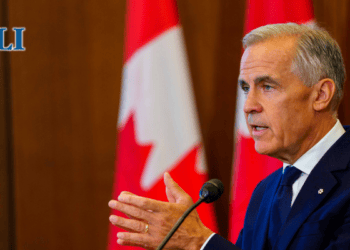

Source: Canadian Affairs
Tags: Matt Spoke

Related Posts

Globalization gutted Canada’s manufacturing. Here’s how we make things ourselves again: Fen Osler Hampson and Tim Sargent in the Globe and Mail
Domestic Policy

Globalization gutted Canada’s manufacturing. Here’s how we make things ourselves again: Fen Osler Hampson and Tim Sargent in the Globe and Mail

May 19, 2026
The debate is over – Women’s sports need protection from biologically male trans athletes: Marty York for Inside Policy
Gender Identity

The debate is over – Women’s sports need protection from biologically male trans athletes: Marty York for Inside Policy

May 14, 2026
Tracking Canadians’ trust in their courts: Andrea Lawlor and Peter Copeland for Inside Policy Talks
Domestic Policy

Tracking Canadians’ trust in their courts: Andrea Lawlor and Peter Copeland for Inside Policy Talks

May 14, 2026

Newsletter Signup

  Thank you for Signing Up
  Please correct the marked field(s) below.
Email Address  *
1,true,6,Contact Email,2
First Name *
1,true,1,First Name,2
Last Name *
1,true,1,Last Name,2
*
*Required Fields

Follow us on

Macdonald-Laurier Institute

323 Chapel Street, Suite #300
Ottawa, Ontario, K1N 7Z2 Canada

613.482.8327

info@macdonaldlaurier.ca
MLI directory

Support Us

Support the Macdonald-Laurier Institute to help ensure that Canada is one of the best governed countries in the world. Click below to learn more or become a sponsor.

Support Us

  • Inside Policy Magazine
  • Annual Reports
  • Jobs
  • Privacy Policy

© 2023 Macdonald-Laurier Institute. All Rights reserved.

No Result
View All Result
  • Home
  • About
    • Who We Are
    • Who Makes MLI Work
    • Fifteenth Anniversary
  • Experts
    • Experts Directory
    • In Memoriam
  • Issues
    • Domestic Policy
      • Economic Policy
      • Justice
      • Rights and Freedoms
      • Assisted Suicide (MAID)
      • Health Care
      • COVID-19
      • Gender Identity
      • Canada’s Political Tradition
      • AI, Technology and Innovation
      • Media and Telecoms
      • Housing
      • Immigration
      • Agriculture and Agri-Food
      • Competition Policy
    • Energy Policy
      • Energy
      • Environment
    • Foreign Policy
      • Israel-Hamas War
      • Ukraine
      • Taiwan
      • China
      • Europe and Russia
      • Indo-Pacific
      • Middle East and North Africa
      • North America
      • Foreign Interference
      • National Defence
      • National Security
      • Foreign Affairs
    • Indigenous Affairs
  • Projects
    • CNAPS (Center for North American Prosperity and Security)
    • Justice Report Card
    • The Promised Land
    • Voices that Inspire: The Macdonald-Laurier Vancouver Speaker Series
    • Dragon at the door
    • Canada on top of the world
    • Letter to a minister
    • The Great Energy Crisis
    • DisInfoWatch.org
    • Managing Indigenous Prosperity
    • Judicial Foundations
    • Landmark Cases Council
    • Defending The Marketplace of Ideas
    • Reforming the University
    • Past Projects
      • Digital Policy & Connectivity
      • Double Trouble
      • Canada and the Indo-Pacific Initiative
      • The Transatlantic Program
      • COVID Misery Index
      • Speak for Ourselves
      • The Eavesdropping Dragon: Huawei
      • Talkin’ in the Free World with Mariam Memarsadeghi
      • An Intellectual Property Strategy for Canada
      • Munk Senior Fellows
      • A Mandate for Canada
      • Confederation Series
      • Fiscal Reform
      • The Canadian Century project
      • Fixing Canadian health care
      • Internal trade
      • From a mandate for change
      • Size of government in Canada
      • Straight Talk
      • Labour Market Report
      • Leading Economic Indicator
      • Centre for Advancing Canada’s Interests Abroad
      • Indigenous Prosperity at a Crossroads
  • Events
    • Upcoming Events
    • Past Events
      • MLI Dinners
      • Great Canadian Debates
  • Latest News
  • Libraries
    • Columns
    • Commentary
    • Papers
    • Books
    • Video
  • Donate

© 2023 Macdonald-Laurier Institute. All Rights reserved.