
Tuesday, January 27, 2026
No Result
View All Result
  • Media
Macdonald-Laurier Institute
  • Home
  • About
    • Who We Are
    • Who Makes MLI Work
    • Fifteenth Anniversary
  • Experts
    • Experts Directory
    • In Memoriam
  • Issues
    • Domestic Policy
      • Economic Policy
      • Justice
      • Rights and Freedoms
      • Assisted Suicide (MAID)
      • Health Care
      • COVID-19
      • Gender Identity
      • Canada’s Political Tradition
      • AI, Technology and Innovation
      • Media and Telecoms
      • Housing
      • Immigration
      • Agriculture and Agri-Food
      • Competition Policy
    • Energy Policy
      • Energy
      • Environment
    • Foreign Policy
      • Israel-Hamas War
      • Ukraine
      • Taiwan
      • China
      • Europe and Russia
      • Indo-Pacific
      • Middle East and North Africa
      • North America
      • Foreign Interference
      • National Defence
      • National Security
      • Foreign Affairs
    • Indigenous Affairs
  • Projects
    • CNAPS (Center for North American Prosperity and Security)
    • The Promised Land
    • Voices that Inspire: The Macdonald-Laurier Vancouver Speaker Series
    • Dragon at the door
    • Canada on top of the world
    • Letter to a minister
    • Justice Report Card
    • The Great Energy Crisis
    • DisInfoWatch.org
    • Managing Indigenous Prosperity
    • Judicial Foundations
    • Landmark Cases Council
    • Defending The Marketplace of Ideas
    • Reforming the University
    • Past Projects
      • Digital Policy & Connectivity
      • Double Trouble
      • Canada and the Indo-Pacific Initiative
      • The Transatlantic Program
      • COVID Misery Index
        • Provincial COVID Misery Index
        • Beyond Lockdown
        • COVID and after: A mandate for recovery
      • Speak for Ourselves
      • The Eavesdropping Dragon: Huawei
      • Talkin’ in the Free World with Mariam Memarsadeghi
      • An Intellectual Property Strategy for Canada
      • Munk Senior Fellows
      • A Mandate for Canada
      • Confederation Series
      • Fiscal Reform
      • The Canadian Century project
      • Fixing Canadian health care
      • Internal trade
      • From a mandate for change
      • Size of government in Canada
      • Straight Talk
      • Labour Market Report
      • Leading Economic Indicator
      • Centre for Advancing Canada’s Interests Abroad
      • Indigenous Prosperity at a Crossroads
        • Aboriginal Canada and Natural Resources
  • Events
    • Upcoming Events
    • Past Events
      • MLI Dinners
      • Great Canadian Debates
  • Latest News
  • Libraries
    • Columns
    • Commentary
    • Papers
    • Books
    • Video
  • Donate
  • Home
  • About
    • Who We Are
    • Who Makes MLI Work
    • Fifteenth Anniversary
  • Experts
    • Experts Directory
    • In Memoriam
  • Issues
    • Domestic Policy
      • Economic Policy
      • Justice
      • Rights and Freedoms
      • Assisted Suicide (MAID)
      • Health Care
      • COVID-19
      • Gender Identity
      • Canada’s Political Tradition
      • AI, Technology and Innovation
      • Media and Telecoms
      • Housing
      • Immigration
      • Agriculture and Agri-Food
      • Competition Policy
    • Energy Policy
      • Energy
      • Environment
    • Foreign Policy
      • Israel-Hamas War
      • Ukraine
      • Taiwan
      • China
      • Europe and Russia
      • Indo-Pacific
      • Middle East and North Africa
      • North America
      • Foreign Interference
      • National Defence
      • National Security
      • Foreign Affairs
    • Indigenous Affairs
  • Projects
    • CNAPS (Center for North American Prosperity and Security)
    • The Promised Land
    • Voices that Inspire: The Macdonald-Laurier Vancouver Speaker Series
    • Dragon at the door
    • Canada on top of the world
    • Letter to a minister
    • Justice Report Card
    • The Great Energy Crisis
    • DisInfoWatch.org
    • Managing Indigenous Prosperity
    • Judicial Foundations
    • Landmark Cases Council
    • Defending The Marketplace of Ideas
    • Reforming the University
    • Past Projects
      • Digital Policy & Connectivity
      • Double Trouble
      • Canada and the Indo-Pacific Initiative
      • The Transatlantic Program
      • COVID Misery Index
        • Provincial COVID Misery Index
        • Beyond Lockdown
        • COVID and after: A mandate for recovery
      • Speak for Ourselves
      • The Eavesdropping Dragon: Huawei
      • Talkin’ in the Free World with Mariam Memarsadeghi
      • An Intellectual Property Strategy for Canada
      • Munk Senior Fellows
      • A Mandate for Canada
      • Confederation Series
      • Fiscal Reform
      • The Canadian Century project
      • Fixing Canadian health care
      • Internal trade
      • From a mandate for change
      • Size of government in Canada
      • Straight Talk
      • Labour Market Report
      • Leading Economic Indicator
      • Centre for Advancing Canada’s Interests Abroad
      • Indigenous Prosperity at a Crossroads
        • Aboriginal Canada and Natural Resources
  • Events
    • Upcoming Events
    • Past Events
      • MLI Dinners
      • Great Canadian Debates
  • Latest News
  • Libraries
    • Columns
    • Commentary
    • Papers
    • Books
    • Video
  • Donate
No Result
View All Result
Macdonald-Laurier Institute

How Canada can move away from its ‘whack-a-mole’ national security strategy: Richard Fadden in the Globe and Mail

The national security concerns of the “great powers,” as well as those of smaller countries are not the same as Canada’s.

January 27, 2026
in National Security, Columns, Foreign Policy, Latest News, In the Media, Richard Fadden
Reading Time: 4 mins read
A A
How Canada can move away from its ‘whack-a-mole’ national security strategy: Richard Fadden in the Globe and Mail

Image via Canva.

This article originally appeared in the Globe and Mail.

By Richard Fadden, January 27, 2026

Months ago, as Prime Minister Mark Carney was embarking on his marathon negotiations with the U.S. government, he indicated that he preferred dealing with trade and security as a package.

In practice, the paths that have developed seem to be trade talks that focus on tariffs and security decisions that focus on a significant increase in defence spending. For the short term, this approach is entirely reasonable and practical, but for the long term it will not advance Canada’s broader national security. Rather, it represents a form of “whack-a-mole.”

There are many definitions of national security used by Canada and other countries. In practical terms, protecting and advancing a country’s national security means protecting its sovereignty. Put bluntly, it means protecting its ability to be the “king of its castle,” and to make its own decisions. Never absolute in today’s world, national sovereignty varies with geography and a variety of other factors such as history, the state of the economy as well as military and security capacity – and, national will.

The national security concerns of the “great powers,” as well as those of smaller countries are not the same as Canada’s. Nor are our concerns the same as those of other middle powers. Our definition of national security must begin with the awareness that we are today a not-so-strong middle power next to the world’s premier power. Both factors are critical to how we might develop the most effective national security policy possible.

Over the years, Canada’s governments have tended to treat national security issues as transactional problems that needed to be resolved, using the minimum amount of attention and resources necessary. Some crises, such as 9/11 and the war in Afghanistan, required more holistic and considered responses, but economic and social issues have received priority attention from recent Canadian governments. In today’s brave new world, this approach risks limiting our capacity to advance our national security.

A middle power should utilize all the tools at its disposal and maximize their effect by ensuring their co-ordination. Thus, foreign, defence, security, development and international economic policies need to be developed in the full awareness that their effectiveness will be significantly enhanced if they are mutually reinforcing. The same applies, depending on circumstances, to emergency planning, international criminal activity, control of our borders, and aspects of national economic activity that promote our capacity to make our own rules.

Entirely reasonably in the circumstances, the government has committed to significant increases in defence and defence-related spending. But it has done so without setting out an up-to-date policy framework that takes into account the current world environment and is integrated into a broader national security policy framework.

The Royal Canadian Navy is already committed to purchasing a dozen submarines and is positing the acquisition of a number of ocean-capable frigates and one or more amphibious landing ships for Arctic use. There is nothing inherently wrong with those ideas, but it is unclear how such major expenditures – and commitment of CAF resources – should rate when compared with the requirements of other parts of the Canadian Armed Forces. And, perhaps more importantly, it is not clear how such acquisitions would fit into a comprehensive view of how Canada might wish to protect its national security by projecting its influence abroad.

Another standalone suggestion is the recommendation from a number of think tanks, and recently argued in the Globe and Mail, that Canada should create a foreign intelligence service capable of gathering intelligence abroad.

While it is a tactical rather than a strategic matter, the idea deserves consideration, but only in the context of a broader national security review. Among the questions that should be asked is whether the significant resources necessary should not first be allocated to domestic security or to digital security. Another is the not-insignificant issue of against whom would Canada be prepared to spy.

Unlike some of our allies, Canada does not have a tradition of regularly issuing major policy statements on national security issues. I suspect this is partially because of our long-term (and recently abandoned) reliance on the United States. That change alone should encourage the government to not just issue a policy statement, but to ensure that it is developed with some involvement by Parliament and the public. Governments require flexibility in dealing with national security issues, not all of which can be discussed publicly.

But a commitment to issuing a broad national security policy would not prevent this engagement, and would encourage a shift away from stand-alone decisions and toward a more comprehensive approach to dealing with all manner of national security issues.


Richard B. Fadden is the former national security adviser to prime ministers and a Macdonald-Laurier Institute advisory council member.

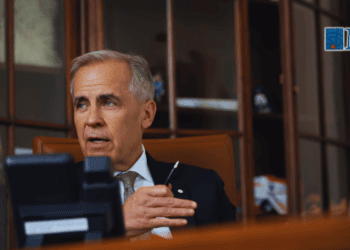
Source: The Globe and Mail

Related Posts

Neither Trump’s nor Carney’s new world order will last: Jack Mintz in the Financial Post
Foreign Affairs

Neither Trump’s nor Carney’s new world order will last: Jack Mintz in the Financial Post

January 27, 2026
Canada under pressure – How the gap in foreign interference response is eroding democracy: Stephen Nagy
Foreign Interference

Canada under pressure – How the gap in foreign interference response is eroding democracy: Stephen Nagy

January 27, 2026
Why “Tactical Lessons from Gaza” matter for Canada and the Canadian Armed Forces: Andrew Fox for Inside Policy
National Defence

Why “Tactical Lessons from Gaza” matter for Canada and the Canadian Armed Forces: Andrew Fox for Inside Policy

January 27, 2026
Next Post
Brian lee crowly clip

Will Trump’s tariff threats influence Canada’s deal with China?: Brian Lee Crowley on CTV News

Newsletter Signup

  Thank you for Signing Up
  Please correct the marked field(s) below.
Email Address  *
1,true,6,Contact Email,2
First Name *
1,true,1,First Name,2
Last Name *
1,true,1,Last Name,2
*
*Required Fields

Follow us on

Macdonald-Laurier Institute

323 Chapel Street, Suite #300
Ottawa, Ontario, K1N 7Z2 Canada

613.482.8327

info@macdonaldlaurier.ca
MLI directory

Support Us

Support the Macdonald-Laurier Institute to help ensure that Canada is one of the best governed countries in the world. Click below to learn more or become a sponsor.

Support Us

  • Inside Policy Magazine
  • Annual Reports
  • Jobs
  • Privacy Policy

© 2023 Macdonald-Laurier Institute. All Rights reserved.

This site uses cookies. By continuing to browse the site you are agreeing to our use of cookies.

Privacy Preference Center

Consent Management

Necessary

Advertising

Analytics

Other

No Result
View All Result
  • Home
  • About
    • Who We Are
    • Who Makes MLI Work
    • Fifteenth Anniversary
  • Experts
    • Experts Directory
    • In Memoriam
  • Issues
    • Domestic Policy
      • Economic Policy
      • Justice
      • Rights and Freedoms
      • Assisted Suicide (MAID)
      • Health Care
      • COVID-19
      • Gender Identity
      • Canada’s Political Tradition
      • AI, Technology and Innovation
      • Media and Telecoms
      • Housing
      • Immigration
      • Agriculture and Agri-Food
      • Competition Policy
    • Energy Policy
      • Energy
      • Environment
    • Foreign Policy
      • Israel-Hamas War
      • Ukraine
      • Taiwan
      • China
      • Europe and Russia
      • Indo-Pacific
      • Middle East and North Africa
      • North America
      • Foreign Interference
      • National Defence
      • National Security
      • Foreign Affairs
    • Indigenous Affairs
  • Projects
    • CNAPS (Center for North American Prosperity and Security)
    • The Promised Land
    • Voices that Inspire: The Macdonald-Laurier Vancouver Speaker Series
    • Dragon at the door
    • Canada on top of the world
    • Letter to a minister
    • Justice Report Card
    • The Great Energy Crisis
    • DisInfoWatch.org
    • Managing Indigenous Prosperity
    • Judicial Foundations
    • Landmark Cases Council
    • Defending The Marketplace of Ideas
    • Reforming the University
    • Past Projects
      • Digital Policy & Connectivity
      • Double Trouble
      • Canada and the Indo-Pacific Initiative
      • The Transatlantic Program
      • COVID Misery Index
      • Speak for Ourselves
      • The Eavesdropping Dragon: Huawei
      • Talkin’ in the Free World with Mariam Memarsadeghi
      • An Intellectual Property Strategy for Canada
      • Munk Senior Fellows
      • A Mandate for Canada
      • Confederation Series
      • Fiscal Reform
      • The Canadian Century project
      • Fixing Canadian health care
      • Internal trade
      • From a mandate for change
      • Size of government in Canada
      • Straight Talk
      • Labour Market Report
      • Leading Economic Indicator
      • Centre for Advancing Canada’s Interests Abroad
      • Indigenous Prosperity at a Crossroads
  • Events
    • Upcoming Events
    • Past Events
      • MLI Dinners
      • Great Canadian Debates
  • Latest News
  • Libraries
    • Columns
    • Commentary
    • Papers
    • Books
    • Video
  • Donate

© 2023 Macdonald-Laurier Institute. All Rights reserved.