This article originally appeared in the Western Standard.
By Matthew Bondy, January 26, 2026
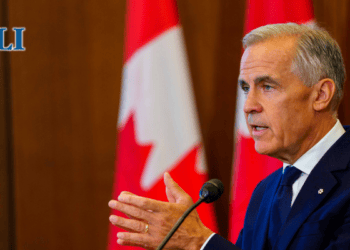
Prime Minister Mark Carney kept up his epic pace of international travel and continued his government’s push to diversify Canadian trade fortunes in a global market rattled by US protectionism. Essentially, everyone — including former Conservative prime minister and noted China hawk Stephen Harper — agrees that trade diversification is essential in the new geoeconomic reality.
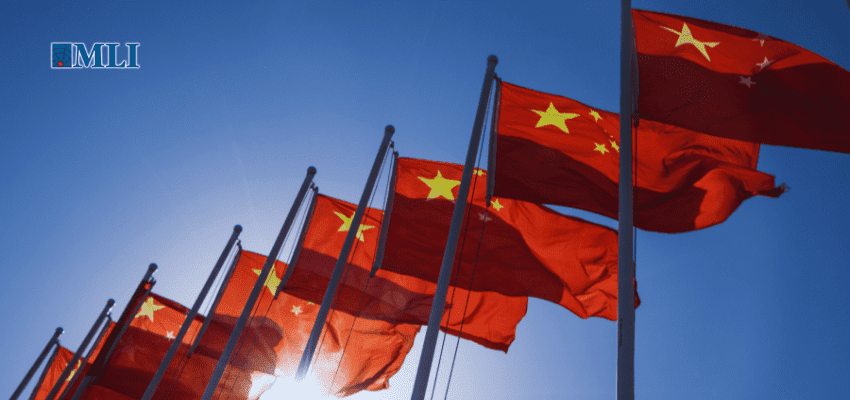
What the Carney government announced following the visit goes far beyond that, though — or at least portends to. In announcing a new “strategic partnership” with China, Mr. Carney risks going much too far, much too fast.
The diplomatic and economic achievements of the summit are significant in several ways.
The Carney government secured a major win for Western Canadian agriculture, especially on canola, and soon for coastal seafood supply chains as well. The Chinese are set to slash tariffs from as high as 85% to 15% — a huge economic relief for key Canadian industries.
The agreement to permit Chinese electric vehicles (EVs) into Canada is wise to be quite limited, at a gradual ceiling of 3% of the Canadian auto market with a regulated emphasis on affordable vehicles under $35,000. But the federal government needs to proceed with caution to the point of paranoia on national security risks presented by Chinese control-use components in imported EVs. The potential for surveillance and sabotage is very real.
Which is what makes engaging the Chinese Communist Party (CCP) on “public safety and security” so dangerous. Those phrases mean protecting the public in Canada. They mean controlling and coercing the public in China.
This is the same CCP that kidnapped the two Michaels, interferes in Canadian elections and democratic institutions, disappears dissenters, has hundreds of thousands of Muslim Uyghurs in forced work and “re-education” camps as we speak, abandoned international treaty law to eat democratic Hong Kong alive, and threatens to invade democratic Taiwan.
To call for a “strategic partnership” with this dictatorship is unwise, and ironically, distorts and distracts from the successful but transactional achievements that Mr. Carney secured for Canada on his visit to Beijing.
What Canada has achieved in this visit, in raw, economic terms, is a tactical and limited enough engagement with the Middle Kingdom to alleviate mutual pressure points and give Canada an opportunity to proceed in engaging with China with extreme caution. Going down this path brings an imperative to significantly improve Canadian national security and its nexus with foreign powers and global trade.
For starters, if Canada is to engage China more robustly going forward, the federal government should proceed with the much-called-for Foreign Agent Registry to track the CCP’s attempts to influence Canadian policymakers, and fast. While technically already a matter of law, the registry remains unimplemented and unenforced.
Second, Canada already has a “net-benefit” analysis under the Investment Canada Act to identify whether new deals involving foreign sources of direct economic investment represent a net benefit to the Dominion, as a matter of evaluating the proposal for approval. Canada should also adopt a national security screen — identifying any nefarious sources of capital or reasonable apprehension of malign intention on the part of potential investors — to better keep the Canadian economy safe from infiltration. Think Huawei.
Third, just like Canada needs to exercise extreme vigilance on Chinese imports for the potential of surveillance or sabotage, so too must Canada police our own exporters from sharing technology that could serve authoritarian oppression in China or enable Beijing’s ability to leverage Canadian technology into repressive exports.
Canada’s Export Controls List bears this responsibility, but special resources should be allocated to the now-growing bilateral Sino-Canadian trade portfolio given China’s global geoeconomic influence and repressive constitution.
Mr. Carney is right to say Canada must “take the world as it is,” though we should always work to make it more as we believe it should be — and to protect ourselves while doing both. That means radically and expeditiously improving Canada’s national security culture and apparatus as we enter what the Carney himself called the “new world order.”
Matthew J. Bondy is CEO of Bondy & Associates and a Senior Fellow with the Macdonald-Laurier Institute.