Disclaimer
The opinions expressed in this publication are solely those of the authors and do not necessarily reflect the views of the Department of National Defence nor the Government of Canada.
By Clare McKendry, Adam MacDonald, and Kurtis H. Simpson, January 7, 2026
Maritime trade is the backbone of the international economy. Transcontinental shipping networks transport goods, oil, and people from all points of the globe by sea.
This labyrinth network of ocean commerce is tracked by vessels using onboard transponders as a means of sharing information with other ships, coastal stations, and satellite receivers.
A mandatory automatic identification system (AIS) communicates critical information such as vessel identification, position, course, speed, and ship profile to the net benefit of all concerned.
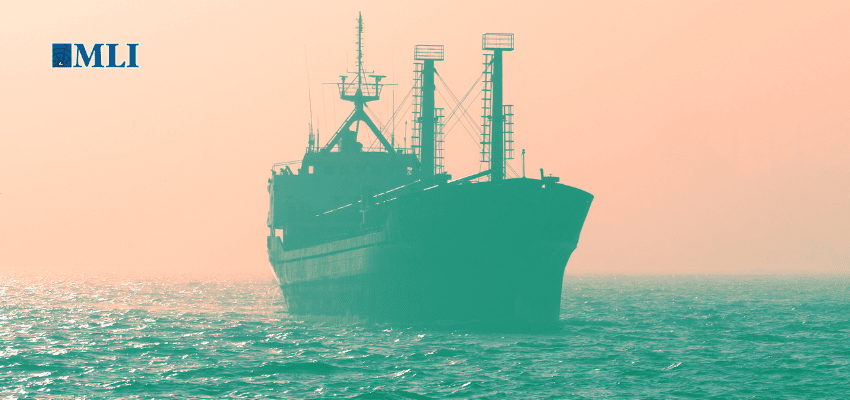
Skirting regulatory and safety oversight are shadow fleets – a series of ships marked by suspicious conduct and irregular ownership structures that supplant the legal maritime commerce system with one of lawlessness to secure an economic and military advantage for sanctioned states and their collaborators.
Russia’s invasion of Ukraine in February 2022 brought renewed attention to shadow fleets as the Kremlin faced a multitude of economic and diplomatic sanctions from countries around the world. In response, Moscow began aligning with Turkey, India, and China to transport illegal oil exports or conduct ship-to-ship transfers (STS) in high-risk maritime zones at discounted rates. Amid tense scrutiny of Russia’s efforts to evade sanctions by using shadow fleets, China’s quiet foray into this practice has largely gone unnoticed.
On December 11, 2025, amidst escalating tensions between Washington and Caracas, the United States seized a Venezuelan oil tanker known as The Skipper – sanctioned three years ago for its involvement in shipping oil from Iran. Canadian press reports indicate this new US tactic focuses on activities targeting shadow fleet tankers that transport sanctioned oil to China, the largest buyer of crude from Venezuela and Iran.
China is becoming the world’s most formidable maritime power, and it is leveraging this new capacity against autocratic regimes and the West alike. By holding sanctioned countries economic hostage via dependencies on its shadow vessels, Beijing has gained significant influence over these sanctioned states. Equally, China’s use of a shadow fleet dilutes the effectiveness of Western economic packages against targeted regimes. This trend will only increase as China’s own dark fleet continues to grow in size, activities, and sophistication.
What is the shadow fleet?
Sanctioned states like North Korea, Russia, Venezuela, Iran, and now China (which is not sanctioned, but a major supporter of these states) increasingly use shadow fleets to bypass UN economic measures designed to financially penalize these regimes and curb their illegal behaviour.
Shadow fleets (also known as dark fleets or dark ships) employ a wide range of techniques all aimed at obfuscating their activities by creating deniability. For example, origin and destination points are often masked alongside the vessel’s identity and cargo. Oftentimes, dark ships are either unmarked, or sail with flags of convenience from countries with lax regulations and enforcement of international maritime laws.
Shadow fleets operate on the edges of a coastal state’s exclusive economic zone (EEZ), or on the high seas, to avoid apprehension by law enforcement. This creates a parallel maritime system of purposeful sanction evasion, theft, clandestine offloading, and other harmful activities that exploit flaws in existing oversight legislation.
Pillars anchoring China’s shadow fleet
China’s shadow maritime network has several defining features that make it stand out compared to other authoritarian states with more limited fleets.
First, China’s shadow fleet is not just about ships. It is a complex ownership and support structure of which vessels are registered to shell companies in offshore jurisdictions with ownership links to single or multiple Chinese nationals. This subnetwork reportedly manages over 50 supertankers accounting for some 10 per cent of all dark vessel voyages transporting sanctioned illegal oil exports.
In 2019, the US Treasury’s Office of Foreign Assets Control (OFAC) took action against Chinese nationals and corporations for their alleged role in facilitating the transaction and transportation of Iranian oil. These entities often have little to no online presence, but open-source searches of vessel insurance documents revealed contact details, emails, phone numbers, addresses, all tracing back ultimately to Chinese ownership.
Oil refineries, regional small-scale banks, and Chinese trading firms with little exposure to the Western financial system are also implicated in enabling China’s shadow fleet activities. In aiding Moscow’s war efforts, these institutions process transactions, export financing, and use exchange offices and crypto assets to circumvent international sanctions. Evidence of this was manifest when a disgruntled employee of a large Chinese shipping enterprise leaked internal information to foreign institutions.
Second, China’s efforts to help regimes targeted by international sanctions is both global and regional in nature. From quietly granting North Korean vessels safe passage and port access, Beijing aids Pyongyang in bypassing UN sanctions vis-à-vis its shadow fleet with Chinese companies being linked to Kim Jong-Un’s uranium enrichment facilities and nuclear ambitions. Shadow vessels from North Korea, Russia, and Iran have been found docking at Chinese ports, offloading oil, ammunition, and other illicit cargo with impunity.
Earlier this year, Taiwan intercepted an unmarked Chinese-crewed ship with half a million litres of fuel and pipe equipment onboard. Moreover, a long-time sanctioned cargo ship sailing under the Panamanian flag, docked at the Russian-occupied Ukrainian port of Sevastopol after first having manipulated its AIS transponder data. Chinese gas carriers also obfuscated their routes in conducting a STS transfer with Russian oil tankers in the Malacca Strait in October 2025, a particular hotspot for dark fleet activity.
Furthermore, Beijing is learning from Russia’s current experience on how to evade sanctions, including via shadow fleet co-operation, arising from geopolitical ambitions. According to Taiwanese media, China has created an unnamed interagency group under Chinese Vice Premier He Lifeng with government officials meeting political and economic leaders in Moscow to discuss the circumnavigation of hard-hitting sanctions, as China would be particularly vulnerable amid a potential conflict over Taiwan.
Third, China dark vessels are also employed to assert territorial and maritime claims opposite Taiwan, the Philippines, Japan, and South Korea. For example, China uses its dark fleet to coerce and intimidate Taiwan’s population through grey-zone operations designed to erode the island’s security. The sabotage of undersea cables is becoming increasingly frequent. The threatened unlawful inspection of Taiwanese commercial ships intimidating, and unapproved mainland vessels conducting sand dredging operations adjacent to Taiwan’s Matsu Islands, are an implicit threat to perceived sovereignty. Chinese civilian cargo ships and ferries, furthermore, are being incorporated into the rehearsal of multi-point, small amphibious landing operations to deliberately instil fear and uncertainty amidst growing concern that China will attempt to forcibly invade and occupy Taiwan..
Fourth, China’s shadow fleet goes beyond sanctions evasion and harassing activities towards neighbours as China’s distant water fleet (DWF) engages in transnational crime by sea in the Indian and Pacific Oceans. The DWF is heavily subsidized by the Chinese state, covering up to half of all fuel, equipment, and vessel construction costs. Even at conservative estimates, the DWF is massive, with recent studies placing the scale of the fleet at some 17,000 ships. Suspected vessels are known to disappear from publicly available maritime tracking platforms and illegally plunder the traditional fishing grounds of coastal states as far away as Argentina.
With respect to drug trafficking, Chinese criminal organizations with ties to the state reportedly use the DWF to support Mexican and South American drug cartels. Chinese bulkers seized by Gibraltar authorities were found to have cocaine onboard. Similarly, Indonesian police have made arrests after discovering an international meth smuggling network with drugs from China and Iran entering into Malaysian ports before being shipped further inland.
Finally, the Chinese state is directly involved in shadow fleet operations. The Chinese Communist Party (CCP) implicitly condones the activities of its shadow fleet to augment national oil requirements and to enable the actions of so-called “axis of autocracy” countries. China further increases its influence over Iran, Russia, and North Korea by reducing their global economic isolation while deepening their dependence on Beijing.

Conclusion
Addressing China’s shadow fleet presents a daunting challenge. Like others operating such fleets, China intentionally exploits the inability of coastal states to fully monitor their Excusive Economic Zones (EEZs). “Innocent passage” rights are guaranteed by the 1984 UN Convention on the Law of the Sea impeding interdiction. Fraudulent registries and sailing under false flags further complicate enforcement. Moreover, drone and other sophisticated technologies are enabling the weaponization of suspect vessels and elevating the risk of policing efforts.
Effectively countering this threat demands coordinated intelligence sharing among allies to increase knowledge on shadow fleets as their capabilities are steadily increasing. Technological know-how and surveillance of high-activity routes is also needed. Critical ongoing requirements for Canada include developing underwater patrol drones, enhancing commercial satellites such as Canada’s Dark Vessel Detection (DVD) program, which revisits strategic locations multiple times per day, and advancing Canada’s own increased surveillance capabilities at home. Moreover, learning from the experiences of France, Taiwan, and Ukraine can further illuminate optimal strategies that can be undertaken by Canada and other coastal states to protect our waters.
While China frequently declares its commitment to the rules-based international order, its national self-interests are narrowly defined; this has enabled not only a sophisticated shadow fleet, but an entire maritime support network that implicates illegal ownership cliques, fraudulent financing, various criminal activities, as well as the development of coercion tactics to advance Beijing’s extraterritorial claims. China’s shadow fleet is a direct threat to Canada’s national security. It serves as a lever of influence over fellow “Axis of Autocracy” states (Russia, North Korea, and Iran) further empowering China and, moreover, enabling illegal behaviour that undermines Western interests, erodes established norms, and weakens the rule of law. A failure to counter China’s dark vessel fleet bolsters Russia’s resilience in its war against Ukraine, provides North Korea a lifeline in the face of global sanctions, and offers Tehran both financing and critical military-related precursor materials for its missile program. Finally, it serves as an instrument of coercive diplomacy against Taiwan, undermining a democracy with shared values. Countervailing action is urgently required.
Clare McKendry is a graduate student researcher at Defence Research and Development Canada’s Centre for Operational Research and Analysis. She is a PhD Candidate in Political Science at the University of Waterloo. Her dissertation focuses on the evolution of Taiwan’s policy in the South China Sea disputes. With a focus on the Indo-Pacific, she writes extensively about China’s use of maritime infrastructure in disputed seas as a grey-zone tactic, growing Chinese presence within the Arctic, and China-Japan relations.
Kurtis H. Simpson currently serves as a special advisor, Indo-Pacific affairs, within the Department of National Defence. As a senior defence scientist, he is a specialist on China and has extensive expertise in Asian security issues, global affairs, as well as transnational threats and terrorism. He holds a PhD from York University and is a graduate of the National Security Program.
Adam P. MacDonald, a former naval officer in the Canadian military, has a PhD in political science from Dalhousie University. He has occupied policy analysis and research roles for Global Affairs Canada and the Department of National Defence, conducting research on China and its impact on Canadian foreign and defence policy.