Friday, December 12, 2025
No Result
View All Result
  • Media
Macdonald-Laurier Institute
  • Home
  • About
    • Who We Are
    • Who Makes MLI Work
    • Fifteenth Anniversary
  • Experts
    • Experts Directory
    • In Memoriam
  • Issues
    • Domestic Policy
      • Economic Policy
      • Justice
      • Rights and Freedoms
      • Assisted Suicide (MAID)
      • Health Care
      • COVID-19
      • Gender Identity
      • Canada’s Political Tradition
      • AI, Technology and Innovation
      • Media and Telecoms
      • Housing
      • Immigration
      • Agriculture and Agri-Food
      • Competition Policy
    • Energy Policy
      • Energy
      • Environment
    • Foreign Policy
      • Israel-Hamas War
      • Ukraine
      • Taiwan
      • China
      • Europe and Russia
      • Indo-Pacific
      • Middle East and North Africa
      • North America
      • Foreign Interference
      • National Defence
      • National Security
      • Foreign Affairs
    • Indigenous Affairs
  • Projects
    • CNAPS (Center for North American Prosperity and Security)
    • The Promised Land
    • Voices that Inspire: The Macdonald-Laurier Vancouver Speaker Series
    • Dragon at the door
    • Canada on top of the world
    • Letter to a minister
    • Justice Report Card
    • The Great Energy Crisis
    • DisInfoWatch.org
    • Managing Indigenous Prosperity
    • Judicial Foundations
    • Landmark Cases Council
    • Defending The Marketplace of Ideas
    • Reforming the University
    • Past Projects
      • Digital Policy & Connectivity
      • Double Trouble
      • Canada and the Indo-Pacific Initiative
      • The Transatlantic Program
      • COVID Misery Index
        • Provincial COVID Misery Index
        • Beyond Lockdown
        • COVID and after: A mandate for recovery
      • Speak for Ourselves
      • The Eavesdropping Dragon: Huawei
      • Talkin’ in the Free World with Mariam Memarsadeghi
      • An Intellectual Property Strategy for Canada
      • Munk Senior Fellows
      • A Mandate for Canada
      • Confederation Series
      • Fiscal Reform
      • The Canadian Century project
      • Fixing Canadian health care
      • Internal trade
      • From a mandate for change
      • Size of government in Canada
      • Straight Talk
      • Labour Market Report
      • Leading Economic Indicator
      • Centre for Advancing Canada’s Interests Abroad
      • Indigenous Prosperity at a Crossroads
        • Aboriginal Canada and Natural Resources
  • Events
    • Upcoming Events
    • Past Events
      • MLI Dinners
      • Great Canadian Debates
  • Latest News
  • Libraries
    • Columns
    • Commentary
    • Papers
    • Books
    • Video
  • Donate
  • Home
  • About
    • Who We Are
    • Who Makes MLI Work
    • Fifteenth Anniversary
  • Experts
    • Experts Directory
    • In Memoriam
  • Issues
    • Domestic Policy
      • Economic Policy
      • Justice
      • Rights and Freedoms
      • Assisted Suicide (MAID)
      • Health Care
      • COVID-19
      • Gender Identity
      • Canada’s Political Tradition
      • AI, Technology and Innovation
      • Media and Telecoms
      • Housing
      • Immigration
      • Agriculture and Agri-Food
      • Competition Policy
    • Energy Policy
      • Energy
      • Environment
    • Foreign Policy
      • Israel-Hamas War
      • Ukraine
      • Taiwan
      • China
      • Europe and Russia
      • Indo-Pacific
      • Middle East and North Africa
      • North America
      • Foreign Interference
      • National Defence
      • National Security
      • Foreign Affairs
    • Indigenous Affairs
  • Projects
    • CNAPS (Center for North American Prosperity and Security)
    • The Promised Land
    • Voices that Inspire: The Macdonald-Laurier Vancouver Speaker Series
    • Dragon at the door
    • Canada on top of the world
    • Letter to a minister
    • Justice Report Card
    • The Great Energy Crisis
    • DisInfoWatch.org
    • Managing Indigenous Prosperity
    • Judicial Foundations
    • Landmark Cases Council
    • Defending The Marketplace of Ideas
    • Reforming the University
    • Past Projects
      • Digital Policy & Connectivity
      • Double Trouble
      • Canada and the Indo-Pacific Initiative
      • The Transatlantic Program
      • COVID Misery Index
        • Provincial COVID Misery Index
        • Beyond Lockdown
        • COVID and after: A mandate for recovery
      • Speak for Ourselves
      • The Eavesdropping Dragon: Huawei
      • Talkin’ in the Free World with Mariam Memarsadeghi
      • An Intellectual Property Strategy for Canada
      • Munk Senior Fellows
      • A Mandate for Canada
      • Confederation Series
      • Fiscal Reform
      • The Canadian Century project
      • Fixing Canadian health care
      • Internal trade
      • From a mandate for change
      • Size of government in Canada
      • Straight Talk
      • Labour Market Report
      • Leading Economic Indicator
      • Centre for Advancing Canada’s Interests Abroad
      • Indigenous Prosperity at a Crossroads
        • Aboriginal Canada and Natural Resources
  • Events
    • Upcoming Events
    • Past Events
      • MLI Dinners
      • Great Canadian Debates
  • Latest News
  • Libraries
    • Columns
    • Commentary
    • Papers
    • Books
    • Video
  • Donate
No Result
View All Result
Macdonald-Laurier Institute

Survival in Trump, Xi and Putin’s ‘great power’ world: Stephen Nagy in the Japan Times

While others focus on military hardware, Beijing has mastered a more dangerous weapon — controlling how the world sees reality.

December 12, 2025
in Latest News, Columns, Foreign Policy, Taiwan, Stephen Nagy
Reading Time: 5 mins read
A A
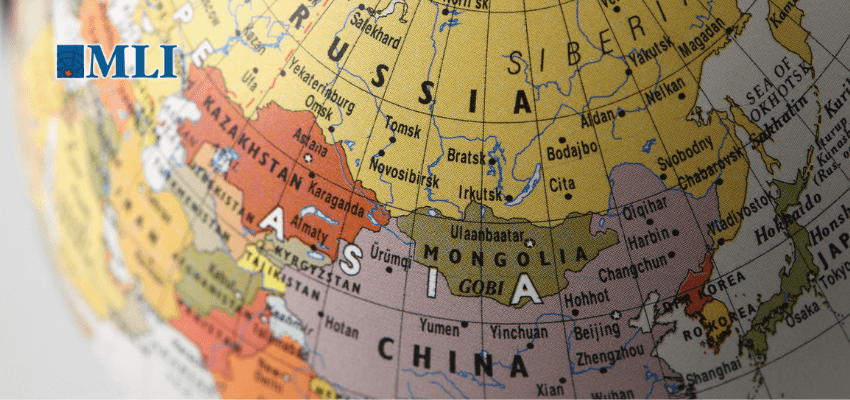
Asia Map

This article originally appeared in the Japan Times.

By Stephen Nagy, December 12, 2025

When Chinese coast-guard vessels recently intensified their gray-zone operations against Japanese aircraft in the East China Sea, the silence from Washington was deafening. When Beijing launched a coordinated disinformation campaign portraying Japan as a militaristic threat following Prime Minister Sanae Takaichi’s Nov. 7 remarks about potential Japanese involvement in a Taiwan contingency, America’s response was measured at best. And when China deployed economic coercion against Japan, the Trump administration’s focus remained squarely on negotiating its own trade arrangements with Chinese leader Xi Jinping.

For Tokyo and other middle powers from Canberra to Ottawa, these episodes illuminate an uncomfortable truth, that the U.S. is recalibrating its approach to the world in ways that may leave traditional allies more exposed than at any point since 1945.

The Trump administration’s 2025 National Security Strategy (NSS), released last week, offers crucial insights into this shift. Unlike previous iterations that championed a “rules-based international order” or positioned the U.S. as the indispensable guarantor of global stability, this document explicitly embraces what it calls “flexible realism.” It acknowledges that “the unipolar moment of American predominance is over” and prioritizes burden-sharing, regional partnerships and, most tellingly, acceptance that “the world’s fundamental political unit is and will remain the nation-state” with each nation putting “their interests first.”

This represents a fundamental departure. The strategy effectively concedes what scholars like Emma Ashford have argued, that multipolarity is not something to resist but to navigate. In her recent Foreign Affairs essay, Ashford contends that attempting to force the world into a bipolar U.S.-China framework ignores reality. Instead, she argues, Washington should embrace “unbalanced multipolarity” where great powers and second-tier states coexist, with the former accepting certain spheres of influence while maintaining economic openness and flexible partnerships.

The Trump government’s NSS appears to operationalize this vision. Its regional priorities are revealing. The Western Hemisphere receives extensive attention under what it calls the “Trump Corollary to the Monroe Doctrine,” asserting U.S. preeminence in its neighborhood. Europe is told to “stand on its own feet” and take “primary responsibility for its own defense.” The Middle East is deprioritized, shifting from a region America actively manages to one where it maintains core interests while encouraging local powers to assume greater burdens.

Notably, the Asia section, while reaffirming U.S. commitment to preventing Chinese domination of the First Island Chain and maintaining freedom of navigation, emphasizes that “the American military cannot — and should not have to — do this alone.” It calls for allies to “spend and do much more for collective defense.”

This is where Takaichi’s remarks become instructive. By stating that Japan would need to consider military involvement in a Taiwan contingency, she wasn’t making a provocative declaration, she was acknowledging strategic reality. Taiwan’s fate directly affects Japan’s security through the Okinawan Islands and shipping lanes vital to Japanese commerce. Yet Washington’s tepid response suggests the administration views such commitments as Japan’s calculation to make, not America’s to validate.

The U.S. silence on Chinese coercion against Japan becomes more comprehensible through this lens. If U.S. President Donald Trump is indeed pursuing a grand bargain with Beijing — trading American acceptance of Chinese regional influence for commitments on trade, technology controls and perhaps Taiwan — then strongly backing Japan against Chinese gray-zone operations might complicate those negotiations. This represents transactional diplomacy that prioritizes immediate U.S. interests over alliance solidarity.

For Japan and fellow middle powers, this creates an acute dilemma. As Antonio Gramsci, the famed Italian Marxist philosopher and political theorist, observed, “the crisis consists precisely in the fact that the old is dying and the new cannot be born; in this interregnum a great variety of morbid symptoms appear.” The post-World War II American-led order is clearly fading, but the emerging multipolar system lacks defined rules. This transitional period is precisely when middle powers face their greatest vulnerability and opportunity.

The temptation might be to accept great power spheres of influence as inevitable. Indeed, historically, multipolarity has been the norm rather than the exception. But accepting Chinese hegemony in Asia or Russian dominance in Eastern Europe is categorically different from cooperating with an illiberal America. Ask Ukrainians or Georgians about life under Russian influence. Ask Hong Kongers or Uyghurs about Chinese governance. The distinction between an imperfect American-influenced order and authoritarian regional hegemony is not semantic.

Japan and other middle powers must recognize they are not powerless spectators in this transition. They possess significant economic weight, technological capabilities and geographic importance that give them agency in shaping what emerges. But this requires strategic clarity and coordinated action across several dimensions.

First, internal balancing. Japan must accelerate defense spending beyond the current 2% of gross domestic product target toward 3% to 4%, focusing on capabilities that deny China fait accompli scenarios in the East China Sea and around Taiwan. This means investing in anti-ship missiles, submarine forces, cyber capabilities and integrated air defense. Australia, South Korea and others should follow similar trajectories. The goal is to raise the costs of Chinese coercion sufficiently that even without U.S. intervention, aggression becomes prohibitively expensive.

Second, external balancing through more minilateral partnerships. In addition to its success with the Association of Southeast Asian Nations and “the Quad” (U.S., Japan, India, Australia), Japan should explore a trilateral security mechanism with Australia and South Korea, coordinate more closely with NATO members on Indo-Pacific security and expand defense technology cooperation with like-minded democracies. These arrangements create needed redundancy — if America pulls back in one domain, others can partially compensate.

Third, economic resilience. Trump’s NSS emphasizes “securing access to critical supply chains.” Middle powers should interpret this as license to diversify away from Chinese dependence. Japan, Australia, India and others should coordinate on critical minerals, semiconductor production and pharmaceutical manufacturing. This is de-risking in ways that align with stated U.S. priorities while reducing vulnerability to Chinese coercion.

Fourth, and most crucially, middle powers must actively participate in rulemaking for the emerging order. The Trump administration’s transactionalism creates space for others to champion principles the U.S. neglects. Japan should lead in articulating norms for gray-zone operations, freedom of navigation and peaceful dispute resolution. Working with Europe, ASEAN and others, Tokyo can help establish that even in a multipolar world, certain rules — including freedom of navigation, peaceful settlement of disputes and protection of critical infrastructure — serve everyone’s interests.

This is about ensuring that multipolarity doesn’t degenerate into might-makes-right. If middle powers can demonstrate that cooperation on rules benefits even great powers (by reducing uncertainty, enabling commerce and preventing spirals), they have a better chance of being at the table shaping the new order rather than on the menu as it gets carved up.

The path forward requires uncomfortable choices. While America remains the indispensable partner, Tokyo must be prepared to lead regionally rather than merely follow Washington. For middle powers collectively, the challenge is existential but not hopeless. The multipolar world taking shape will be more competitive and less predictable than the post-Cold War era. But it need not be a Hobbesian nightmare if countries like Japan, Australia, Canada and India work together to embed norms, build resilience and maintain sufficient military capability to deter aggression.

The Trump administration’s security strategy suggests America will remain engaged but more selectively and transactionally. Middle powers must adapt by becoming more capable, more coordinated and more proactive in shaping regional order. The alternative, passive acceptance of great power spheres means subordination to Beijing or Moscow in ways that would make current American unreliability seem trivial by comparison.


Stephen R. Nagy is a professor of politics and international studies at the International Christian University in Tokyo and a visiting fellow with the Japan Institute for International Affairs. The tentative title for his forthcoming monograph is “Navigating U.S. China Strategic Competition: Japan as an International Adapter Middle Power.”

Source: The Japan Times

Related Posts

Breakthrough Nation with Karen Restoule: Crystal Smith, Ep. 1
Energy

Breakthrough Nation with Karen Restoule: Crystal Smith, Ep. 1

December 12, 2025
Westminster parliament
Domestic Policy

Dec. 11 is the day Canada gained autonomy. Progressives want us to forget: Christopher Dummitt in the National Post

December 11, 2025
Canadian Economy
Domestic Policy

Get ready for a troubling new era for the Canadian economy: Trevor Tome in the Hub

December 11, 2025
Next Post
Breakthrough Nation with Karen Restoule: Crystal Smith, Ep. 1

Breakthrough Nation with Karen Restoule: Crystal Smith, Ep. 1

Newsletter Signup

  Thank you for Signing Up
  Please correct the marked field(s) below.
Email Address  *
1,true,6,Contact Email,2
First Name *
1,true,1,First Name,2
Last Name *
1,true,1,Last Name,2
*
*Required Fields

Follow us on

Macdonald-Laurier Institute

323 Chapel Street, Suite #300
Ottawa, Ontario, K1N 7Z2 Canada

613.482.8327

info@macdonaldlaurier.ca
MLI directory

Support Us

Support the Macdonald-Laurier Institute to help ensure that Canada is one of the best governed countries in the world. Click below to learn more or become a sponsor.

Support Us

  • Inside Policy Magazine
  • Annual Reports
  • Jobs
  • Privacy Policy

© 2023 Macdonald-Laurier Institute. All Rights reserved.

No Result
View All Result
  • Home
  • About
    • Who We Are
    • Who Makes MLI Work
    • Fifteenth Anniversary
  • Experts
    • Experts Directory
    • In Memoriam
  • Issues
    • Domestic Policy
      • Economic Policy
      • Justice
      • Rights and Freedoms
      • Assisted Suicide (MAID)
      • Health Care
      • COVID-19
      • Gender Identity
      • Canada’s Political Tradition
      • AI, Technology and Innovation
      • Media and Telecoms
      • Housing
      • Immigration
      • Agriculture and Agri-Food
      • Competition Policy
    • Energy Policy
      • Energy
      • Environment
    • Foreign Policy
      • Israel-Hamas War
      • Ukraine
      • Taiwan
      • China
      • Europe and Russia
      • Indo-Pacific
      • Middle East and North Africa
      • North America
      • Foreign Interference
      • National Defence
      • National Security
      • Foreign Affairs
    • Indigenous Affairs
  • Projects
    • CNAPS (Center for North American Prosperity and Security)
    • The Promised Land
    • Voices that Inspire: The Macdonald-Laurier Vancouver Speaker Series
    • Dragon at the door
    • Canada on top of the world
    • Letter to a minister
    • Justice Report Card
    • The Great Energy Crisis
    • DisInfoWatch.org
    • Managing Indigenous Prosperity
    • Judicial Foundations
    • Landmark Cases Council
    • Defending The Marketplace of Ideas
    • Reforming the University
    • Past Projects
      • Digital Policy & Connectivity
      • Double Trouble
      • Canada and the Indo-Pacific Initiative
      • The Transatlantic Program
      • COVID Misery Index
      • Speak for Ourselves
      • The Eavesdropping Dragon: Huawei
      • Talkin’ in the Free World with Mariam Memarsadeghi
      • An Intellectual Property Strategy for Canada
      • Munk Senior Fellows
      • A Mandate for Canada
      • Confederation Series
      • Fiscal Reform
      • The Canadian Century project
      • Fixing Canadian health care
      • Internal trade
      • From a mandate for change
      • Size of government in Canada
      • Straight Talk
      • Labour Market Report
      • Leading Economic Indicator
      • Centre for Advancing Canada’s Interests Abroad
      • Indigenous Prosperity at a Crossroads
  • Events
    • Upcoming Events
    • Past Events
      • MLI Dinners
      • Great Canadian Debates
  • Latest News
  • Libraries
    • Columns
    • Commentary
    • Papers
    • Books
    • Video
  • Donate

© 2023 Macdonald-Laurier Institute. All Rights reserved.