Friday, December 5, 2025
No Result
View All Result
  • Media
Macdonald-Laurier Institute
  • Home
  • About
    • Who We Are
    • Who Makes MLI Work
    • Fifteenth Anniversary
  • Experts
    • Experts Directory
    • In Memoriam
  • Issues
    • Domestic Policy
      • Economic Policy
      • Justice
      • Rights and Freedoms
      • Assisted Suicide (MAID)
      • Health Care
      • COVID-19
      • Gender Identity
      • Canada’s Political Tradition
      • AI, Technology and Innovation
      • Media and Telecoms
      • Housing
      • Immigration
      • Agriculture and Agri-Food
      • Competition Policy
    • Energy Policy
      • Energy
      • Environment
    • Foreign Policy
      • Israel-Hamas War
      • Ukraine
      • Taiwan
      • China
      • Europe and Russia
      • Indo-Pacific
      • Middle East and North Africa
      • North America
      • Foreign Interference
      • National Defence
      • National Security
      • Foreign Affairs
    • Indigenous Affairs
  • Projects
    • CNAPS (Center for North American Prosperity and Security)
    • The Promised Land
    • Voices that Inspire: The Macdonald-Laurier Vancouver Speaker Series
    • Dragon at the door
    • Canada on top of the world
    • Letter to a minister
    • Justice Report Card
    • The Great Energy Crisis
    • DisInfoWatch.org
    • Managing Indigenous Prosperity
    • Judicial Foundations
    • Landmark Cases Council
    • Defending The Marketplace of Ideas
    • Reforming the University
    • Past Projects
      • Digital Policy & Connectivity
      • Double Trouble
      • Canada and the Indo-Pacific Initiative
      • The Transatlantic Program
      • COVID Misery Index
        • Provincial COVID Misery Index
        • Beyond Lockdown
        • COVID and after: A mandate for recovery
      • Speak for Ourselves
      • The Eavesdropping Dragon: Huawei
      • Talkin’ in the Free World with Mariam Memarsadeghi
      • An Intellectual Property Strategy for Canada
      • Munk Senior Fellows
      • A Mandate for Canada
      • Confederation Series
      • Fiscal Reform
      • The Canadian Century project
      • Fixing Canadian health care
      • Internal trade
      • From a mandate for change
      • Size of government in Canada
      • Straight Talk
      • Labour Market Report
      • Leading Economic Indicator
      • Centre for Advancing Canada’s Interests Abroad
      • Indigenous Prosperity at a Crossroads
        • Aboriginal Canada and Natural Resources
  • Events
    • Upcoming Events
    • Past Events
      • MLI Dinners
      • Great Canadian Debates
  • Latest News
  • Libraries
    • Columns
    • Commentary
    • Papers
    • Books
    • Video
  • Donate
  • Home
  • About
    • Who We Are
    • Who Makes MLI Work
    • Fifteenth Anniversary
  • Experts
    • Experts Directory
    • In Memoriam
  • Issues
    • Domestic Policy
      • Economic Policy
      • Justice
      • Rights and Freedoms
      • Assisted Suicide (MAID)
      • Health Care
      • COVID-19
      • Gender Identity
      • Canada’s Political Tradition
      • AI, Technology and Innovation
      • Media and Telecoms
      • Housing
      • Immigration
      • Agriculture and Agri-Food
      • Competition Policy
    • Energy Policy
      • Energy
      • Environment
    • Foreign Policy
      • Israel-Hamas War
      • Ukraine
      • Taiwan
      • China
      • Europe and Russia
      • Indo-Pacific
      • Middle East and North Africa
      • North America
      • Foreign Interference
      • National Defence
      • National Security
      • Foreign Affairs
    • Indigenous Affairs
  • Projects
    • CNAPS (Center for North American Prosperity and Security)
    • The Promised Land
    • Voices that Inspire: The Macdonald-Laurier Vancouver Speaker Series
    • Dragon at the door
    • Canada on top of the world
    • Letter to a minister
    • Justice Report Card
    • The Great Energy Crisis
    • DisInfoWatch.org
    • Managing Indigenous Prosperity
    • Judicial Foundations
    • Landmark Cases Council
    • Defending The Marketplace of Ideas
    • Reforming the University
    • Past Projects
      • Digital Policy & Connectivity
      • Double Trouble
      • Canada and the Indo-Pacific Initiative
      • The Transatlantic Program
      • COVID Misery Index
        • Provincial COVID Misery Index
        • Beyond Lockdown
        • COVID and after: A mandate for recovery
      • Speak for Ourselves
      • The Eavesdropping Dragon: Huawei
      • Talkin’ in the Free World with Mariam Memarsadeghi
      • An Intellectual Property Strategy for Canada
      • Munk Senior Fellows
      • A Mandate for Canada
      • Confederation Series
      • Fiscal Reform
      • The Canadian Century project
      • Fixing Canadian health care
      • Internal trade
      • From a mandate for change
      • Size of government in Canada
      • Straight Talk
      • Labour Market Report
      • Leading Economic Indicator
      • Centre for Advancing Canada’s Interests Abroad
      • Indigenous Prosperity at a Crossroads
        • Aboriginal Canada and Natural Resources
  • Events
    • Upcoming Events
    • Past Events
      • MLI Dinners
      • Great Canadian Debates
  • Latest News
  • Libraries
    • Columns
    • Commentary
    • Papers
    • Books
    • Video
  • Donate
No Result
View All Result
Macdonald-Laurier Institute

On energy, Carney is talking the talk but not walking the walk: Heather Exner-Pirot in The Hub

As it stands, it looks like the federal government will try to achieve its new economic and foreign policy goals through top down, publicly funded, and politically expedient projects.

September 3, 2025
in Energy, Energy Policy, Latest News, Columns, Resources, In the Media, Heather Exner-Pirot
Reading Time: 4 mins read
A A
On energy, Carney is talking the talk but not walking the walk: Heather Exner-Pirot in The Hub

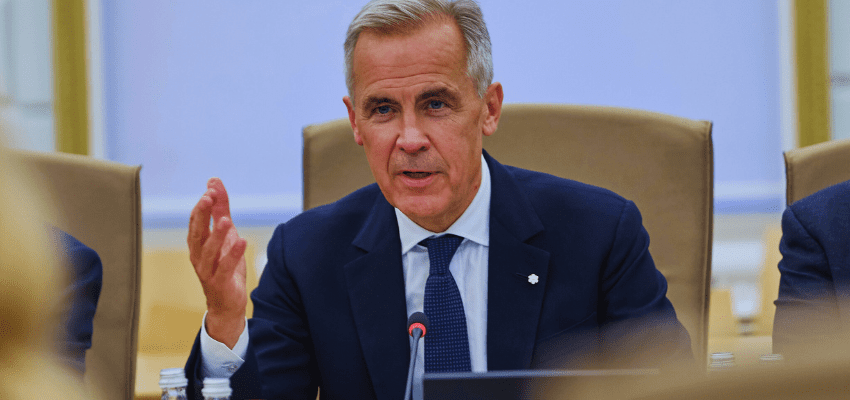
Photo by Gatis Rozenfelds, Latvian State Chancellery via Flickr.

This article originally appeared in The Hub.

By Heather Exner-Pirot, September 3, 2025

Complaining about Ottawa is a favourite pastime for Canadian oil and gas proponents, but last week, we were robbed of the opportunity.

After a long summer with limited regulatory movement and creeping unrest, a banger of a speech from Energy Minister Tim Hodgson in Berlin rekindled some hope that this Liberal government may, in fact, want to make good on its promise to turn Canada into an energy superpower.

“The new Canadian federal government has made a conscious choice to re-centre energy and critical minerals in how we think about not only our domestic affairs but Canada’s place in the world,” said Hodgson. We all noticed his deliberate distancing from the old Canadian government, from which a majority of his fellow cabinet members are drawn.

Hodgson went on to sing the praises of Canada’s ethical, clean LNG, and advocated for Canadian energy products abroad. This should not be strange and yet it was. It was wonderful, too.

It is notable that this shift in Canadian foreign affairs—of leading with our strong foot, our resource endowment, to strengthen ties with our allies—was announced not by the prime minister or foreign minister, but by our minister of energy and natural resources. Although Carney wasn’t the one speaking, I’m convinced the prime minister supports it. There seems to be few things he wants more than to impress our European allies. In order to accomplish this, he chose to play the energy and minerals card.

The week was capped off by the announcement of a new Major Projects Office. If more federal bureaucracy was never going to impress the country’s C-suites, the appointment of former Trans Mountain head Dawn Farrell as CEO, and the establishment of the office in Calgary, likely did.

A clash over tactics

We are now aligned on resource strategy and objective. But the division over tactics is gaping.

Carney’s own remarks in Berlin highlight the problem. A German journalist asked him what Canada could realistically offer to Germany and Europe given the lack of ports and pipelines.

“Our government is in the process of unleashing half a trillion dollars of investment,” he said. When it came to port infrastructure he identified “a new port in Churchill, Manitoba…and other East Coast ports…which could open up enormous LNG opportunities.” He also mentioned the Port of Montreal in Contrecoeur, Quebec.

In April, following Carney’s election win, 38 Canadian oil and gas CEOs wrote a letter to the prime minister congratulating him and offering recommendations on how to become the “world’s leading energy superpower” Carney spoke so much about on the campaign trail.

The list didn’t include subsidies for seasonal Arctic ports, so we’d be forced to sell the most expensive and uncompetitive LNG on the planet. The letter didn’t ask for government “investment” in energy projects (these are not investments, they are subsidies).

What did the letter include? It asked to get rid of the emissions cap and the West coast tanker ban; to overhaul the Impact Assessment Act; to replace the federal industrial carbon levy with provincial schemes; and to reduce regulatory approval timelines.

Getting rid of these things would not cost the federal government anything; in fact, it would save the bureaucracy the trouble of administering them. It would also unleash billions, potentially tens of billions, of investment in the short term. Canada is weaker and poorer with these policies in place.

It is bewildering that instead of cancelling the regulations that everyone knows are a barrier to becoming an energy superpower, and getting energy to markets in places like Germany, the government is advancing a new scheme to pick and choose projects that it will bankroll and fast track through a regulatory system left broken for everybody else.

There is a case for some public funding for some export infrastructure. But shouldn’t we start with attracting private capital to build things before we resort to using taxpayers’ dollars? Can we at least try to occupy the range of options between “investment killing regulatory framework” and “government-subsidized infrastructure”, instead of going from one bad extreme to another?

As it stands, it looks like the federal government will try to achieve its new economic and foreign policy goals through top down, publicly funded, and politically expedient projects. It will pick winners and losers. This is a more expensive, slower and less productive approach than re-establishing the conditions in which Canada is attractive for foreign investment.

The new Canadian government is different in style. But when it comes to substance, it’s starting to look the same. Passing new legislation, delivering good speeches, and opening up new offices are not the outcomes we were promised. Success will be judged on an increase in foreign investment, exports, and GDP per capita.

We will know we are on that trajectory when it is the private sector making announcements instead of the government.


Heather Exner-Pirot is the director of energy, natural resources and environment at the Macdonald-Laurier Institute.


Source: The Hub

Related Posts

Iran pushing the Middle East to the brink of war: Joe Varner for National Security Journal
Middle East and North Africa

Iran pushing the Middle East to the brink of war: Joe Varner for National Security Journal

December 5, 2025
Property rights are “precarious” in Canada: Paul Warchuk and Peter Copeland for Inside Policy Talks
Domestic Policy

Property rights are “precarious” in Canada: Paul Warchuk and Peter Copeland for Inside Policy Talks

December 4, 2025
Harvard eschews ingrained ideology in order to tackle ‘genuinely hard problems’: Peter MacKinnon in the National Post
Reforming Universities

Harvard eschews ingrained ideology in order to tackle ‘genuinely hard problems’: Peter MacKinnon in the National Post

December 3, 2025
Next Post
Is Canada the most European non-EU country? Let’s hope not!: Jack Mintz in the Financial Post

Is Canada the most European non-EU country? Let’s hope not!: Jack Mintz in the Financial Post

Newsletter Signup

  Thank you for Signing Up
  Please correct the marked field(s) below.
Email Address  *
1,true,6,Contact Email,2
First Name *
1,true,1,First Name,2
Last Name *
1,true,1,Last Name,2
*
*Required Fields

Follow us on

Macdonald-Laurier Institute

323 Chapel Street, Suite #300
Ottawa, Ontario, K1N 7Z2 Canada

613.482.8327

info@macdonaldlaurier.ca
MLI directory

Support Us

Support the Macdonald-Laurier Institute to help ensure that Canada is one of the best governed countries in the world. Click below to learn more or become a sponsor.

Support Us

  • Inside Policy Magazine
  • Annual Reports
  • Jobs
  • Privacy Policy

© 2023 Macdonald-Laurier Institute. All Rights reserved.

No Result
View All Result
  • Home
  • About
    • Who We Are
    • Who Makes MLI Work
    • Fifteenth Anniversary
  • Experts
    • Experts Directory
    • In Memoriam
  • Issues
    • Domestic Policy
      • Economic Policy
      • Justice
      • Rights and Freedoms
      • Assisted Suicide (MAID)
      • Health Care
      • COVID-19
      • Gender Identity
      • Canada’s Political Tradition
      • AI, Technology and Innovation
      • Media and Telecoms
      • Housing
      • Immigration
      • Agriculture and Agri-Food
      • Competition Policy
    • Energy Policy
      • Energy
      • Environment
    • Foreign Policy
      • Israel-Hamas War
      • Ukraine
      • Taiwan
      • China
      • Europe and Russia
      • Indo-Pacific
      • Middle East and North Africa
      • North America
      • Foreign Interference
      • National Defence
      • National Security
      • Foreign Affairs
    • Indigenous Affairs
  • Projects
    • CNAPS (Center for North American Prosperity and Security)
    • The Promised Land
    • Voices that Inspire: The Macdonald-Laurier Vancouver Speaker Series
    • Dragon at the door
    • Canada on top of the world
    • Letter to a minister
    • Justice Report Card
    • The Great Energy Crisis
    • DisInfoWatch.org
    • Managing Indigenous Prosperity
    • Judicial Foundations
    • Landmark Cases Council
    • Defending The Marketplace of Ideas
    • Reforming the University
    • Past Projects
      • Digital Policy & Connectivity
      • Double Trouble
      • Canada and the Indo-Pacific Initiative
      • The Transatlantic Program
      • COVID Misery Index
      • Speak for Ourselves
      • The Eavesdropping Dragon: Huawei
      • Talkin’ in the Free World with Mariam Memarsadeghi
      • An Intellectual Property Strategy for Canada
      • Munk Senior Fellows
      • A Mandate for Canada
      • Confederation Series
      • Fiscal Reform
      • The Canadian Century project
      • Fixing Canadian health care
      • Internal trade
      • From a mandate for change
      • Size of government in Canada
      • Straight Talk
      • Labour Market Report
      • Leading Economic Indicator
      • Centre for Advancing Canada’s Interests Abroad
      • Indigenous Prosperity at a Crossroads
  • Events
    • Upcoming Events
    • Past Events
      • MLI Dinners
      • Great Canadian Debates
  • Latest News
  • Libraries
    • Columns
    • Commentary
    • Papers
    • Books
    • Video
  • Donate

© 2023 Macdonald-Laurier Institute. All Rights reserved.