Monday, January 26, 2026
No Result
View All Result
  • Media
Macdonald-Laurier Institute
  • Home
  • About
    • Who We Are
    • Who Makes MLI Work
    • Fifteenth Anniversary
  • Experts
    • Experts Directory
    • In Memoriam
  • Issues
    • Domestic Policy
      • Economic Policy
      • Justice
      • Rights and Freedoms
      • Assisted Suicide (MAID)
      • Health Care
      • COVID-19
      • Gender Identity
      • Canada’s Political Tradition
      • AI, Technology and Innovation
      • Media and Telecoms
      • Housing
      • Immigration
      • Agriculture and Agri-Food
      • Competition Policy
    • Energy Policy
      • Energy
      • Environment
    • Foreign Policy
      • Israel-Hamas War
      • Ukraine
      • Taiwan
      • China
      • Europe and Russia
      • Indo-Pacific
      • Middle East and North Africa
      • North America
      • Foreign Interference
      • National Defence
      • National Security
      • Foreign Affairs
    • Indigenous Affairs
  • Projects
    • CNAPS (Center for North American Prosperity and Security)
    • The Promised Land
    • Voices that Inspire: The Macdonald-Laurier Vancouver Speaker Series
    • Dragon at the door
    • Canada on top of the world
    • Letter to a minister
    • Justice Report Card
    • The Great Energy Crisis
    • DisInfoWatch.org
    • Managing Indigenous Prosperity
    • Judicial Foundations
    • Landmark Cases Council
    • Defending The Marketplace of Ideas
    • Reforming the University
    • Past Projects
      • Digital Policy & Connectivity
      • Double Trouble
      • Canada and the Indo-Pacific Initiative
      • The Transatlantic Program
      • COVID Misery Index
        • Provincial COVID Misery Index
        • Beyond Lockdown
        • COVID and after: A mandate for recovery
      • Speak for Ourselves
      • The Eavesdropping Dragon: Huawei
      • Talkin’ in the Free World with Mariam Memarsadeghi
      • An Intellectual Property Strategy for Canada
      • Munk Senior Fellows
      • A Mandate for Canada
      • Confederation Series
      • Fiscal Reform
      • The Canadian Century project
      • Fixing Canadian health care
      • Internal trade
      • From a mandate for change
      • Size of government in Canada
      • Straight Talk
      • Labour Market Report
      • Leading Economic Indicator
      • Centre for Advancing Canada’s Interests Abroad
      • Indigenous Prosperity at a Crossroads
        • Aboriginal Canada and Natural Resources
  • Events
    • Upcoming Events
    • Past Events
      • MLI Dinners
      • Great Canadian Debates
  • Latest News
  • Libraries
    • Columns
    • Commentary
    • Papers
    • Books
    • Video
  • Donate
  • Home
  • About
    • Who We Are
    • Who Makes MLI Work
    • Fifteenth Anniversary
  • Experts
    • Experts Directory
    • In Memoriam
  • Issues
    • Domestic Policy
      • Economic Policy
      • Justice
      • Rights and Freedoms
      • Assisted Suicide (MAID)
      • Health Care
      • COVID-19
      • Gender Identity
      • Canada’s Political Tradition
      • AI, Technology and Innovation
      • Media and Telecoms
      • Housing
      • Immigration
      • Agriculture and Agri-Food
      • Competition Policy
    • Energy Policy
      • Energy
      • Environment
    • Foreign Policy
      • Israel-Hamas War
      • Ukraine
      • Taiwan
      • China
      • Europe and Russia
      • Indo-Pacific
      • Middle East and North Africa
      • North America
      • Foreign Interference
      • National Defence
      • National Security
      • Foreign Affairs
    • Indigenous Affairs
  • Projects
    • CNAPS (Center for North American Prosperity and Security)
    • The Promised Land
    • Voices that Inspire: The Macdonald-Laurier Vancouver Speaker Series
    • Dragon at the door
    • Canada on top of the world
    • Letter to a minister
    • Justice Report Card
    • The Great Energy Crisis
    • DisInfoWatch.org
    • Managing Indigenous Prosperity
    • Judicial Foundations
    • Landmark Cases Council
    • Defending The Marketplace of Ideas
    • Reforming the University
    • Past Projects
      • Digital Policy & Connectivity
      • Double Trouble
      • Canada and the Indo-Pacific Initiative
      • The Transatlantic Program
      • COVID Misery Index
        • Provincial COVID Misery Index
        • Beyond Lockdown
        • COVID and after: A mandate for recovery
      • Speak for Ourselves
      • The Eavesdropping Dragon: Huawei
      • Talkin’ in the Free World with Mariam Memarsadeghi
      • An Intellectual Property Strategy for Canada
      • Munk Senior Fellows
      • A Mandate for Canada
      • Confederation Series
      • Fiscal Reform
      • The Canadian Century project
      • Fixing Canadian health care
      • Internal trade
      • From a mandate for change
      • Size of government in Canada
      • Straight Talk
      • Labour Market Report
      • Leading Economic Indicator
      • Centre for Advancing Canada’s Interests Abroad
      • Indigenous Prosperity at a Crossroads
        • Aboriginal Canada and Natural Resources
  • Events
    • Upcoming Events
    • Past Events
      • MLI Dinners
      • Great Canadian Debates
  • Latest News
  • Libraries
    • Columns
    • Commentary
    • Papers
    • Books
    • Video
  • Donate
No Result
View All Result
Macdonald-Laurier Institute

What if Carney is wrong?: Stephen Nagy in National Newswatch

Canada’s Davos gambit risks leaving Ottawa caught between two great powers—with friends in neither camp.

January 26, 2026
in Foreign Affairs, China: The dragon at the door, Columns, Foreign Policy, Latest News, In the Media, Indo-Pacific, Stephen Nagy
Reading Time: 6 mins read
A A
What if Carney is wrong?: Stephen Nagy in National Newswatch

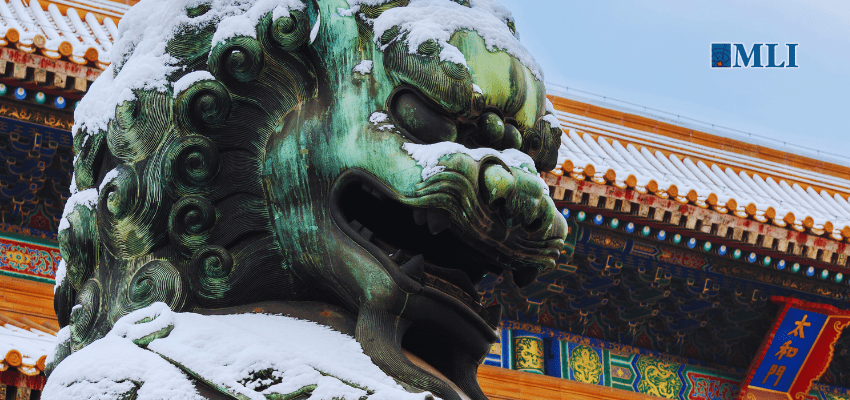
Image via Canva.

This article originally appeared in National Newswatch.

By Stephen Nagy, January 26, 2026

Prime Minister Mark Carney arrived in Davos a hero to the global commentariat. The Canadian leader delivered what many called the speech of the forum—a full-throated defense of multilateralism, middle-power solidarity, and rules-based order. He implicitly rebuked the Trump administration’s unilateralism. He championed a coalition of middle powers standing together against great power bullying. This followed his four day visit to Beijing, where he signed a raft of agreements with President Xi Jinping.

The applause in Davos was rapturous. But in Washington, the response was predictable—and swift. Within days, United States President Trump threatened 100 per cent tariffs on Canadian goods and signaled the potential withdrawal of the United States from the continental trade pact, the United States-Canada-Mexico Agreement (USMCA). For anyone paying attention to Trump’s consistent patterns of behavior, this was not a surprise. Trump is Trump. He has demonstrated himself to be vindictive over and over again. The question that Canadian policymakers should now be asking is uncomfortable but essential: What if Carney is wrong?

Buried within the USMCA is Article 32.10, a provision that effectively requires member countries to notify partners before entering free trade negotiations with a “non-market economy.” China is explicitly such an economy under U.S. trade law. The clause was designed precisely to prevent what Carney just did—using access to the North American market as leverage to court Beijing. Carney’s defenders will argue that Canada signed cooperation agreements, not a free trade deal. They will note that the clause requires notification, not permission. These are lawyerly distinctions that miss the political reality. As outlined in the 2026 National Defense Strategy from the Department of War, the Trump administration views any strategic tilt toward Beijing as a hostile act. Whether Ottawa technically violated USMCA is beside the point. Washington believes it did—and Washington holds the leverage. The irony is acute. The United States itself has adopted significant industrial policies under both the Trump and Biden administrations. The Inflation Reduction Act, CHIPS Act, and targeted tariffs all raise legitimate questions about whether America still qualifies as a pure “market economy.” But superpowers make rules; middle powers follow them. Canada’s position does not afford it the luxury of pointing out American hypocrisy while simultaneously courting America’s primary strategic rival.

Carney’s Davos speech rested on a theory of international relations that sounds appealing but may be dangerously outdated—the idea that middle powers can band together to constrain great power excess, uphold international law, and protect their interests through collective action. The theory has intellectual pedigree. It worked, to a degree, during the liberal international order’s heyday. But that order was underwritten by American power and American willingness to absorb costs on behalf of allies. What Carney’s vision misses is that this world is disappearing. The Lowy Institute’s Asia Power Index offers a sobering corrective to Canadian assumptions about middle power relevance. Among the measured countries, Canada would rank at the lower end of the middle power scale—behind Japan, behind Australia, behind India, behind South Korea. More importantly, the index reveals that many states are rising while traditional middle powers stagnate. Indonesia, Vietnam, Saudi Arabia, and the UAE are building capabilities and influence. Canada’s relative position is in decline. Time for a middle power rethink. The coalition Carney envisions may exist, but Canada’s seat at the table is less secure than Ottawa imagines. And building that coalition by antagonizing your largest trading partner and defense guarantor is a curious strategy.

From Washington’s perspective, allies fall into two categories: assets and liabilities. Assets contribute meaningfully to shared security objectives. They invest in defense, secure their borders, counter foreign interference, and align their economic policies with strategic realities. Liabilities do the opposite. They free-ride on American protection while pursuing independent foreign policies that complicate American strategy. Canada’s recent trajectory places it uncomfortably in the liability column. The Commission on Foreign Interference documented systemic failures in Ottawa’s approach to Chinese political influence operations on Canadian soil. Arctic security remains underfunded despite Russian and Chinese interest in the region. According to the Stockholm International for Peace Research Institute (SIPRI) Canadian defense spending continues to lag NATO commitments. And now, Canada has signaled a strategic opening to Beijing precisely when Washington is mobilizing for intensified strategic competition with China. Japan, Australia, and the Philippines have all responded to the changing security environment by deepening defense cooperation with the United States, increasing military spending, and diversifying supply chains away from China. Canada went to Davos and Beijing. As Kori Schake recently argued in Foreign Affairs, America under Trump is becoming neither feared nor loved—but increasingly seen as unreliable by allies who are learning to hedge. The problem for Canada is that hedging requires capabilities Ottawa does not possess. It requires defense spending Canada has not made. It requires regional partnerships Canada has not built. Carney’s grand strategy assumes Canada can navigate between great powers. But navigation requires a ship, and Canada’s is taking on water.

The deepest flaw in Carney’s approach may be its assumption that courting Beijing offers a genuine alternative. It does not. China’s economic statecraft is well documented. Research from the Central European Institute of Asian Studies demonstrates that Japan’s experience shows even limited commercial disputes with China lead to economic coercion—tourism restrictions, export bans, regulatory harassment. Beijing punishes countries that cross its interests, regardless of whether they supported China previously. Canada is now positioned to receive punishment from both sides. American tariffs are already threatened. USMCA withdrawal would devastate Canadian manufacturing and agriculture. But if Canada retreats from Beijing to appease Washington, it will have gained nothing from the Davos gambit while having demonstrated its unreliability to China. And if Canada presses forward with Chinese engagement, it will eventually find itself subject to Chinese coercion when interests diverge—as they inevitably will over Taiwan, the South China Sea, or technology competition. Ask Japan as it faces Beijing’s disinformation and economic coercion campaign. This was preventable. A more careful Canadian government would have recognized that middle powers thrive by maintaining options without forcing choices. Carney forced a choice—and chose the wrong audience to impress.

None of this means Canada should become an American vassal. National sovereignty matters. Independent foreign policy has value. But strategy requires matching ends to means. Canada cannot credibly pursue an independent path between great powers while underinvesting in defense, failing to address foreign interference, and ignoring the explicit terms of its most important trade agreement. The path back requires humility. It requires acknowledging that Davos applause is not the same as strategic success. It requires recognizing that middle power coalitions are complements to great power relationships, not substitutes for them. And it requires understanding that in an era of superpower competition, geography is destiny—and Canada’s geography places it firmly in America’s orbit, whether Ottawa likes it or not. Mark Carney bet that Canada could chart a new course. The markets are about to render their verdict.


Stephen R. Nagy is professor of politics and international studies at the International Christian University. Concurrently, he holds appointments as a senior fellow and China project lead at the Macdonald-Laurier Institute and a visiting fellow at the Japan Institute for International Affairs. The title of his forthcoming book is “Japan as a Middle Power State: Navigating Ideological and Systemic Divides.”
Source: National Newswatch

Related Posts

Carney’s China gamble — trade diversification is smart — a ‘strategic partnership’ is not: Matthew Bondy in the Western Standard
Foreign Affairs

Carney’s China gamble — trade diversification is smart — a ‘strategic partnership’ is not: Matthew Bondy in the Western Standard

January 26, 2026
Debating creating a Canadian CIA? Never say never, but now is not the time: Martin Green in The Hill Times
National Security

Debating creating a Canadian CIA? Never say never, but now is not the time: Martin Green in The Hill Times

January 26, 2026
B.C.’s fast-track law is stalled before it takes effect: Jerome Gessaroli in the Vancouver Sun
Environment

B.C.’s fast-track law is stalled before it takes effect: Jerome Gessaroli in the Vancouver Sun

January 23, 2026

Newsletter Signup

  Thank you for Signing Up
  Please correct the marked field(s) below.
Email Address  *
1,true,6,Contact Email,2
First Name *
1,true,1,First Name,2
Last Name *
1,true,1,Last Name,2
*
*Required Fields

Follow us on

Macdonald-Laurier Institute

323 Chapel Street, Suite #300
Ottawa, Ontario, K1N 7Z2 Canada

613.482.8327

info@macdonaldlaurier.ca
MLI directory

Support Us

Support the Macdonald-Laurier Institute to help ensure that Canada is one of the best governed countries in the world. Click below to learn more or become a sponsor.

Support Us

  • Inside Policy Magazine
  • Annual Reports
  • Jobs
  • Privacy Policy

© 2023 Macdonald-Laurier Institute. All Rights reserved.

This site uses cookies. By continuing to browse the site you are agreeing to our use of cookies.

Privacy Preference Center

Consent Management

Necessary

Advertising

Analytics

Other

No Result
View All Result
  • Home
  • About
    • Who We Are
    • Who Makes MLI Work
    • Fifteenth Anniversary
  • Experts
    • Experts Directory
    • In Memoriam
  • Issues
    • Domestic Policy
      • Economic Policy
      • Justice
      • Rights and Freedoms
      • Assisted Suicide (MAID)
      • Health Care
      • COVID-19
      • Gender Identity
      • Canada’s Political Tradition
      • AI, Technology and Innovation
      • Media and Telecoms
      • Housing
      • Immigration
      • Agriculture and Agri-Food
      • Competition Policy
    • Energy Policy
      • Energy
      • Environment
    • Foreign Policy
      • Israel-Hamas War
      • Ukraine
      • Taiwan
      • China
      • Europe and Russia
      • Indo-Pacific
      • Middle East and North Africa
      • North America
      • Foreign Interference
      • National Defence
      • National Security
      • Foreign Affairs
    • Indigenous Affairs
  • Projects
    • CNAPS (Center for North American Prosperity and Security)
    • The Promised Land
    • Voices that Inspire: The Macdonald-Laurier Vancouver Speaker Series
    • Dragon at the door
    • Canada on top of the world
    • Letter to a minister
    • Justice Report Card
    • The Great Energy Crisis
    • DisInfoWatch.org
    • Managing Indigenous Prosperity
    • Judicial Foundations
    • Landmark Cases Council
    • Defending The Marketplace of Ideas
    • Reforming the University
    • Past Projects
      • Digital Policy & Connectivity
      • Double Trouble
      • Canada and the Indo-Pacific Initiative
      • The Transatlantic Program
      • COVID Misery Index
      • Speak for Ourselves
      • The Eavesdropping Dragon: Huawei
      • Talkin’ in the Free World with Mariam Memarsadeghi
      • An Intellectual Property Strategy for Canada
      • Munk Senior Fellows
      • A Mandate for Canada
      • Confederation Series
      • Fiscal Reform
      • The Canadian Century project
      • Fixing Canadian health care
      • Internal trade
      • From a mandate for change
      • Size of government in Canada
      • Straight Talk
      • Labour Market Report
      • Leading Economic Indicator
      • Centre for Advancing Canada’s Interests Abroad
      • Indigenous Prosperity at a Crossroads
  • Events
    • Upcoming Events
    • Past Events
      • MLI Dinners
      • Great Canadian Debates
  • Latest News
  • Libraries
    • Columns
    • Commentary
    • Papers
    • Books
    • Video
  • Donate

© 2023 Macdonald-Laurier Institute. All Rights reserved.