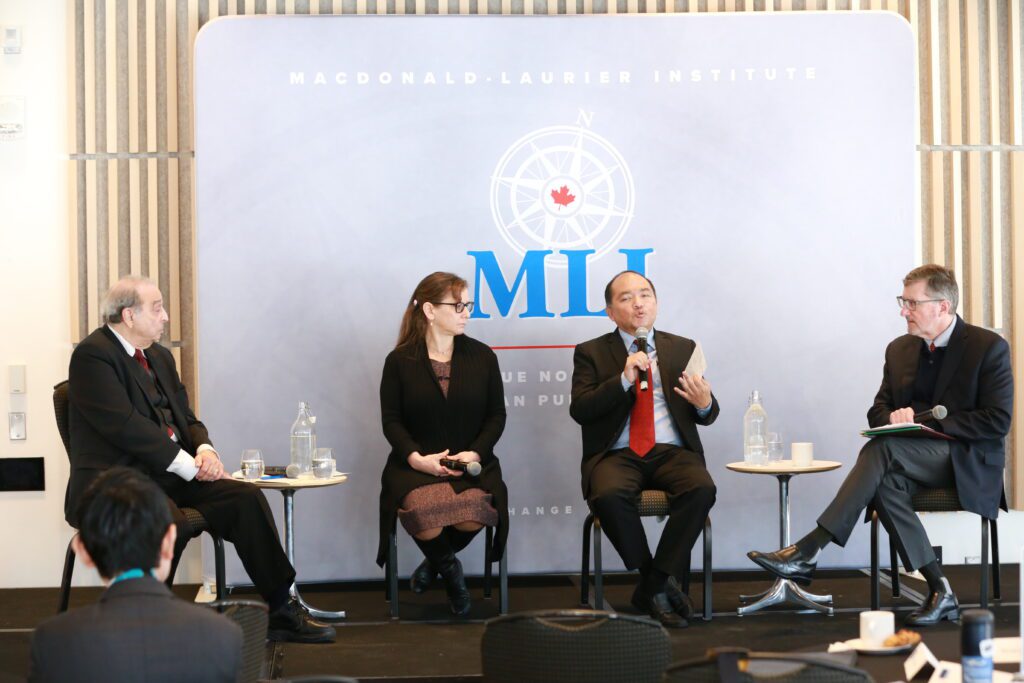
On March 18, 2026, the Macdonald-Laurier Institute, in co-operation with the Embassy of Japan, convened a high-level policy discussion at the National Arts Centre in Ottawa to assess Canada’s Indo-Pacific Strategy. The event brought together senior policymakers, diplomats, and leading experts for a candid exchange on Canada’s role in an increasingly important and contested region.
The discussion opened with introductory remarks from MLI Foreign Policy Director Christopher Coates followed by welcoming remarks from MLI founder Brian Lee Crowley. Crowley emphasized that the Indo-Pacific will be central to shaping the century ahead and raised pressing questions about whether Canada is prepared to meet the moment. He noted that regional partners often view Canada as hesitant to commit for the long-term, underscoring the need for Ottawa to move beyond rhetoric and demonstrate sustained engagement. Crowley also highlighted the growing convergence of security, strategy, and trade, and the vital role middle powers must play in maintaining balance and stability.
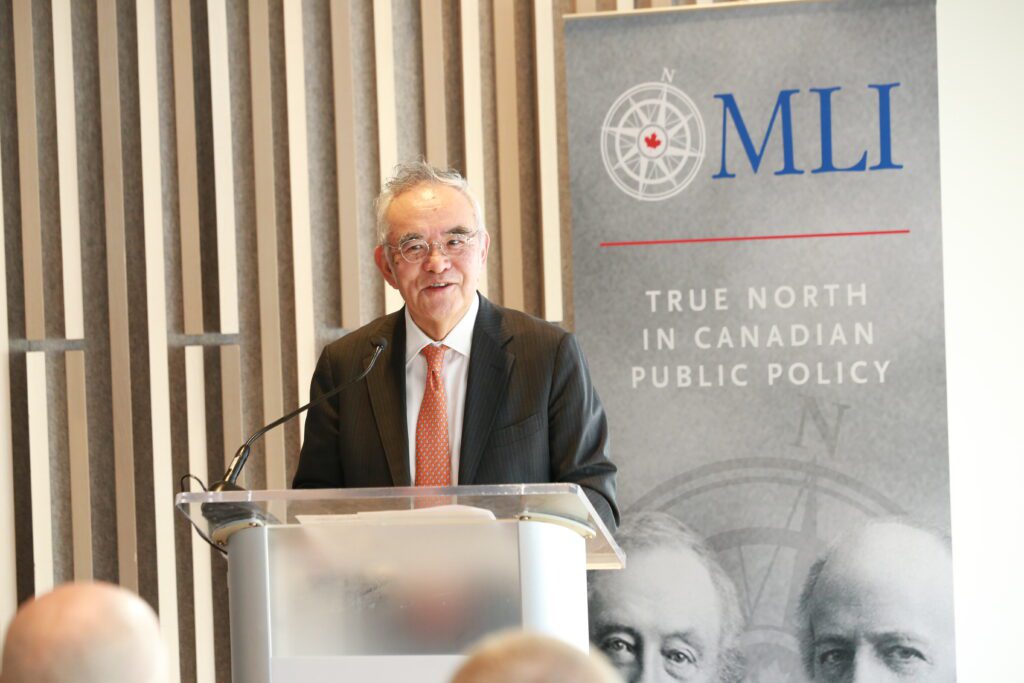
Remarks from Japan’s Ambassador to Canada, Yamanouchi, reinforced the strategic importance of the Canada–Japan relationship. The Ambassador observed that while Canada has historically been Atlantic-facing, its recent engagement, including high-level visits across the Indo-Pacific, signals a shift in priorities. He pointed to deepening economic ties, particularly the integration of the Canadian and Japanese auto sectors, and identified further opportunities for co-operation in liquefied natural gas, critical minerals, and broader energy partnerships.
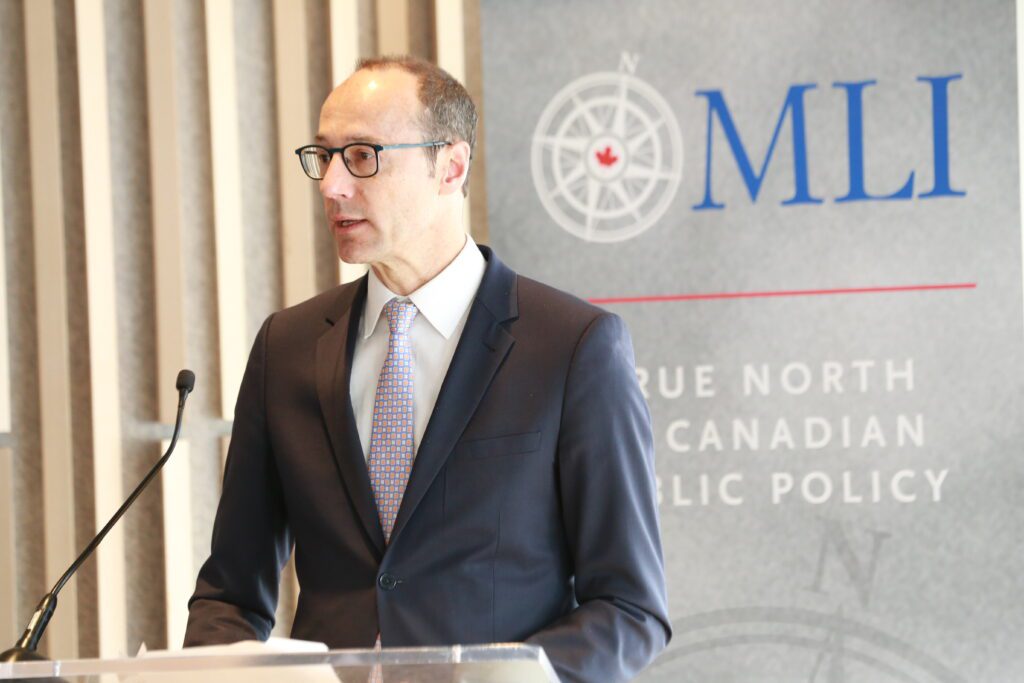
The Ambassador’s remarks were followed by a keynote address by Weldon Epp, Assistant Deputy Minister for Indo-Pacific at Global Affairs Canada. Epp outlined how Canada’s Indo-Pacific Strategy provides a framework for expanded engagement in a region central to global economic growth, and stressed the importance of building the “software” of international co-operation — institutions, norms, and relationships — that enable deeper and more resilient partnerships.
Highlighting recent progress, including strengthened ties with Japan, he argued that Canada must adapt to a new era of economic development in the region by shifting from a model of assistance to one of investment. He also emphasized the need for pragmatic engagement with major regional actors, including India and China, to manage risk while advancing Canadian interests.
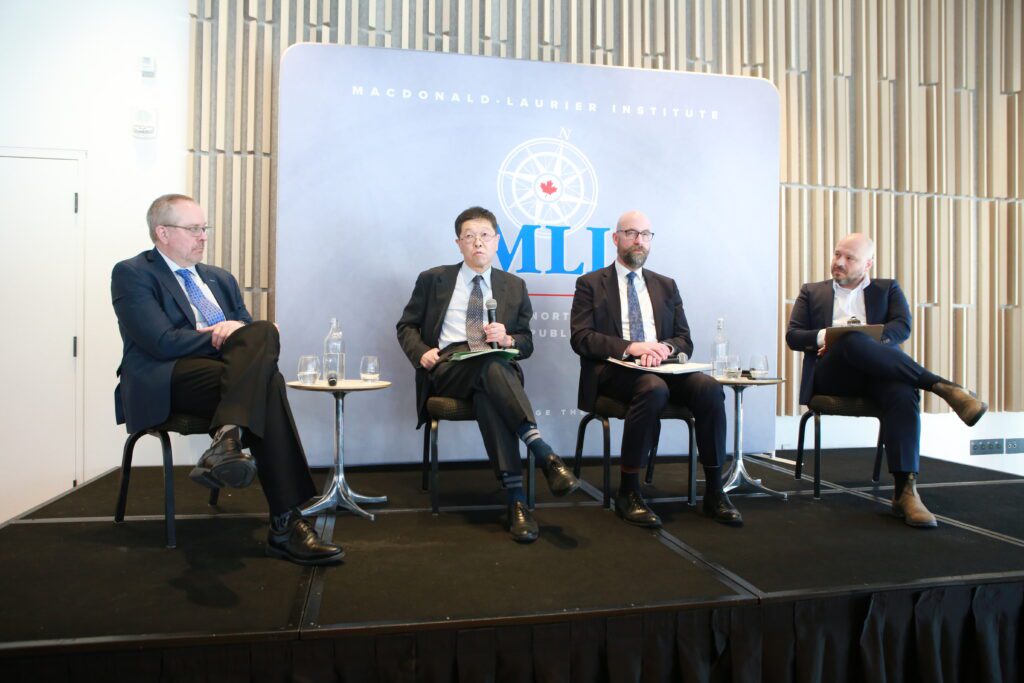
The keynote was followed by two panel discussions: one examining the evolving security landscape in the Indo-Pacific and its implications for Canada’s defence posture and strategic partnerships, and the other focused on defending a rules-based economic order. Across both panels, participants explored how Canada can strengthen regional stability, diversify trade relationships, and play a more consequential role in advancing a free, open, and secure Indo-Pacific.