By Steve MacBeth, August 27, 2025
“In an increasingly dangerous and divided world, Canada must assert its sovereignty. We will rapidly procure new equipment and technology, build our defence industrial capacity, and meet our NATO defence commitment this year. Canada will seize this opportunity with urgency and determination.”
—Prime Minister Mark Carney, June 9, 2025
Sprint from a cold start
Canada is racing to modernize its land forces from a standing start, surging forward before the foundations are firm. This is not a gradual uplift; it is a strategic sprint. The metaphorical scramble is not going to happen on a flat track, but over the broken ground left by decades of piecemeal acquisition and tentative defence policy.
Prime Minister Mark Carney has said Canada is entering “a new era.” This is reflected in Canada’s 2024 defence policy update, Our North, Strong and Free, as well as Ottawa’s specific commitment to meet NATO’s two per cent defence spending target by 2026 and a projected five per cent increase by 2035. Additionally, the recent signing of the European ReArm initiative – also known as ReARM Europe or Readiness 2030 – gives Canada access to the European defence ecosystem.
While Canada’s rhetoric has shifted sharply, its ability to deliver on the prime minister’s vision remains constrained. The Canadian Army lacks foundational capabilities to meet its current alliance commitments, let alone future ambitions. ReArm Europe is ambitious in scale, but its execution remains firmly national, not supranational, and is therefore still constrained by the sovereign procurement bottlenecks that have long plagued European defence cooperation. The program unlocks capital but does not address the temporal challenge of acquisition at scale to meet the advertised threats in the near term.
The Republic of Korea (ROK) enters the frame as the accelerant. Its defence sector offers an integrated model of production. Past procurements by Poland and Australia have proven the ROK defence sector can serve as an effective accelerant for a country like Canada, capable of delivering NATO-compatible firepower within months, not decades. Making an initial shift away from long standing European and US suppliers aims to restore what this article terms strategic acceleration: the urgent restoration of deployable capacity, ensuring that Canada can meet current obligations while preparing for long-term modernization.
 In this context, strategic acceleration reflects a deliberate rebalancing of landpower readiness with policy ambition: closing operational gaps now so that transformation is built from a stable foundation. It denotes a force able to credibly deploy, sustain itself, and contribute to coalition operations without excessive risk or dependence. Strategic acceleration is the restoration of credible deployable landpower ahead of full transformational modernization. It is not about moving fast for its own sake. It is about enabling the Canadian Army to meet near-term mission requirements while initiating its long-term reform.
Why focus on landpower?
“The Canadian Army we have today is not the Canadian Army we need for the future.”
—Lieutenant-General Michael Wright, Commander, Canadian Army, May 13, 2025
Landpower remains central to Canada’s strategic credibility. It is the largest service in the Canadian Armed Forces (CAF), the domain where deterrent presence can be sustained and allies reassured, and the way in which Canada’s contribution to coalition operations is made most tangible.
Submarines and stealth fighters project force and secure Canada’s borders. The ROK offers both capabilities and recent reporting suggests that Korea is a finalist in Canada’s submarine search. These are complex multi-year procurements that necessitate distinct acquisition models. Land forces can be purchased at scale in a matter of months rather than years, and require a mass to take and hold ground in support of sovereignty, demonstrate resolve in support of partners, and overtly absorb risk for the government in a tactile manner that differs from other domains.
This focus is not arbitrary. The character of war has shifted most visibly on land. In Ukraine, ground combat has evolved into a fusion of 20th-century industrial firepower and 21st-century autonomy: precision artillery, unmanned systems, and dispersed formations claim to redefine war while closely resembling the attritional trench battles of the First World War. In the Indo-Pacific, regional militaries are investing in littoral and light forces to operate across archipelagos and degraded communications environments. In the Arctic, the challenges include extreme climate and scarce infrastructure. Only ground forces can establish a persistent presence and respond at scale. In the Middle East, enduring stability missions and partnered operations – such as the CAF’s Operation Amarna – still depend on sustained land presence and logistics reach to surge quickly at scale when required. Across all four potential theatres, the ability to deploy, operate, and sustain ground forces remains the most visible indicator of a country’s seriousness.
Lieutenant-General Mike Wright, commander of the Canadian Army, has repeatedly emphasized that modernization must begin with operational viability. His forthcoming modernization blueprint is expected to echo this principle: that strategic ambition must be built on a credible baseline. He utilizes the nomenclature of “4+1” to highlight his priorities: air defence, precision strike, artillery modernization, and Arctic mobility, plus the necessary digital backbone. He says these elements must be established in order to create the “Army we need for tomorrow.”
The landpower domain is where strategic industrial acceleration is most feasible to meet operational needs. There are recent examples from Allied forces to model. If Canada is to reconstitute military credibility within this decade, it must begin with the Army.
Why not buy local?
Canada’s domestic production is not currently equipped to meet short-term demands. Canada does not have the present defence industrial base to meet the necessary surge, nor the industrial policy frameworks in place to guarantee resilience. It needs time to adapt.
A 2025 Deloitte report serves as an indicator of the requirements to move the Canadian defence supply chain from its present form to a fully integrated and resilient program. The report describes the current supply chain as highly fragmented, leaving it vulnerable to disruption, shocks, and foreign chokepoints. Poor visibility and complex systems mean Ottawa can track its prime contractors but has only a foggy picture of the smaller firms – often offshore – that supply the engines, bearings, circuit boards, and specialty alloys buried two or three layers down the production chain. Because these lower-tier vendors are not routinely audited for capacity, lead times, or financial health, a single parts shortage or factory shutdown can stall an entire platform line without warning.
For Canada’s land-force renewal, such a lack of clarity could be fatal: strategic acceleration depends on reliable, multi-theatre sustainment. However, production cannot be surged or logistics shifted without knowing where the critical sub-components come from, or whether they exist in sufficient volume. Mapping this system or simplifying it is more than an accounting nicety; it is the prerequisite for any realistic plan to restore deployable mass on a compressed timeline. The Department of National Defence (DND) cannot build for the future if it cannot deliver now.
The US is an option, but Carney has been explicit: “Seventy-five cents of every dollar of capital spending for defence goes to the United States. That’s not smart.” This is not about abandoning the US alliance but about diversifying so that Canada is no longer dependent on a single partner for sovereign capability.
Canada’s challenge is twofold: restore baseline landpower capacity immediately and position itself to modernize in the long run through the ReArm initiative. This article proposes a pragmatic method to do both, arguing for an integrated approach in two broad phases. In the first phase, the Canadian government should pursue strategic acceleration by acquiring rapidly deliverable, NATO-compatible platforms from the Republic of Korea to close urgent gaps. Allies like Australia and Poland already field Korean systems. ROK deliverables are combat-proven and backed by globally integrated sustainment. In the second phase, having regained functionality, Canada can move to deep modernization through ReArm and European defence-industrial integration. The ROK model does not displace long-term recapitalization; it enables it. The ROK offers a bridge from operational deficit to force development.
This approach not only serves defence policy but also intersects with Canada’s trade strategy and diplomatic posture. The Canada–Korea Free Trade Agreement (CKFTA ), the 2022 Indo-Pacific Strategy, and Our North, Strong and Free each point toward diversified partnerships and regional resilience. The Republic of Korea provides exactly that: a sovereign partner with compatible systems, global supply chain reach, and a proven track record of joint development. In this way, strategic acceleration supports the very architecture of Carney’s new defence era; fusing foreign policy, economic sovereignty, and operational readiness into a coherent pathway.
Strategic direction is set
After decades of procurement inertia and hollow-force conditions, Canada has committed to a defence reawakening. The release of Our North, Strong and Free, and the design of the forthcoming ReArm framework signal a renewed ambition. Finance Minister François-Philippe Champagne has stated that defence renewal must “support Canadian industry” and “autonomy,” while Defence Minister David McGuinty has positioned ReArm as a catalyst to “strengthen [Canadian] sovereignty.”
These are not abstract statements. Budget 2025 is expected to begin the process of generational renewal. The political will to reach NATO’s two per cent target by 2026 appears to be aligned not only with the ruling party but also across the floor of Parliament.
However, political ambition and fielded capability remain out of sync. Wright, the Canadian Army commander, has publicly stated, “There are capabilities which NATO has assigned to us which we currently don’t have the ability to fulfil.”
These include core functions like air defence, long-range fires, ISR integration, and deployable sustainment – all of which are required in every theatre in which Canada is engaged. Without them, the Army is structurally unprepared for peer or near-peer operations. This operational fragility demands immediate intervention. That’s why strategic acceleration is the prerequisite for transformation, and the baseline from which Canada must modernize.
Catalyzing recovery: From ambition to function
Strategic acceleration is more than a phrase – it is a diagnosis. Canada’s Army is not ready for sustained operations across its four primary theatres. In the Arctic, mobility, logistics and long range fires are insufficient. In the Indo-Pacific, no scalable, resourced light force concept exists. In Europe, legacy platforms cannot integrate with NATO C5ISRT (Command, Control, Communications, Computers, Cyber, Intelligence, Surveillance, Reconnaissance and Targeting). In the Middle East, long-range sustainment platforms are not fielded.

These are not abstract requirements – they are foundational. Canada cannot rely on ReArm alone to eventually fix them. That program is inherently long-cycle. More critically, Canada cannot build its force around innovation until it re-establishes functionality. Fires, mobility, sustainment, and brigade-level interoperability must be restored. As Lt. Gen. Wright has underscored, this is not just about untested high-tech transformation but about a credible, usable force. Strategic acceleration begins by meeting that minimum bar. Only then can what has been visualized occur.
Korea’s defence model: a bridge, not a detour
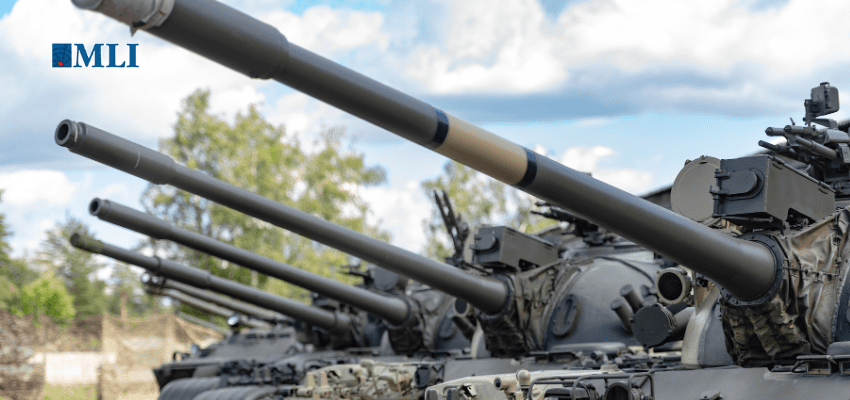
The Republic of Korea offers a model of field-ready, coalition-compatible platforms backed by robust logistics. It is more than equipment – it provides a defence-industrial ecosystem capable of supporting operations across Canada’s four strategic theatres. Its products – like the K9 Thunder artillery system, K239 Chunmoo rocket system, and Redback infantry fighting vehicle – are not theoretical. Close Canadian allies already deploy them. Korean systems meet NATO Standard Agreement criteria, and are being produced at scale.
Importantly, the Korean model includes not just kit, but integrated sustainment hubs and co-development options. For example, Hanwha Aerospace maintains regional support nodes across the Middle East, North, Central Europe, and the Indo-Pacific, giving it a logistical footprint that can support Canada’s missions across all four strategic theatres. Canada’s Arctic requirements, while unique, align with Korea’s proven adaptability: the cold-weather-adapted K2 Black Panther variant, developed for Poland, is optimized for sub-zero operations and low-infrastructure environments, relevant to Canadian northern conditions. In the Indo-Pacific, Korean platforms are interchangeable with US and Australian systems and have participated in exercises such as Talisman Sabre. In the Middle East, Hanwha platforms operate in the Gulf under high-temperature conditions, with existing support infrastructure in place.
Canada does not need to build a sustainment web from scratch because ROK platforms are already supported in the regions where Canada operates. This provides more than operational utility. It offers an immediate supply chain backbone – one that’s de-risked and deployable. South Korea offers not only platforms but a force-multiplying industrial partner.
Additionally, this model supports the diversification of Canada’s defence-industrial partnerships – an increasingly important policy objective as Ottawa looks to reduce overreliance on US suppliers. The Republic of Korea thus becomes a bridge between Canada’s army reconstitution and its broader foreign policy and trade diversification goals. Korea’s industrial strategy treats defence exports as instruments of diplomatic alignment. Canada’s 2022 Indo-Pacific Strategy further strengthens this policy fit by prioritizing regional military presence, resilience, and reduced dependence on US infrastructure. Adoption of this framework would enable Canada to integrate into existing operational scaffolding without delay or the need for custom adaptations to meet unique CAF needs. The move would strengthen the Republic of Korea’s alignment with its fellow Indo-Pacific Four partners: Japan, Australia, and New Zealand. It would also boost Canada’s strategic autonomy.
Allied data points: The Polish and Australian cases
Poland’s partnership with Korea is a model of volume, velocity, and sovereignty. Since 2022, Poland has committed to one of the most significant land recapitalization efforts in NATO, signing contracts worth over $22 billion CAD with South Korea for over 1,000 K2 tanks, 672 K9 howitzers, and 200 K239 Chunmoo long-range missile systems. The deals include co-production rights to all of these systems, increasing national resilience and developing national industrial capacity.
In the words of Poland’s now former defence minister Mariusz Błaszczak, “This sends a very powerful message about Poland’s defence capabilities.”
“By equipping the Polish army with modern weapons, we are deterring the aggressor and strengthening the security of our homeland,” said Błaszczak, adding that South Korea “also represents a big opportunity for the Polish defence industry, which will co-produce, and then produce, this equipment, not only for the Polish army, but also for foreign customers.”
The first K2 and K9 units were delivered within months, anchoring a rapid reconstitution of Poland’s land force posture. Crucially, these systems were integrated into Poland’s national defence industry, with local assembly and training hubs.
Australia has pursued a similarly calibrated partnership which offers a practical analogue for Canada’s own defence strategy. In 2021, the Australian government entered into a contract valued at approximately AU$1 billion (approximately US$65 million) with Hanwha Defence Australia to procure 30 AS9 Huntsman K9 self‑propelled howitzers and 15 AS10 ammunition resupply vehicles to be built at its new Geelong facility. Lower‑level investment into the Geelong plant – valued around AU$170 million – alongside the wider Land 400 Phase 3 program ultimately secured a contract worth roughly AU$5-7 billion (US$3.4-4.7 billion) to manufacture 129 Redback IFVs domestically. This reflects Australia’s strategic effort to synchronize equipment procurement with industrial sovereignty and regional operational relevance.
Australia’s selection criteria offered compelling parallels to what Canada might require. The AS9 Huntsman – based on the K9 – features automated loading, digital battle management systems, armoured protection, and deep sustainment compatibility. Then-Australian prime minister Scott Morrison said, “By reviving this project, we will deliver the Army the capability it needs. By building it in Australia, we will create up to 350 jobs as part of growing our defence industry across the nation.”
Meanwhile, the Redback Infantry Fighting vehicle was chosen for its ability to provide protected mobility, a lethal 30 mm main gun, Spike anti-tank missiles, and an extensive communications architecture essential for distributed and joint fire operations.
All of this is tailored to the operational realities of Australia’s Indo-Pacific posture. The combined appeal of capability and co-development was decisive: Australia gained a hardened, combat-ready fleet while anchoring a sovereign industrial base within its territory. Hanwha delivered a mature package tailored to climatic and theatre-specific requirements, with the factory in Geelong slated to support regional sustainment and global supply chain integration. The Geelong plant will serve as a regional sustainment and export hub, anchoring both readiness and sovereignty.
These are not abstract test cases. Poland and Australia are both allies of Canada and have accelerated their landpower renewal by partnering with Korea. These models can inform Canada’s own strategy: restoration of capability and protection of national interest are not mutually exclusive. South Korea offers both.
Integrated sustainment and theatre readiness
Korea’s utility is not limited to what it builds, but how and where it builds. Hanwha and Hyundai Rotem operate within a globally distributed defence-industrial network that includes active partnerships and production nodes in Poland, Romania, Norway, the United Arab Emirates (UAE), and Australia. This network creates an integrated supply web already operating across the four theatres where Canada expects to deploy.
Norway’s adoption of the K9A1 Thunder self-propelled artillery platform is especially relevant to Canada’s northern strategy. The K9 has been validated in Arctic conditions, and the Norwegian Army’s cold-weather experience with the platform demonstrates its suitability for sustained northern operations. Poland’s extensive co-production agreements and Romania’s integration partnerships add further depth to the European dimension. The UAE’s regional maintenance facilities and Korea’s national production lines – combined with Australia’s domestic Redback production – expand this web to the Middle East and Indo-Pacific respectively.
Taken together, this network is not a theoretical promise but a functioning, resilient support lattice already linked to Canada’s closest partners. By plugging into this web, Canada gains reliable parts access, regional sustainment capacity, and multi-theatre responsiveness – all of which are critical enablers of strategic acceleration. A central value of the Korean model lies in its global logistics infrastructure, already positioned to support Canada’s engagement across all four theatres, should Canada choose to develop the necessary linkages to leverage this advantage. The UAE and Saudi Arabia support sustainment in the Middle East. Poland, Romania, and the Baltics offer coverage in NATO’s eastern flank. Australia’s Hanwha plant will support operations in the Indo-Pacific. Cold-weather variants such as the K2PL demonstrate utility in the Arctic. Unlike single-source supply chains, this model is already geographically diversified, creating a web of support that is pre-established, regionally tailored, and sovereign-compatible.
Canada can plug into this network immediately, without the risk or delay of domestic ramp-up. Such an approach would not only restore functionality, it would reinforce alliance credibility and protect against global supply shocks.
From recovery to renewal: The role of ReArm
Once Canada restores baseline capability, it can move forward with full-spectrum modernization. ReArm provides the framework for European industrial integration, doctrinal modernization, and long-cycle acquisition. But it cannot be the starting point. Without near-term delivery, ReArm risks becoming a policy promise untethered from operational reality.
While ReArm aims to provide access to a $1.25-trillion ReArm Europe program via Secure Action for Europe (SAFE) loans, its design remains nationally oriented, not operationally unified. SAFE funds are loans rather than grants, and member states retain control over procurement decisions. This can result in delays in actual delivery. It limits EU efficacy as a stand-alone supplier of alliance-grade combat power.
Strategic acceleration through Korean platforms ensures that ReArm begins from a position of strength. The sequence matters. Capability first, doctrine second. Delivery now, design next. Korean platforms are not a substitute for European integration but a springboard toward it.
Delivering the ‘new era’
Canada has made the strategic decision to reinvest in its military. However, if Canada is to move from the “Army we have” to the “Army we need,” as Lieutenant-General Michael Wright describes, readiness cannot be deferred to long-term plans alone.
Reinvestment is insufficient without near-term delivery. Capability must align with a sense of operational urgency, in line with policy, fiscal direction, and alliance credibility. The Republic of Korea offers a model that fits: tested platforms, fast timelines, global sustainment, and partnership rather than procurement.
As Poland and Australia have shown, this is not about bypassing transformation. It’s about enabling it. The ROK investments have not merely been stopgaps for those nations, they are accelerants to transformation. The Canada–Korea Free Trade Agreement (CKFTA) further strengthens the relationship, which offers an existing legal and economic foundation for joint production, procurement, and scalable integration of defence supply chains. Importantly, this approach also aligns across government: it advances landpower recovery, leverages existing trade architecture, and deepens regional partnerships consistent with Canada’s Indo-Pacific Strategy. It sits at the strategic intersection of defence, economic, and foreign policy: an integrated solution to a multidimensional problem. The CKFTA and Canada’s Indo-Pacific Strategy provide the policy scaffolding. The geopolitical moment demands urgency. The industrial tools already exist.
Strategic acceleration for Canadian landpower is possible. But it requires a catalyst: one that signals something different in the approach, acknowledging the requirement for long-term change while simultaneously recognizing the need for an urgent solution to address the potentially catastrophic shortfalls should the Canadian Army be required to defend the country’s interests in one of its four primary theatres in the near future. By adopting a calibrated, pragmatic, theatre-informed approach – one that begins with proven, rapidly deliverable systems from the Republic of Korea, and evolves toward deeper integration with Europe through ReArm – Canada can restore the Army’s operational baseline, reinforce its sovereign defence industrial posture, and align military renewal with the broader imperatives of foreign policy, economic diversification, and strategic autonomy. The option to strategically accelerate through the ROK offers a pathway anchored in capability, enabled by policy, and driven by shared interest.
Prime Minister Carney’s vision of a “new era” must be matched with delivery. Korean systems – which are combat-tested, rapidly fielded, and globally sustained – offer the catalyst. They do not replace Canada’s long-term aspirations for ReArm; they enable them. By building from a position of restored function, Canada can align ambition with action, vision with viability.
Steve MacBeth is a PhD Candidate in security studies at Massey University in New Zealand, and a contributor for the Macdonald-Laurier Institute. The views expressed are those of the author and do not represent the position of any organization.