Thursday, January 22, 2026
No Result
View All Result
  • Media
Macdonald-Laurier Institute
  • Home
  • About
    • Who We Are
    • Who Makes MLI Work
    • Fifteenth Anniversary
  • Experts
    • Experts Directory
    • In Memoriam
  • Issues
    • Domestic Policy
      • Economic Policy
      • Justice
      • Rights and Freedoms
      • Assisted Suicide (MAID)
      • Health Care
      • COVID-19
      • Gender Identity
      • Canada’s Political Tradition
      • AI, Technology and Innovation
      • Media and Telecoms
      • Housing
      • Immigration
      • Agriculture and Agri-Food
      • Competition Policy
    • Energy Policy
      • Energy
      • Environment
    • Foreign Policy
      • Israel-Hamas War
      • Ukraine
      • Taiwan
      • China
      • Europe and Russia
      • Indo-Pacific
      • Middle East and North Africa
      • North America
      • Foreign Interference
      • National Defence
      • National Security
      • Foreign Affairs
    • Indigenous Affairs
  • Projects
    • CNAPS (Center for North American Prosperity and Security)
    • The Promised Land
    • Voices that Inspire: The Macdonald-Laurier Vancouver Speaker Series
    • Dragon at the door
    • Canada on top of the world
    • Letter to a minister
    • Justice Report Card
    • The Great Energy Crisis
    • DisInfoWatch.org
    • Managing Indigenous Prosperity
    • Judicial Foundations
    • Landmark Cases Council
    • Defending The Marketplace of Ideas
    • Reforming the University
    • Past Projects
      • Digital Policy & Connectivity
      • Double Trouble
      • Canada and the Indo-Pacific Initiative
      • The Transatlantic Program
      • COVID Misery Index
        • Provincial COVID Misery Index
        • Beyond Lockdown
        • COVID and after: A mandate for recovery
      • Speak for Ourselves
      • The Eavesdropping Dragon: Huawei
      • Talkin’ in the Free World with Mariam Memarsadeghi
      • An Intellectual Property Strategy for Canada
      • Munk Senior Fellows
      • A Mandate for Canada
      • Confederation Series
      • Fiscal Reform
      • The Canadian Century project
      • Fixing Canadian health care
      • Internal trade
      • From a mandate for change
      • Size of government in Canada
      • Straight Talk
      • Labour Market Report
      • Leading Economic Indicator
      • Centre for Advancing Canada’s Interests Abroad
      • Indigenous Prosperity at a Crossroads
        • Aboriginal Canada and Natural Resources
  • Events
    • Upcoming Events
    • Past Events
      • MLI Dinners
      • Great Canadian Debates
  • Latest News
  • Libraries
    • Columns
    • Commentary
    • Papers
    • Books
    • Video
  • Donate
  • Home
  • About
    • Who We Are
    • Who Makes MLI Work
    • Fifteenth Anniversary
  • Experts
    • Experts Directory
    • In Memoriam
  • Issues
    • Domestic Policy
      • Economic Policy
      • Justice
      • Rights and Freedoms
      • Assisted Suicide (MAID)
      • Health Care
      • COVID-19
      • Gender Identity
      • Canada’s Political Tradition
      • AI, Technology and Innovation
      • Media and Telecoms
      • Housing
      • Immigration
      • Agriculture and Agri-Food
      • Competition Policy
    • Energy Policy
      • Energy
      • Environment
    • Foreign Policy
      • Israel-Hamas War
      • Ukraine
      • Taiwan
      • China
      • Europe and Russia
      • Indo-Pacific
      • Middle East and North Africa
      • North America
      • Foreign Interference
      • National Defence
      • National Security
      • Foreign Affairs
    • Indigenous Affairs
  • Projects
    • CNAPS (Center for North American Prosperity and Security)
    • The Promised Land
    • Voices that Inspire: The Macdonald-Laurier Vancouver Speaker Series
    • Dragon at the door
    • Canada on top of the world
    • Letter to a minister
    • Justice Report Card
    • The Great Energy Crisis
    • DisInfoWatch.org
    • Managing Indigenous Prosperity
    • Judicial Foundations
    • Landmark Cases Council
    • Defending The Marketplace of Ideas
    • Reforming the University
    • Past Projects
      • Digital Policy & Connectivity
      • Double Trouble
      • Canada and the Indo-Pacific Initiative
      • The Transatlantic Program
      • COVID Misery Index
        • Provincial COVID Misery Index
        • Beyond Lockdown
        • COVID and after: A mandate for recovery
      • Speak for Ourselves
      • The Eavesdropping Dragon: Huawei
      • Talkin’ in the Free World with Mariam Memarsadeghi
      • An Intellectual Property Strategy for Canada
      • Munk Senior Fellows
      • A Mandate for Canada
      • Confederation Series
      • Fiscal Reform
      • The Canadian Century project
      • Fixing Canadian health care
      • Internal trade
      • From a mandate for change
      • Size of government in Canada
      • Straight Talk
      • Labour Market Report
      • Leading Economic Indicator
      • Centre for Advancing Canada’s Interests Abroad
      • Indigenous Prosperity at a Crossroads
        • Aboriginal Canada and Natural Resources
  • Events
    • Upcoming Events
    • Past Events
      • MLI Dinners
      • Great Canadian Debates
  • Latest News
  • Libraries
    • Columns
    • Commentary
    • Papers
    • Books
    • Video
  • Donate
No Result
View All Result
Macdonald-Laurier Institute

Liberal environmentalism was always a luxury belief for well-off progressives: Anthony De Luca-Baratta in the National Post

Climate change only mattered when there was little else to worry about.

January 6, 2026
in Environment, Energy Policy, Latest News, Columns, In the Media
Reading Time: 9 mins read
A A
Liberal environmentalism was always a luxury belief for well-off progressives: Anthony De Luca-Baratta in the National Post

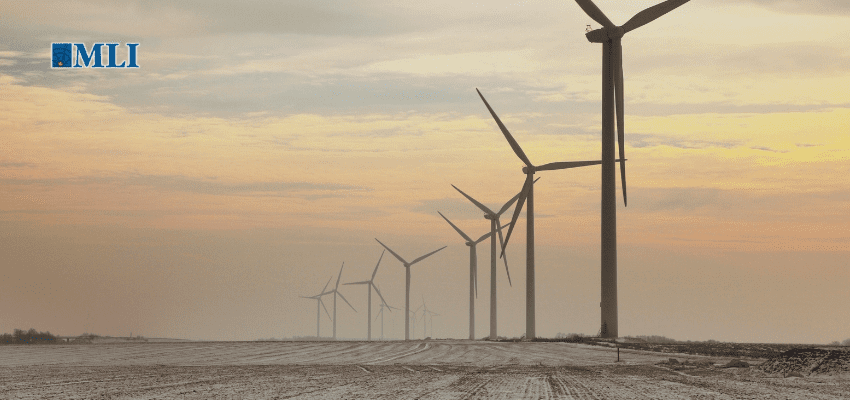
Image via Canva.

This article originally appeared in the National Post.

By Anthony De Luca-Baratta, January 6, 2025

In 2019, the American writer Rob Henderson coined the term “luxury belief” to refer to “ideas and opinions that confer status on the rich at very little cost, while taking a toll on the lower class.” In slightly altered form, this concept neatly captures the past decade of environmental activism in Canada. Progressives resolutely opposed the fossil fuel industry to the detriment of workers in parts of the country who depend on it for their livelihoods. But as the recent energy deal between Prime Minister Mark Carney and Alberta Premier Danielle Smith shows, an increasing number of Canadians are abandoning this luxury belief.

According to a recent Angus Reid poll, 60 per cent of Canadians support the construction of an Alberta-British Columbia pipeline under the agreement, including 53 per cent in B.C. and 50 per cent in environmentalist Quebec. A decade ago, only 37 per cent of B.C. residents supported the proposed Northern Gateway pipeline, which would have carried crude oil from northern Alberta to the northern B.C. coast. Similarly, according to a 2015 poll, 57 per cent of Quebecers opposed the proposed Energy East pipeline, which would have linked the Albertan oil sands to Quebec’s East coast.

Contrast this clear opposition to the recent Angus Reid poll and other similar findings, and a large-scale shift in public opinion seems undeniable. In February 2025, at the height of trade tensions with the United States, 59 per cent of Quebecers reported wanting to revive Energy East. Large majorities in every province agreed that Canada needed oil and gas pipelines from sea to sea, ranging from a low of 74 per cent in Quebec to a high of 89 per cent in Alberta. So what changed?

The truth is that Canadians could afford to pursue abstract environmental goals when things were going relatively well. The glow of green virtue was enticing when housing was relatively affordable, inflation was a non-issue, and the Canadian middle class was, as the New York Times suggested in April 2014, the most affluent on the planet.

To read that New York Times story today is to rediscover an alien world. If you can believe it — and many young Canadians surely won’t — median income in Canada was once higher than median income in the United States. It was once possible to view relatively high home values as a boon to the middle class because people still believed that owning a house was a realistic near-term possibility for most people. The ability to pay for “mobile-phone plans” apparently topped Canadians’ list of economic concerns.

Enter Justin Trudeau, the handsome harbinger of a sunnier, greener Canada. Riding the coattails of a decade of responsible economic management, Trudeau told us that we could legislate our way to a clean energy utopia without threatening the economic dynamism that underpinned Canadian prosperity. And we believed him.

One long, painful decade later, we no longer do. Today, median income in Canada has fallen below that of the United States while our tax burden remains much higher. Many young people might never own a home. Business investment and per capita income are increasingly lagging the rest of the developed world.

To be sure, Trudeau is not solely responsible for these woes. But he did the country grave harm by ignoring basic principles that any Economics 101 student could have taught him. For instance, making business more costly results in less business. The fact that this was not always obvious is a tad depressing, but alas, Trudeau’s government introduced a slew of regulations — many of them in the name of fighting climate change — that made it much more difficult to build major infrastructure projects. Business executives have consistently reported that such rules increased costs and uncertainty, making them reluctant to invest in Canada, especially in the resource sector.

Now add skyrocketing housing and grocery prices and a trade war with the United States, and it is little surprise that Canadians are abandoning Trudeau’s environmental ship in droves. It turns out we were never a country with a strong ideological commitment to the “green economy.” Rather, we were a country with so little to worry about that activism for a fashionable cause seemed like as worthy a way as any to feel good about ourselves, even if it came at a high cost to many of our fellow citizens.

That moment is over. Targets set by suits in Paris mean little when the strong economy we took for granted is a distant memory and our most important trading partner is threatening a painful divorce. A full 16 per cent of Canadian GDP and 1.8 million jobs depend on the resource sector. We are simply not willing to pretend this reality away anymore. Canadians are thinking pragmatically because we can no longer afford not to.


Anthony De Luca-Baratta is a contributor to the Center for North American Prosperity and Security, a project of the Macdonald-Laurier Institute, and a Young Voices Senior Contributor based in Montreal. He holds a master’s degree in international relations from the Johns Hopkins School of Advanced International Studies in Washington, D.C.

Source: National Post
Tags: Anthony De Luca-Baratta

Related Posts

Flashpoints reshaping global power – Venezuela and Iran: Joe Varner on the Brian Crombie Hour
Foreign Affairs

Flashpoints reshaping global power – Venezuela and Iran: Joe Varner on the Brian Crombie Hour

January 21, 2026
Judging the provinces – Charter interpretation and the erosion of provincial autonomy: Dave Snow and Mark Harding
Justice

Judging the provinces – Charter interpretation and the erosion of provincial autonomy: Dave Snow and Mark Harding

January 21, 2026
Canada China relations.
China: The dragon at the door

Praising Beijing’s ‘new world order’ a costly misstep for Carney — and Canada: Joe Varner in the National Post

January 20, 2026
Next Post
Trump’s Venezuela coup, Taiwan and lessons for China: Stephen Nagy in the Japan Times

Trump’s Venezuela coup, Taiwan and lessons for China: Stephen Nagy in the Japan Times

Newsletter Signup

  Thank you for Signing Up
  Please correct the marked field(s) below.
Email Address  *
1,true,6,Contact Email,2
First Name *
1,true,1,First Name,2
Last Name *
1,true,1,Last Name,2
*
*Required Fields

Follow us on

Macdonald-Laurier Institute

323 Chapel Street, Suite #300
Ottawa, Ontario, K1N 7Z2 Canada

613.482.8327

info@macdonaldlaurier.ca
MLI directory

Support Us

Support the Macdonald-Laurier Institute to help ensure that Canada is one of the best governed countries in the world. Click below to learn more or become a sponsor.

Support Us

  • Inside Policy Magazine
  • Annual Reports
  • Jobs
  • Privacy Policy

© 2023 Macdonald-Laurier Institute. All Rights reserved.

No Result
View All Result
  • Home
  • About
    • Who We Are
    • Who Makes MLI Work
    • Fifteenth Anniversary
  • Experts
    • Experts Directory
    • In Memoriam
  • Issues
    • Domestic Policy
      • Economic Policy
      • Justice
      • Rights and Freedoms
      • Assisted Suicide (MAID)
      • Health Care
      • COVID-19
      • Gender Identity
      • Canada’s Political Tradition
      • AI, Technology and Innovation
      • Media and Telecoms
      • Housing
      • Immigration
      • Agriculture and Agri-Food
      • Competition Policy
    • Energy Policy
      • Energy
      • Environment
    • Foreign Policy
      • Israel-Hamas War
      • Ukraine
      • Taiwan
      • China
      • Europe and Russia
      • Indo-Pacific
      • Middle East and North Africa
      • North America
      • Foreign Interference
      • National Defence
      • National Security
      • Foreign Affairs
    • Indigenous Affairs
  • Projects
    • CNAPS (Center for North American Prosperity and Security)
    • The Promised Land
    • Voices that Inspire: The Macdonald-Laurier Vancouver Speaker Series
    • Dragon at the door
    • Canada on top of the world
    • Letter to a minister
    • Justice Report Card
    • The Great Energy Crisis
    • DisInfoWatch.org
    • Managing Indigenous Prosperity
    • Judicial Foundations
    • Landmark Cases Council
    • Defending The Marketplace of Ideas
    • Reforming the University
    • Past Projects
      • Digital Policy & Connectivity
      • Double Trouble
      • Canada and the Indo-Pacific Initiative
      • The Transatlantic Program
      • COVID Misery Index
      • Speak for Ourselves
      • The Eavesdropping Dragon: Huawei
      • Talkin’ in the Free World with Mariam Memarsadeghi
      • An Intellectual Property Strategy for Canada
      • Munk Senior Fellows
      • A Mandate for Canada
      • Confederation Series
      • Fiscal Reform
      • The Canadian Century project
      • Fixing Canadian health care
      • Internal trade
      • From a mandate for change
      • Size of government in Canada
      • Straight Talk
      • Labour Market Report
      • Leading Economic Indicator
      • Centre for Advancing Canada’s Interests Abroad
      • Indigenous Prosperity at a Crossroads
  • Events
    • Upcoming Events
    • Past Events
      • MLI Dinners
      • Great Canadian Debates
  • Latest News
  • Libraries
    • Columns
    • Commentary
    • Papers
    • Books
    • Video
  • Donate

© 2023 Macdonald-Laurier Institute. All Rights reserved.