Wednesday, February 4, 2026
No Result
View All Result
  • Media
Macdonald-Laurier Institute
  • Home
  • About
    • Who We Are
    • Who Makes MLI Work
    • Fifteenth Anniversary
  • Experts
    • Experts Directory
    • In Memoriam
  • Issues
    • Domestic Policy
      • Economic Policy
      • Justice
      • Rights and Freedoms
      • Assisted Suicide (MAID)
      • Health Care
      • COVID-19
      • Gender Identity
      • Canada’s Political Tradition
      • AI, Technology and Innovation
      • Media and Telecoms
      • Housing
      • Immigration
      • Agriculture and Agri-Food
      • Competition Policy
    • Energy Policy
      • Energy
      • Environment
    • Foreign Policy
      • Israel-Hamas War
      • Ukraine
      • Taiwan
      • China
      • Europe and Russia
      • Indo-Pacific
      • Middle East and North Africa
      • North America
      • Foreign Interference
      • National Defence
      • National Security
      • Foreign Affairs
    • Indigenous Affairs
  • Projects
    • CNAPS (Center for North American Prosperity and Security)
    • The Promised Land
    • Voices that Inspire: The Macdonald-Laurier Vancouver Speaker Series
    • Dragon at the door
    • Canada on top of the world
    • Letter to a minister
    • Justice Report Card
    • The Great Energy Crisis
    • DisInfoWatch.org
    • Managing Indigenous Prosperity
    • Judicial Foundations
    • Landmark Cases Council
    • Defending The Marketplace of Ideas
    • Reforming the University
    • Past Projects
      • Digital Policy & Connectivity
      • Double Trouble
      • Canada and the Indo-Pacific Initiative
      • The Transatlantic Program
      • COVID Misery Index
        • Provincial COVID Misery Index
        • Beyond Lockdown
        • COVID and after: A mandate for recovery
      • Speak for Ourselves
      • The Eavesdropping Dragon: Huawei
      • Talkin’ in the Free World with Mariam Memarsadeghi
      • An Intellectual Property Strategy for Canada
      • Munk Senior Fellows
      • A Mandate for Canada
      • Confederation Series
      • Fiscal Reform
      • The Canadian Century project
      • Fixing Canadian health care
      • Internal trade
      • From a mandate for change
      • Size of government in Canada
      • Straight Talk
      • Labour Market Report
      • Leading Economic Indicator
      • Centre for Advancing Canada’s Interests Abroad
      • Indigenous Prosperity at a Crossroads
        • Aboriginal Canada and Natural Resources
  • Events
    • Upcoming Events
    • Past Events
      • MLI Dinners
      • Great Canadian Debates
  • Latest News
  • Libraries
    • Columns
    • Commentary
    • Papers
    • Books
    • Video
  • Donate
  • Home
  • About
    • Who We Are
    • Who Makes MLI Work
    • Fifteenth Anniversary
  • Experts
    • Experts Directory
    • In Memoriam
  • Issues
    • Domestic Policy
      • Economic Policy
      • Justice
      • Rights and Freedoms
      • Assisted Suicide (MAID)
      • Health Care
      • COVID-19
      • Gender Identity
      • Canada’s Political Tradition
      • AI, Technology and Innovation
      • Media and Telecoms
      • Housing
      • Immigration
      • Agriculture and Agri-Food
      • Competition Policy
    • Energy Policy
      • Energy
      • Environment
    • Foreign Policy
      • Israel-Hamas War
      • Ukraine
      • Taiwan
      • China
      • Europe and Russia
      • Indo-Pacific
      • Middle East and North Africa
      • North America
      • Foreign Interference
      • National Defence
      • National Security
      • Foreign Affairs
    • Indigenous Affairs
  • Projects
    • CNAPS (Center for North American Prosperity and Security)
    • The Promised Land
    • Voices that Inspire: The Macdonald-Laurier Vancouver Speaker Series
    • Dragon at the door
    • Canada on top of the world
    • Letter to a minister
    • Justice Report Card
    • The Great Energy Crisis
    • DisInfoWatch.org
    • Managing Indigenous Prosperity
    • Judicial Foundations
    • Landmark Cases Council
    • Defending The Marketplace of Ideas
    • Reforming the University
    • Past Projects
      • Digital Policy & Connectivity
      • Double Trouble
      • Canada and the Indo-Pacific Initiative
      • The Transatlantic Program
      • COVID Misery Index
        • Provincial COVID Misery Index
        • Beyond Lockdown
        • COVID and after: A mandate for recovery
      • Speak for Ourselves
      • The Eavesdropping Dragon: Huawei
      • Talkin’ in the Free World with Mariam Memarsadeghi
      • An Intellectual Property Strategy for Canada
      • Munk Senior Fellows
      • A Mandate for Canada
      • Confederation Series
      • Fiscal Reform
      • The Canadian Century project
      • Fixing Canadian health care
      • Internal trade
      • From a mandate for change
      • Size of government in Canada
      • Straight Talk
      • Labour Market Report
      • Leading Economic Indicator
      • Centre for Advancing Canada’s Interests Abroad
      • Indigenous Prosperity at a Crossroads
        • Aboriginal Canada and Natural Resources
  • Events
    • Upcoming Events
    • Past Events
      • MLI Dinners
      • Great Canadian Debates
  • Latest News
  • Libraries
    • Columns
    • Commentary
    • Papers
    • Books
    • Video
  • Donate
No Result
View All Result
Macdonald-Laurier Institute

Let’s not forget the Abraham Accords: Loay Alshareef in the National Post

Trump's peace plan has been widely praised, but it's the Abraham Accords that lay the groundwork for Middle East transformation and peace.

January 12, 2026
in Columns, Foreign Policy, Latest News, The Promised Land, In the Media, Middle East and North Africa, Israel-Hamas War
Reading Time: 5 mins read
A A
Let’s not forget the Abraham Accords: Loay Alshareef in the National Post

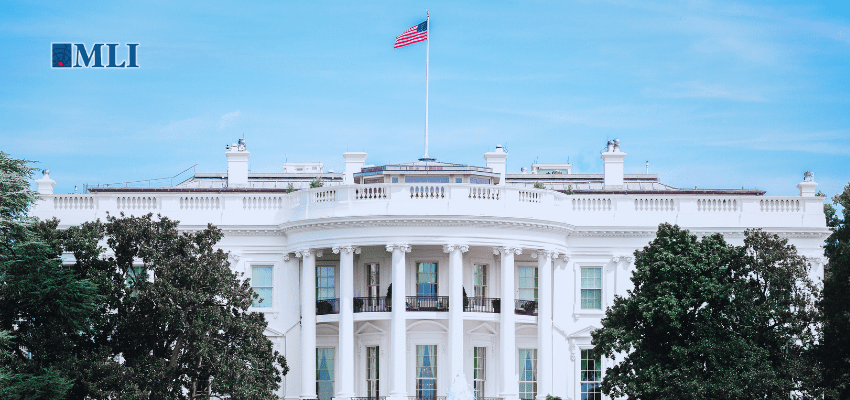
Image via Canva.

This article originally appeared in the National Post.

By Loay Alshareef, January 12, 2026

U.S. President Donald Trump’s 20-point Gaza peace plan was widely praised, and for good reason, but when history looks back at the early 21st century, it is the Abraham Accords that should be remembered as a transformative breakthrough for modern Middle Eastern diplomacy.

The Abraham Accords were not merely peace treaties — they were a civilizational turning point that laid the groundwork for peace. Thanks to President Trump and his diplomatic team — Jared Kushner, Avi Berkowitz, and David Friedman — the Accords of Sept. 15, 2020, became the greatest American foreign policy success in the Middle East since the Camp David Accords of 1978.

The Abraham Accords differ profoundly from previous peace efforts. The peace between Egypt and Israel (1979) and between Jordan and Israel (1994) ended wars and established diplomatic relations, but they largely remained cold peace agreements. They stabilized borders, not hearts. The average Egyptian or Jordanian citizen seldom interacted with Israelis; cultural and educational ties remained minimal. Peace existed on paper, not in people’s minds.

The Abraham Accords reversed that formula. They were conceived not as a political truce, but as a social transformation. They began with the idea that people-to-people relations are the foundation of lasting peace. Emiratis, Bahrainis, Moroccans, and Israelis immediately began visiting each other’s countries, launching business ventures, and exchanging cultural experiences. Israeli tourists strolled through Dubai’s souks; Emirati students visited Jerusalem’s Old City; Jewish and Muslim influencers appeared together on social media platforms promoting coexistence.

For the first time in modern Arab-Israeli history, friendship itself became a political act of courage.

For decades, much of the region’s political narrative was built on denial — denial of Israel’s right to exist, denial of Jewish historical connection to the land, and denial that Jews and Arabs can share the same regional destiny. The Abraham Accords shattered that wall of denial. Recognizing Israel is not capitulation; it is realism and moral maturity. It acknowledges that the Jewish people are indigenous to the land of Israel, whose roots stretch from ancient Hebron to modern Tel Aviv. When Arab states embrace this truth, it does not undermine the Palestinian cause — it liberates it from the endless cycle of rejectionism. Only recognition can lead to genuine negotiation, just as it did when Egyptian President Anwar Sadat visited Jerusalem in 1977, breaking a psychological barrier that had lasted for generations.

Historically, the Middle East was strongest when cooperation, not division, defined it. In the Abbasid Caliphate of Baghdad, Jewish and Muslim scholars translated Greek texts together, preserving knowledge that would later inspire the European Renaissance. In Al-Andalus (Muslim Spain), Jewish poets and Muslim philosophers debated faith and reason side by side. This was not utopia — it was a pragmatic coexistence built on intellectual respect.

The Abraham Accords can revive that same spirit. The future of the region depends on partnerships in renewable energy, artificial intelligence, biotechnology, and cultural preservation — all areas where Israelis and Arabs excel when they collaborate. The UAE’s visionary “Projects of the 50” initiative, Israel’s world-leading innovation ecosystem, and Morocco’s diplomatic outreach to Africa form a natural synergy that can transform the region into a hub of peace and prosperity.

For the Accords to truly flourish in the next twenty years, peace must not remain an elite conversation — it must reach classrooms, mosques, and media spaces across the Arab world. That requires a strategic process of de-radicalization, rooted in education, culture, and leadership. This means:

Educational Reform: Curricula must be modernized to present history accurately — including the shared Abrahamic roots of Jews, Christians, and Muslims. Young Arabs should learn that Jerusalem is sacred not to one faith but to all, and that coexistence was historically the norm, not the exception. School textbooks should highlight Jewish contributions to Arab civilization and vice versa, breaking the myth of eternal enmity.

Media Transformation: Media outlets and influencers play an enormous role in shaping public consciousness. Instead of perpetuating outdated hostilities, they must amplify stories of cooperation — Emirati startups partnering with Israeli firms, Bahraini students studying in Tel Aviv, or interfaith dialogues in Casablanca.

Religious Leadership and Interfaith Dialogue: Imams, rabbis, and priests hold moral authority in their communities. The Abrahamic message of peace — that all humans are children of the same creator — should become a central theme in sermons and conferences. The Abrahamic Family House in Abu Dhabi stands as a global model: a mosque, church, and synagogue under one roof, symbolizing harmony without erasing difference.

Cultural and Youth Exchange: Youth is the most critical audience for de-radicalization. Programs that bring Emirati, Israeli, Moroccan, and Bahraini students together to study, travel, and innovate can change perceptions for a lifetime. Just as the Fulbright Program built post-war understanding between Americans and Europeans, the Abraham Youth Initiative could become the next great peace engine of our time.

Addressing Online Radicalization: Extremist narratives thrive in digital spaces. Countering them requires creating powerful, creative, fact-based content in Arabic, Hebrew, and English — stories that remind audiences that peace is strength, not weakness.

In twenty years, the true success of the Abraham Accords will not be measured merely by trade figures or diplomatic visits. It will be seen in classrooms where Arab and Israeli students study history together; in cities where synagogues, mosques, and churches share neighbourhoods; and in a new generation that sees peace as the default, not the exception.

If nurtured with sincerity and courage, the Accords can expand — first bringing in Saudi Arabia, then other Muslim-majority nations in Africa and Asia. Each new partner adds a layer of normalization not just politically, but psychologically. As the Prophet Isaiah wrote: “Nation shall not lift up sword against nation, neither shall they learn war anymore.”

The Abraham Accords give that ancient dream a modern form.


Loay Alshareef is a Middle East peace activist and senior fellow at the Macdonald-Laurier Institute in Ottawa.
Source: National Post

Related Posts

Rising separatism in Alberta and Quebec could put 2 million Canadian jobs at risk: Trevor Tombe in The Hub
Intergovernmental Affairs

Rising separatism in Alberta and Quebec could put 2 million Canadian jobs at risk: Trevor Tombe in The Hub

February 4, 2026
SS Breakthrough Nation video.
Latest News

Breakthrough Nation with Karen Restoule: Thomas Isaac Series 3, Ep. 1

February 4, 2026
The News Forum ss of show.
Domestic Policy

Canadian identity—culture, values & the future: Peter Copeland on The News Forum

February 3, 2026
Next Post
US makes statement supporting protesters in Iran amid internet blackout: Joe Varner on CTV News

US makes statement supporting protesters in Iran amid internet blackout: Joe Varner on CTV News

Newsletter Signup

  Thank you for Signing Up
  Please correct the marked field(s) below.
Email Address  *
1,true,6,Contact Email,2
First Name *
1,true,1,First Name,2
Last Name *
1,true,1,Last Name,2
*
*Required Fields

Follow us on

Macdonald-Laurier Institute

323 Chapel Street, Suite #300
Ottawa, Ontario, K1N 7Z2 Canada

613.482.8327

info@macdonaldlaurier.ca
MLI directory

Support Us

Support the Macdonald-Laurier Institute to help ensure that Canada is one of the best governed countries in the world. Click below to learn more or become a sponsor.

Support Us

  • Inside Policy Magazine
  • Annual Reports
  • Jobs
  • Privacy Policy

© 2023 Macdonald-Laurier Institute. All Rights reserved.

No Result
View All Result
  • Home
  • About
    • Who We Are
    • Who Makes MLI Work
    • Fifteenth Anniversary
  • Experts
    • Experts Directory
    • In Memoriam
  • Issues
    • Domestic Policy
      • Economic Policy
      • Justice
      • Rights and Freedoms
      • Assisted Suicide (MAID)
      • Health Care
      • COVID-19
      • Gender Identity
      • Canada’s Political Tradition
      • AI, Technology and Innovation
      • Media and Telecoms
      • Housing
      • Immigration
      • Agriculture and Agri-Food
      • Competition Policy
    • Energy Policy
      • Energy
      • Environment
    • Foreign Policy
      • Israel-Hamas War
      • Ukraine
      • Taiwan
      • China
      • Europe and Russia
      • Indo-Pacific
      • Middle East and North Africa
      • North America
      • Foreign Interference
      • National Defence
      • National Security
      • Foreign Affairs
    • Indigenous Affairs
  • Projects
    • CNAPS (Center for North American Prosperity and Security)
    • The Promised Land
    • Voices that Inspire: The Macdonald-Laurier Vancouver Speaker Series
    • Dragon at the door
    • Canada on top of the world
    • Letter to a minister
    • Justice Report Card
    • The Great Energy Crisis
    • DisInfoWatch.org
    • Managing Indigenous Prosperity
    • Judicial Foundations
    • Landmark Cases Council
    • Defending The Marketplace of Ideas
    • Reforming the University
    • Past Projects
      • Digital Policy & Connectivity
      • Double Trouble
      • Canada and the Indo-Pacific Initiative
      • The Transatlantic Program
      • COVID Misery Index
      • Speak for Ourselves
      • The Eavesdropping Dragon: Huawei
      • Talkin’ in the Free World with Mariam Memarsadeghi
      • An Intellectual Property Strategy for Canada
      • Munk Senior Fellows
      • A Mandate for Canada
      • Confederation Series
      • Fiscal Reform
      • The Canadian Century project
      • Fixing Canadian health care
      • Internal trade
      • From a mandate for change
      • Size of government in Canada
      • Straight Talk
      • Labour Market Report
      • Leading Economic Indicator
      • Centre for Advancing Canada’s Interests Abroad
      • Indigenous Prosperity at a Crossroads
  • Events
    • Upcoming Events
    • Past Events
      • MLI Dinners
      • Great Canadian Debates
  • Latest News
  • Libraries
    • Columns
    • Commentary
    • Papers
    • Books
    • Video
  • Donate

© 2023 Macdonald-Laurier Institute. All Rights reserved.