Thursday, March 19, 2026
No Result
View All Result
  • Media
Macdonald-Laurier Institute
  • Home
  • About
    • Who We Are
    • Who Makes MLI Work
    • Fifteenth Anniversary
  • Experts
    • Experts Directory
    • In Memoriam
  • Issues
    • Domestic Policy
      • Economic Policy
      • Justice
      • Rights and Freedoms
      • Assisted Suicide (MAID)
      • Health Care
      • COVID-19
      • Gender Identity
      • Canada’s Political Tradition
      • AI, Technology and Innovation
      • Media and Telecoms
      • Housing
      • Immigration
      • Agriculture and Agri-Food
      • Competition Policy
    • Energy Policy
      • Energy
      • Environment
    • Foreign Policy
      • Israel-Hamas War
      • Ukraine
      • Taiwan
      • China
      • Europe and Russia
      • Indo-Pacific
      • Middle East and North Africa
      • North America
      • Foreign Interference
      • National Defence
      • National Security
      • Foreign Affairs
    • Indigenous Affairs
  • Projects
    • CNAPS (Center for North American Prosperity and Security)
    • Justice Report Card
    • The Promised Land
    • Voices that Inspire: The Macdonald-Laurier Vancouver Speaker Series
    • Dragon at the door
    • Canada on top of the world
    • Letter to a minister
    • The Great Energy Crisis
    • DisInfoWatch.org
    • Managing Indigenous Prosperity
    • Judicial Foundations
    • Landmark Cases Council
    • Defending The Marketplace of Ideas
    • Reforming the University
    • Past Projects
      • Digital Policy & Connectivity
      • Double Trouble
      • Canada and the Indo-Pacific Initiative
      • The Transatlantic Program
      • COVID Misery Index
        • Provincial COVID Misery Index
        • Beyond Lockdown
        • COVID and after: A mandate for recovery
      • Speak for Ourselves
      • The Eavesdropping Dragon: Huawei
      • Talkin’ in the Free World with Mariam Memarsadeghi
      • An Intellectual Property Strategy for Canada
      • Munk Senior Fellows
      • A Mandate for Canada
      • Confederation Series
      • Fiscal Reform
      • The Canadian Century project
      • Fixing Canadian health care
      • Internal trade
      • From a mandate for change
      • Size of government in Canada
      • Straight Talk
      • Labour Market Report
      • Leading Economic Indicator
      • Centre for Advancing Canada’s Interests Abroad
      • Indigenous Prosperity at a Crossroads
        • Aboriginal Canada and Natural Resources
  • Events
    • Upcoming Events
    • Past Events
      • MLI Dinners
      • Great Canadian Debates
  • Latest News
  • Libraries
    • Columns
    • Commentary
    • Papers
    • Books
    • Video
  • Donate
  • Home
  • About
    • Who We Are
    • Who Makes MLI Work
    • Fifteenth Anniversary
  • Experts
    • Experts Directory
    • In Memoriam
  • Issues
    • Domestic Policy
      • Economic Policy
      • Justice
      • Rights and Freedoms
      • Assisted Suicide (MAID)
      • Health Care
      • COVID-19
      • Gender Identity
      • Canada’s Political Tradition
      • AI, Technology and Innovation
      • Media and Telecoms
      • Housing
      • Immigration
      • Agriculture and Agri-Food
      • Competition Policy
    • Energy Policy
      • Energy
      • Environment
    • Foreign Policy
      • Israel-Hamas War
      • Ukraine
      • Taiwan
      • China
      • Europe and Russia
      • Indo-Pacific
      • Middle East and North Africa
      • North America
      • Foreign Interference
      • National Defence
      • National Security
      • Foreign Affairs
    • Indigenous Affairs
  • Projects
    • CNAPS (Center for North American Prosperity and Security)
    • Justice Report Card
    • The Promised Land
    • Voices that Inspire: The Macdonald-Laurier Vancouver Speaker Series
    • Dragon at the door
    • Canada on top of the world
    • Letter to a minister
    • The Great Energy Crisis
    • DisInfoWatch.org
    • Managing Indigenous Prosperity
    • Judicial Foundations
    • Landmark Cases Council
    • Defending The Marketplace of Ideas
    • Reforming the University
    • Past Projects
      • Digital Policy & Connectivity
      • Double Trouble
      • Canada and the Indo-Pacific Initiative
      • The Transatlantic Program
      • COVID Misery Index
        • Provincial COVID Misery Index
        • Beyond Lockdown
        • COVID and after: A mandate for recovery
      • Speak for Ourselves
      • The Eavesdropping Dragon: Huawei
      • Talkin’ in the Free World with Mariam Memarsadeghi
      • An Intellectual Property Strategy for Canada
      • Munk Senior Fellows
      • A Mandate for Canada
      • Confederation Series
      • Fiscal Reform
      • The Canadian Century project
      • Fixing Canadian health care
      • Internal trade
      • From a mandate for change
      • Size of government in Canada
      • Straight Talk
      • Labour Market Report
      • Leading Economic Indicator
      • Centre for Advancing Canada’s Interests Abroad
      • Indigenous Prosperity at a Crossroads
        • Aboriginal Canada and Natural Resources
  • Events
    • Upcoming Events
    • Past Events
      • MLI Dinners
      • Great Canadian Debates
  • Latest News
  • Libraries
    • Columns
    • Commentary
    • Papers
    • Books
    • Video
  • Donate
No Result
View All Result
Macdonald-Laurier Institute

How accommodation hollowed out Canadian nationalism: Christopher Dummitt in The Hub

The competing interests holding Canadian nationalism back.

March 19, 2026
in Domestic Policy, Latest News, Columns, In the Media, Political Tradition, Christopher Dummitt
Reading Time: 4 mins read
A A
How accommodation hollowed out Canadian nationalism: Christopher Dummitt in The Hub

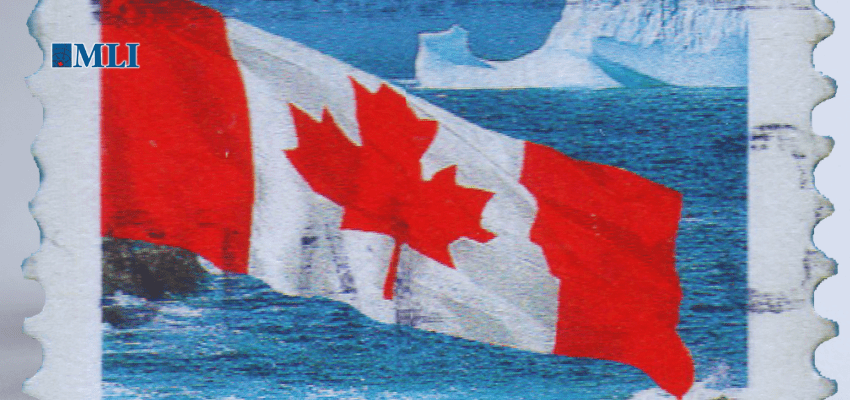
Image via Canva.

This article originally appeared in The Hub.

By Christopher Dummitt, March 19, 2026

Should Canada put the national interest first? The Canadian answer has usually been: Sort of. Maybe. Kinda. It depends.

Even claiming that Canada has a single national interest has often triggered a cascade of questions. Who is a part of it and who is not? Does it conflict with the special claims of Quebecers? What about Aboriginal rights? Can we even speak of a single Canadian culture? Shouldn’t we instead celebrate diversity as our culture?

Mark Carney’s government is living through a modern version of these struggles as it tries to identify projects of national significance.

Our long, divisive history 

This is nothing new under the cold Canadian sun. In the 1870s, the young Canadian government wondered whether it could build a national railway to the Pacific. Maybe—but critics soon asked whether the project unfairly benefited Eastern capitalists. And even if it did tie the nation together from east to west, others now argue that it should not be celebrated because it destroyed Indigenous livelihoods and sovereignty.

The pattern appeared again in wartime. Should Canada impose conscription to fight a total war against Germany and Japan? That might be what many English Canadians wanted—but would French Canadians rebel?

Or consider social programs. Could Canada create a national pension plan? It sounded like a good idea. But shouldn’t Quebec be allowed to opt out with compensation and create its own version?

Canada even had its own “Canada First” movement in the 19th century. After the assassination of D’Arcy McGee, a group of British Canadians dreamed of building a culturally nationalist movement that could transcend these divisions within the new country. But it collapsed almost immediately. Canada Firsters spoke in the 19th-century language of race and religion, too easily pitting Catholic against Protestant and English against French. The movement divided the nation it wanted to unite almost as soon as it appeared.

Even in the 20th century, when John Diefenbaker asserted a civil-rights-based “One Canada” vision—a celebration of unhyphenated Canadianism—he was ultimately criticized for ignoring the country’s divisions. Diefenbaker dared to suggest that Canadians should be Canadians first. His critics called the idea naïve. Foolish.

Then came Lester Pearson, who advanced the notion of two founding nations. With Quebec separatism looming in the background—and FLQ bombs and murders pushing Ottawa to act—Pearson embraced a more asymmetrical federalism. Quebec would create its own pension plan and gradually assume control over areas such as immigration and aspects of foreign relations that had once been clearly federal responsibilities. We were told it had to be done.

Perhaps it did. But actions have consequences.

Canadians today live with the consequences of building a country in which the national interest has often ranked second to local, provincial, or ethnic identity.

In 1982, Pierre Trudeau and the premiers agreed to include Section 35 in the Constitution, guaranteeing “existing Aboriginal rights.” Was this a vague concept that few people at the time could define? Yes. Did some warn that it could lead to a major expansion of rights claims and challenges to provincial and federal sovereignty? They did.

Many participants at the 1982 constitutional table would likely be startled by how courts have since interpreted Section 35, expanding the scope of those rights in ways that were never explicitly agreed upon. Yet this concession, too, was made in order to “go along, to get along.”: another accommodation, another effort to pursue justice by dividing authority within the national framework.

The best of intentions.

Better together? 

But when a country continually subdivides itself—parceling out powers, exemptions, and special arrangements to nations within the nation—it becomes increasingly difficult to claim a single national interest exists at all.

And once that pattern is established, it should not be surprising when other regions make similar demands for special accommodation.

Hello, Alberta separatists.

Danielle Smith’s proposed referendum questions contain some Western Canadian quirks, but in several areas—immigration authority, the ability to opt out of national programs with compensation—they merely echo concessions Ottawa has long granted Quebec. In effect, they demand their own form of asymmetrical federalism, backed by the implicit threat of separatism. Plus ça change.

The same logic also echoes many Indigenous political claims: demands for local control, economic ownership of resource projects, and forms of sovereignty, accompanied by the silent threat of blockades or prolonged litigation if concessions are not granted.

For some Canadians, this entire process is admirable. They argue it is precisely what defines Canada: a country united by its willingness to accommodate differences and reconcile competing claims.

But if you happen to live in Alberta, you might notice that some differences are more readily accommodated than others. As Orwell put it: “All animals are equal, but some animals are more equal than others.”

Taken as a whole, this legacy of national hesitation makes governing difficult. Is it any wonder that Carney spends so much time abroad signing international agreements? Foreign policy is one of the few areas where a Canadian government can still act as a single whole with relative clarity about the national interest.

But Carney’s real test will come when he finally returns home.

Canada’s genius has always been accommodation. But accommodation, repeated often enough, can gradually hollow out the idea that the country itself even has a single political purpose.

When Carney eventually tries to move forward with projects deemed nationally significant—whether mining developments, high-speed rail, or (God forbid) a new pipeline—he will run directly into Canada’s familiar pattern of internal division.

That’s when we’ll truly find out who is willing to embrace an “Elbows Up” style of nationalism. Until then, we’re left wondering: whose elbows? Defending which nation?


Christopher Dummitt is a professor of history at Trent University and host of the podcast 1867 & All That (www.1867allthat.com). He is also the author of “Unbuttoned: A History of Mackenzie King’s Secret Life”.


Source: The Hub

Related Posts

Race should not trump merit at Canada’s universities: David Wand and Peter Copeland for Inside Policy Talks
Domestic Policy

Race should not trump merit at Canada’s universities: David Wand and Peter Copeland for Inside Policy Talks

March 19, 2026
Why Mark Carney should visit Israel: Jack Mintz in the National Post
Middle East and North Africa

Why Mark Carney should visit Israel: Jack Mintz in the National Post

March 19, 2026
Hiding in plain sight: W.A. Rivera for Inside Policy
Foreign Interference

Hiding in plain sight: W.A. Rivera for Inside Policy

March 19, 2026
Next Post
Race should not trump merit at Canada’s universities: David Wand and Peter Copeland for Inside Policy Talks

Race should not trump merit at Canada’s universities: David Wand and Peter Copeland for Inside Policy Talks

Newsletter Signup

  Thank you for Signing Up
  Please correct the marked field(s) below.
Email Address  *
1,true,6,Contact Email,2
First Name *
1,true,1,First Name,2
Last Name *
1,true,1,Last Name,2
*
*Required Fields

Follow us on

Macdonald-Laurier Institute

323 Chapel Street, Suite #300
Ottawa, Ontario, K1N 7Z2 Canada

613.482.8327

info@macdonaldlaurier.ca
MLI directory

Support Us

Support the Macdonald-Laurier Institute to help ensure that Canada is one of the best governed countries in the world. Click below to learn more or become a sponsor.

Support Us

  • Inside Policy Magazine
  • Annual Reports
  • Jobs
  • Privacy Policy

© 2023 Macdonald-Laurier Institute. All Rights reserved.

This site uses cookies. By continuing to browse the site you are agreeing to our use of cookies.

Privacy Preference Center

Consent Management

Necessary

Advertising

Analytics

Other

No Result
View All Result
  • Home
  • About
    • Who We Are
    • Who Makes MLI Work
    • Fifteenth Anniversary
  • Experts
    • Experts Directory
    • In Memoriam
  • Issues
    • Domestic Policy
      • Economic Policy
      • Justice
      • Rights and Freedoms
      • Assisted Suicide (MAID)
      • Health Care
      • COVID-19
      • Gender Identity
      • Canada’s Political Tradition
      • AI, Technology and Innovation
      • Media and Telecoms
      • Housing
      • Immigration
      • Agriculture and Agri-Food
      • Competition Policy
    • Energy Policy
      • Energy
      • Environment
    • Foreign Policy
      • Israel-Hamas War
      • Ukraine
      • Taiwan
      • China
      • Europe and Russia
      • Indo-Pacific
      • Middle East and North Africa
      • North America
      • Foreign Interference
      • National Defence
      • National Security
      • Foreign Affairs
    • Indigenous Affairs
  • Projects
    • CNAPS (Center for North American Prosperity and Security)
    • Justice Report Card
    • The Promised Land
    • Voices that Inspire: The Macdonald-Laurier Vancouver Speaker Series
    • Dragon at the door
    • Canada on top of the world
    • Letter to a minister
    • The Great Energy Crisis
    • DisInfoWatch.org
    • Managing Indigenous Prosperity
    • Judicial Foundations
    • Landmark Cases Council
    • Defending The Marketplace of Ideas
    • Reforming the University
    • Past Projects
      • Digital Policy & Connectivity
      • Double Trouble
      • Canada and the Indo-Pacific Initiative
      • The Transatlantic Program
      • COVID Misery Index
      • Speak for Ourselves
      • The Eavesdropping Dragon: Huawei
      • Talkin’ in the Free World with Mariam Memarsadeghi
      • An Intellectual Property Strategy for Canada
      • Munk Senior Fellows
      • A Mandate for Canada
      • Confederation Series
      • Fiscal Reform
      • The Canadian Century project
      • Fixing Canadian health care
      • Internal trade
      • From a mandate for change
      • Size of government in Canada
      • Straight Talk
      • Labour Market Report
      • Leading Economic Indicator
      • Centre for Advancing Canada’s Interests Abroad
      • Indigenous Prosperity at a Crossroads
  • Events
    • Upcoming Events
    • Past Events
      • MLI Dinners
      • Great Canadian Debates
  • Latest News
  • Libraries
    • Columns
    • Commentary
    • Papers
    • Books
    • Video
  • Donate

© 2023 Macdonald-Laurier Institute. All Rights reserved.