This article originally appeared in The Hill Times.
By Jonathan Berkshire Miller, August 29, 2025
Much of Ottawa’s strategic gaze today is fixed on Europe and the United States, supporting Ukraine, meeting NATO benchmarks, and preparing for more turbulence with the Trump administration. These priorities are understandable, but they also risk crowding out Canada’s attention to the Indo-Pacific, the region most likely to shape global order in the coming months and years.
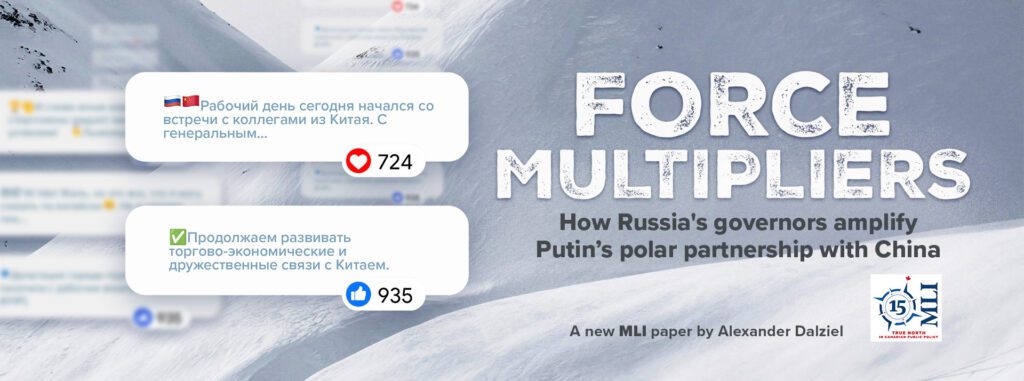
Against that backdrop, Canada’s recent decision to sign a memorandum of understanding on defence co-operation with Indonesia should be welcomed. The pact, announced during the Super Garuda Shield 2025 exercise in Indonesia, is admittedly not transformative. However, it is a signal that Ottawa is capable of walking and chewing gum at the same time: tending to urgent transatlantic matters while also planting a stake and trying to reassure partners of its tilt to the Indo-Pacific.
On one hand, it is tempting to herald the MOU as a breakthrough in Canada–Indonesia relations. However, this pact represents a baseline, an opening handshake, not a binding alliance. Unlike reciprocal access agreements, intelligence-sharing arrangements, or acquisition and cross-servicing agreements that Canada has pursued aggressively in recent months with closer partners such as Japan, South Korea, and the Philippines, this MOU is more aspirational than operational. It signals intent and a willingness for both sides to co-operate, exchange, and explore.
For Canada, which has often struggled to move beyond declaratory Indo-Pacific policy statements and some targeted successes with mature partnerships such as South Korea and Japan, even an entry-level defence accord with Southeast Asia’s largest state marks progress. But the challenge will be ensuring this is a first step on a longer journey and not a box-ticking exercise that fades into irrelevance.
Of course, Indonesia is not just another Southeast Asian state. With 280 million people, a rapidly growing economy, and a strategic geography that spans critical maritime chokepoints, it is the de facto anchor of the Association of Southeast Asian Nations and a pivotal swing state in great-power competition. Jakarta balances carefully—albeit imperfectly—between China and the United States, while increasingly leaning into defence partnerships with like-minded countries. The Super Garuda Shield exercises, with over 6,500 personnel from a dozen nations, illustrates that outward-looking pragmatism.
For Ottawa, Indonesia offers both tantalizing opportunities and significant challenges. Sustained engagement here is less about hard alliances and more about building trust, interoperability, and earning political capital.
Therefore, by formalizing even a modest MOU in the context of a major exercise, Ottawa has demonstrated it wants a seat at the table.
The truth is that despite Canada’s Indo-Pacific Strategy, Ottawa is playing catch-up more broadly on its defence diplomacy engagements. Our presence has often been episodic—rotational naval deployments, occasional capacity-building, and broad strategy documents. The Indonesia MOU does not yet change that dynamic, but it does lay the foundation for more meaningful agreements down the road.
However, here is the rub: if Canada wants this agreement to matter, it must be prepared to test it in practice before even considering more advanced arrangements. For now, the focus should be on building confidence through regular dialogues, exchanges, and joint activities. Only once both sides see value and trust in this baseline co-operation would it make sense to contemplate deeper frameworks—whether logistical agreements, intelligence co-ordination, or access arrangements.
The Indonesia MOU, while modest, allows Ottawa to point to concrete progress, demonstrating some evidence that it is investing in diverse security relationships outside of Northeast Asia and the Philippines. For a government under pressure to demonstrate that new defence spending and Indo-Pacific commitments yield tangible outcomes, this pact serves as a useful marker. Still, the true political test will be whether it grows into sustained co-operation, rather than another headline soon forgotten.
Jonathan Berkshire Miller is co-founder and principal of Pendulum Geopolitical Advisory in Ottawa and a senior fellow at the Macdonald-Laurier Institute.