Monday, December 8, 2025
No Result
View All Result
  • Media
Macdonald-Laurier Institute
  • Home
  • About
    • Who We Are
    • Who Makes MLI Work
    • Fifteenth Anniversary
  • Experts
    • Experts Directory
    • In Memoriam
  • Issues
    • Domestic Policy
      • Economic Policy
      • Justice
      • Rights and Freedoms
      • Assisted Suicide (MAID)
      • Health Care
      • COVID-19
      • Gender Identity
      • Canada’s Political Tradition
      • AI, Technology and Innovation
      • Media and Telecoms
      • Housing
      • Immigration
      • Agriculture and Agri-Food
      • Competition Policy
    • Energy Policy
      • Energy
      • Environment
    • Foreign Policy
      • Israel-Hamas War
      • Ukraine
      • Taiwan
      • China
      • Europe and Russia
      • Indo-Pacific
      • Middle East and North Africa
      • North America
      • Foreign Interference
      • National Defence
      • National Security
      • Foreign Affairs
    • Indigenous Affairs
  • Projects
    • CNAPS (Center for North American Prosperity and Security)
    • The Promised Land
    • Voices that Inspire: The Macdonald-Laurier Vancouver Speaker Series
    • Dragon at the door
    • Canada on top of the world
    • Letter to a minister
    • Justice Report Card
    • The Great Energy Crisis
    • DisInfoWatch.org
    • Managing Indigenous Prosperity
    • Judicial Foundations
    • Landmark Cases Council
    • Defending The Marketplace of Ideas
    • Reforming the University
    • Past Projects
      • Digital Policy & Connectivity
      • Double Trouble
      • Canada and the Indo-Pacific Initiative
      • The Transatlantic Program
      • COVID Misery Index
        • Provincial COVID Misery Index
        • Beyond Lockdown
        • COVID and after: A mandate for recovery
      • Speak for Ourselves
      • The Eavesdropping Dragon: Huawei
      • Talkin’ in the Free World with Mariam Memarsadeghi
      • An Intellectual Property Strategy for Canada
      • Munk Senior Fellows
      • A Mandate for Canada
      • Confederation Series
      • Fiscal Reform
      • The Canadian Century project
      • Fixing Canadian health care
      • Internal trade
      • From a mandate for change
      • Size of government in Canada
      • Straight Talk
      • Labour Market Report
      • Leading Economic Indicator
      • Centre for Advancing Canada’s Interests Abroad
      • Indigenous Prosperity at a Crossroads
        • Aboriginal Canada and Natural Resources
  • Events
    • Upcoming Events
    • Past Events
      • MLI Dinners
      • Great Canadian Debates
  • Latest News
  • Libraries
    • Columns
    • Commentary
    • Papers
    • Books
    • Video
  • Donate
  • Home
  • About
    • Who We Are
    • Who Makes MLI Work
    • Fifteenth Anniversary
  • Experts
    • Experts Directory
    • In Memoriam
  • Issues
    • Domestic Policy
      • Economic Policy
      • Justice
      • Rights and Freedoms
      • Assisted Suicide (MAID)
      • Health Care
      • COVID-19
      • Gender Identity
      • Canada’s Political Tradition
      • AI, Technology and Innovation
      • Media and Telecoms
      • Housing
      • Immigration
      • Agriculture and Agri-Food
      • Competition Policy
    • Energy Policy
      • Energy
      • Environment
    • Foreign Policy
      • Israel-Hamas War
      • Ukraine
      • Taiwan
      • China
      • Europe and Russia
      • Indo-Pacific
      • Middle East and North Africa
      • North America
      • Foreign Interference
      • National Defence
      • National Security
      • Foreign Affairs
    • Indigenous Affairs
  • Projects
    • CNAPS (Center for North American Prosperity and Security)
    • The Promised Land
    • Voices that Inspire: The Macdonald-Laurier Vancouver Speaker Series
    • Dragon at the door
    • Canada on top of the world
    • Letter to a minister
    • Justice Report Card
    • The Great Energy Crisis
    • DisInfoWatch.org
    • Managing Indigenous Prosperity
    • Judicial Foundations
    • Landmark Cases Council
    • Defending The Marketplace of Ideas
    • Reforming the University
    • Past Projects
      • Digital Policy & Connectivity
      • Double Trouble
      • Canada and the Indo-Pacific Initiative
      • The Transatlantic Program
      • COVID Misery Index
        • Provincial COVID Misery Index
        • Beyond Lockdown
        • COVID and after: A mandate for recovery
      • Speak for Ourselves
      • The Eavesdropping Dragon: Huawei
      • Talkin’ in the Free World with Mariam Memarsadeghi
      • An Intellectual Property Strategy for Canada
      • Munk Senior Fellows
      • A Mandate for Canada
      • Confederation Series
      • Fiscal Reform
      • The Canadian Century project
      • Fixing Canadian health care
      • Internal trade
      • From a mandate for change
      • Size of government in Canada
      • Straight Talk
      • Labour Market Report
      • Leading Economic Indicator
      • Centre for Advancing Canada’s Interests Abroad
      • Indigenous Prosperity at a Crossroads
        • Aboriginal Canada and Natural Resources
  • Events
    • Upcoming Events
    • Past Events
      • MLI Dinners
      • Great Canadian Debates
  • Latest News
  • Libraries
    • Columns
    • Commentary
    • Papers
    • Books
    • Video
  • Donate
No Result
View All Result
Macdonald-Laurier Institute

CAF must strengthen its alliance with Indigenous Canadians: Sam Huyer and Richard Shimooka in Canadian Affairs

The CAF should move from tolerating Indigenous practices to respecting and even celebrating them when appropriate.

November 10, 2025
in National Defence, Latest News, Columns, Foreign Policy, Indigenous Affairs, In the Media, Richard Shimooka
Reading Time: 3 mins read
A A
CAF must strengthen its alliance with Indigenous Canadians: Sam Huyer and Richard Shimooka in Canadian Affairs

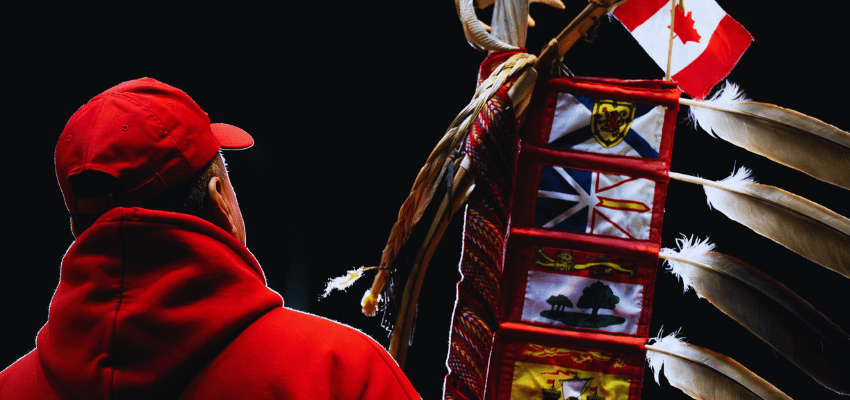
Photo by MCpl Duchesne-Beaulieu | Combat camera via Flickr.

This article originally appeared in Canadian Affairs.

By Sam Huyer and Richard Shimooka, November 10, 2025

A defining characteristic of the Canadian Armed Forces throughout its storied history has been the high quality of its personnel. They are resourceful, resilient, adaptive and value tradition.

There’s another community that’s often described this way: Indigenous peoples.

So it should come as no surprise that these two groups share a long and storied history. Indigenous members consistently prove to be excellent soldiers, sailors and airmen, serving with the highest levels of distinction.

Inuit sniper John Shiwak’s skills as a hunter and trapper prepared him for distinguished service as a scout in the First World War. The Second World War saw First Nations servicemen such as Charles Tomkins of Alberta translate radio messages into Cree to thwart their interception by the enemy. On a nation-to-nation level, the Haudenosaunee entered treaties with the United States and Canada to fight against Axis powers. These are a few examples among many of the remarkable legacy of Indigenous veterans.

Were the alignment in qualities between the Canadian Armed Forces and Indigenous service members harnessed to its full potential, both groups would benefit.

Indigenous recruits offer the CAF many advantages over their non-Indigenous counterparts. They often bring practical life skills that the military prizes — such as marksmanship, and the ability to hunt and live off the land. Most Canadians have no such experience, much less aptitude and comfort, in these areas.

Similarly, the CAF offers a great value proposition to Indigenous youth.

The Forces present an alternative to a life on reserves and other communities — providing  stable, lucrative employment across diverse occupations often not available to them at home. This can facilitate personal development, and build practical skills for youth to bring back to their communities.

There are also many intangible benefits that stem from service. Military service introduces its members to concepts such as discipline, duty and structure.

Leaving their communities may also help Indigenous youth see past stereotypes about the outside world — and even about themselves. Time away often provides Indigenous service members with new perspectives on their cultures, sometimes instilling them with a sense of greater pride and belonging when they return.

Yet, despite this tremendous potential, the CAF is squandering the opportunity.

Though a steady stream of Indigenous recruits enter the military’s ranks, they often face prejudice or even naked, systemic racism. Many soldiers feel they are held to a far higher standard than non-Indigenous members, often because they are under constant scrutiny from colleagues. It’s a testament to their indomitable perseverance that many still thrive in this difficult environment.

This must be remedied.

What sets this opportunity apart from other policies to promote diversity and inclusion within the CAF is the history and magnitude of the issue. First Nations have been an integral part of Canadian military history. This proposal is not a call to build new bridges to unfamiliar territory, but to refurbish an existing one on a well-trodden path.

To their credit, successive governments have made significant efforts to promote Indigenous recruitment. Programs such as Black Bear, Raven and Bold Eagle facilitate entry into basic training, while the Indigenous Leadership Opportunity Year (ILOY) exists for cadets at Royal Military College. At intake, Indigenous members make up about five per cent of recruits — which is roughly proportionate to the percentage of individuals who self-identify as Indigenous in the general population.

But more needs to be done, particularly to retain Indigenous members already in the service.

Indigenous members have the lowest retention rate of every other identity group, save for women from a visible minority.

The CAF should move from tolerating Indigenous practices to respecting and even celebrating them when appropriate.

While unit cohesion and discipline are absolutely vital for a military’s successful operation, acceptance of items such as some Indigenous hairstyles and traditional observances would open up a pathway to harness the potential of more Indigenous youth.

For example, the CAF should expand the number of military chaplains who can lead the observance of Indigenous ceremonies.

Few would doubt that Indigenous soldiers are committed to their comrades in arms, their units and the Crown. The CAF must reciprocate this dedication.


Sam Huyer is a Canadian Studies & Indigenous Studies graduate student at Trent University.

Richard Shimooka is a senior fellow at the McDonald Laurier Institute.

Source: Canadian Affairs
Tags: Sam Huyer

Related Posts

CNAPS promotes “Grand Bargain” between Canada and United States at USMCA review hearing in Washington, D.C.
North America

CNAPS promotes “Grand Bargain” between Canada and United States at USMCA review hearing in Washington, D.C.

December 8, 2025
Canada’s global ambitions must begin with domestic protection: Andrew Kirsch in the Hamilton Spectator
National Security

Canada’s global ambitions must begin with domestic protection: Andrew Kirsch in the Hamilton Spectator

December 8, 2025
Oaths, trust and Canadian democracy: Stephen Van Dine and Karl Salgo for Inside Policy
Political Tradition

Coalition conservatism requires comfort with contradiction and debate: Shawn Whatley in The Hub

December 8, 2025
Next Post
The high price of green virtue: Jerome Gessaroli for Inside Policy

The high price of green virtue: Jerome Gessaroli for Inside Policy

Newsletter Signup

  Thank you for Signing Up
  Please correct the marked field(s) below.
Email Address  *
1,true,6,Contact Email,2
First Name *
1,true,1,First Name,2
Last Name *
1,true,1,Last Name,2
*
*Required Fields

Follow us on

Macdonald-Laurier Institute

323 Chapel Street, Suite #300
Ottawa, Ontario, K1N 7Z2 Canada

613.482.8327

info@macdonaldlaurier.ca
MLI directory

Support Us

Support the Macdonald-Laurier Institute to help ensure that Canada is one of the best governed countries in the world. Click below to learn more or become a sponsor.

Support Us

  • Inside Policy Magazine
  • Annual Reports
  • Jobs
  • Privacy Policy

© 2023 Macdonald-Laurier Institute. All Rights reserved.

No Result
View All Result
  • Home
  • About
    • Who We Are
    • Who Makes MLI Work
    • Fifteenth Anniversary
  • Experts
    • Experts Directory
    • In Memoriam
  • Issues
    • Domestic Policy
      • Economic Policy
      • Justice
      • Rights and Freedoms
      • Assisted Suicide (MAID)
      • Health Care
      • COVID-19
      • Gender Identity
      • Canada’s Political Tradition
      • AI, Technology and Innovation
      • Media and Telecoms
      • Housing
      • Immigration
      • Agriculture and Agri-Food
      • Competition Policy
    • Energy Policy
      • Energy
      • Environment
    • Foreign Policy
      • Israel-Hamas War
      • Ukraine
      • Taiwan
      • China
      • Europe and Russia
      • Indo-Pacific
      • Middle East and North Africa
      • North America
      • Foreign Interference
      • National Defence
      • National Security
      • Foreign Affairs
    • Indigenous Affairs
  • Projects
    • CNAPS (Center for North American Prosperity and Security)
    • The Promised Land
    • Voices that Inspire: The Macdonald-Laurier Vancouver Speaker Series
    • Dragon at the door
    • Canada on top of the world
    • Letter to a minister
    • Justice Report Card
    • The Great Energy Crisis
    • DisInfoWatch.org
    • Managing Indigenous Prosperity
    • Judicial Foundations
    • Landmark Cases Council
    • Defending The Marketplace of Ideas
    • Reforming the University
    • Past Projects
      • Digital Policy & Connectivity
      • Double Trouble
      • Canada and the Indo-Pacific Initiative
      • The Transatlantic Program
      • COVID Misery Index
      • Speak for Ourselves
      • The Eavesdropping Dragon: Huawei
      • Talkin’ in the Free World with Mariam Memarsadeghi
      • An Intellectual Property Strategy for Canada
      • Munk Senior Fellows
      • A Mandate for Canada
      • Confederation Series
      • Fiscal Reform
      • The Canadian Century project
      • Fixing Canadian health care
      • Internal trade
      • From a mandate for change
      • Size of government in Canada
      • Straight Talk
      • Labour Market Report
      • Leading Economic Indicator
      • Centre for Advancing Canada’s Interests Abroad
      • Indigenous Prosperity at a Crossroads
  • Events
    • Upcoming Events
    • Past Events
      • MLI Dinners
      • Great Canadian Debates
  • Latest News
  • Libraries
    • Columns
    • Commentary
    • Papers
    • Books
    • Video
  • Donate

© 2023 Macdonald-Laurier Institute. All Rights reserved.