Wednesday, August 19, 2026
No Result
View All Result
  • Media
Macdonald-Laurier Institute
  • Home
  • About
    • Who We Are
    • Who Makes MLI Work
    • Fifteenth Anniversary
  • Experts
    • Experts Directory
    • In Memoriam
  • Issues
    • Domestic Policy
      • Economic Policy
      • Justice
      • Rights and Freedoms
      • Assisted Suicide (MAID)
      • Health Care
      • COVID-19
      • Gender Identity
      • Canada’s Political Tradition
      • AI, Technology and Innovation
      • Media and Telecoms
      • Housing
      • Immigration
      • Agriculture and Agri-Food
      • Competition Policy
    • Energy Policy
      • Energy
      • Environment
    • Foreign Policy
      • Israel-Hamas War
      • Ukraine
      • Taiwan
      • China
      • Europe and Russia
      • Indo-Pacific
      • Middle East and North Africa
      • North America
      • Foreign Interference
      • National Defence
      • National Security
      • Foreign Affairs
    • Indigenous Affairs
  • Projects
    • CNAPS (Center for North American Prosperity and Security)
    • The Promised Land
    • Dragon at the door
    • Justice Report Card
    • DisInfoWatch.org
    • Managing Indigenous Prosperity
    • Judicial Foundations
    • Landmark Cases Council
    • Closing Canada’s Border, Policing, and Legal Gaps
    • Reforming the University
    • Digital Policy & Connectivity
    • Defending The Marketplace of Ideas
    • Letter to a minister
    • Past Projects
      • The Great Energy Crisis
      • Canada on top of the world
      • Double Trouble
      • Canada and the Indo-Pacific Initiative
      • The Transatlantic Program
      • COVID Misery Index
        • Provincial COVID Misery Index
        • Beyond Lockdown
        • COVID and after: A mandate for recovery
      • Speak for Ourselves
      • The Eavesdropping Dragon: Huawei
      • Talkin’ in the Free World with Mariam Memarsadeghi
      • An Intellectual Property Strategy for Canada
      • Munk Senior Fellows
      • A Mandate for Canada
      • Confederation Series
      • Fiscal Reform
      • The Canadian Century project
      • Fixing Canadian health care
      • Internal trade
      • From a mandate for change
      • Size of government in Canada
      • Straight Talk
      • Labour Market Report
      • Leading Economic Indicator
      • Centre for Advancing Canada’s Interests Abroad
      • Indigenous Prosperity at a Crossroads
        • Aboriginal Canada and Natural Resources
  • Events
    • Voices that Inspire: The Macdonald-Laurier Vancouver Speaker Series
    • Upcoming Events
    • Past Events
      • MLI Dinners
      • Great Canadian Debates
  • Latest News
  • Libraries
    • Columns
    • Commentary
    • Papers
    • Books
    • Video
  • Donate
  • Home
  • About
    • Who We Are
    • Who Makes MLI Work
    • Fifteenth Anniversary
  • Experts
    • Experts Directory
    • In Memoriam
  • Issues
    • Domestic Policy
      • Economic Policy
      • Justice
      • Rights and Freedoms
      • Assisted Suicide (MAID)
      • Health Care
      • COVID-19
      • Gender Identity
      • Canada’s Political Tradition
      • AI, Technology and Innovation
      • Media and Telecoms
      • Housing
      • Immigration
      • Agriculture and Agri-Food
      • Competition Policy
    • Energy Policy
      • Energy
      • Environment
    • Foreign Policy
      • Israel-Hamas War
      • Ukraine
      • Taiwan
      • China
      • Europe and Russia
      • Indo-Pacific
      • Middle East and North Africa
      • North America
      • Foreign Interference
      • National Defence
      • National Security
      • Foreign Affairs
    • Indigenous Affairs
  • Projects
    • CNAPS (Center for North American Prosperity and Security)
    • The Promised Land
    • Dragon at the door
    • Justice Report Card
    • DisInfoWatch.org
    • Managing Indigenous Prosperity
    • Judicial Foundations
    • Landmark Cases Council
    • Closing Canada’s Border, Policing, and Legal Gaps
    • Reforming the University
    • Digital Policy & Connectivity
    • Defending The Marketplace of Ideas
    • Letter to a minister
    • Past Projects
      • The Great Energy Crisis
      • Canada on top of the world
      • Double Trouble
      • Canada and the Indo-Pacific Initiative
      • The Transatlantic Program
      • COVID Misery Index
        • Provincial COVID Misery Index
        • Beyond Lockdown
        • COVID and after: A mandate for recovery
      • Speak for Ourselves
      • The Eavesdropping Dragon: Huawei
      • Talkin’ in the Free World with Mariam Memarsadeghi
      • An Intellectual Property Strategy for Canada
      • Munk Senior Fellows
      • A Mandate for Canada
      • Confederation Series
      • Fiscal Reform
      • The Canadian Century project
      • Fixing Canadian health care
      • Internal trade
      • From a mandate for change
      • Size of government in Canada
      • Straight Talk
      • Labour Market Report
      • Leading Economic Indicator
      • Centre for Advancing Canada’s Interests Abroad
      • Indigenous Prosperity at a Crossroads
        • Aboriginal Canada and Natural Resources
  • Events
    • Voices that Inspire: The Macdonald-Laurier Vancouver Speaker Series
    • Upcoming Events
    • Past Events
      • MLI Dinners
      • Great Canadian Debates
  • Latest News
  • Libraries
    • Columns
    • Commentary
    • Papers
    • Books
    • Video
  • Donate
No Result
View All Result
Macdonald-Laurier Institute

The UNHCR is goading the U.S. into pulling its funding – and putting itself in existential risk: Michael Barutciski in The Globe and Mail

Canada and its European partners would do well to challenge the deadlock-generating status quo on asylum law and policy.

August 19, 2026
in Domestic Policy, Latest News, Columns, In the Media, Immigration, Michael Barutciski
Reading Time: 4 mins read
A A
The UNHCR is goading the U.S. into pulling its funding – and putting itself in existential risk: Michael Barutciski in The Globe and Mail

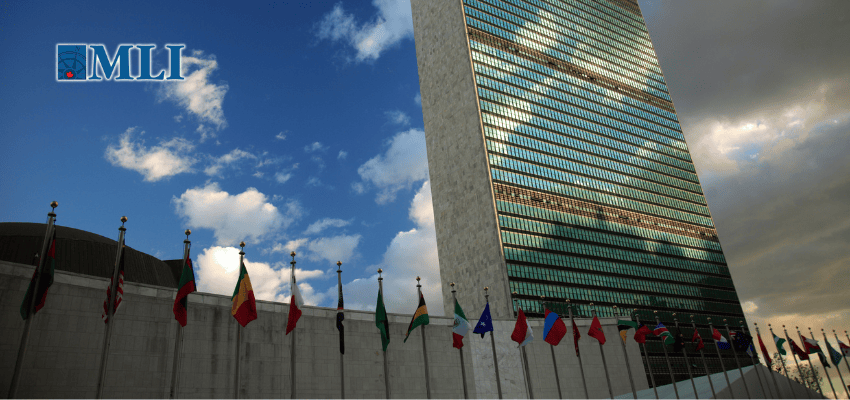
Image via Canva.

This article originally appeared in The Globe and Mail.

By Michael Barutciski, August 19, 2026

The UN High Commissioner for Refugees is running his office into a self-inflicted existential crisis.

Although he only became High Commissioner at the beginning of the year, former Iraqi prime minister Barham Salih has faced intense pressure from the Trump administration. As UNHCR’s largest donor, Washington is well-positioned to leverage its “America First” agenda to demand stricter migration policies and tighter institutional spending – and rather than pursuing pragmatic reform, Mr. Salih has chosen bureaucratic resistance

This is not a simplistic scenario of a superpower bullying idealistic humanitarians. The current tension stems from unnecessary diplomatic friction caused by UN officials during a controversial nomination process in June. By disregarding the long-standing practice of allowing the White House to select an American for the vital role of Deputy High Commissioner, international bureaucrats opted to openly defy Washington. The UNHCR is effectively daring U.S. President Donald Trump and his administration to withdraw from this historic institution, which risks losing the most powerful incentive for reform-minded UN members to fix the global asylum system.

To understand this clash, it helps to look at UNHCR’s history. What began in 1951 as a modest Geneva office has expanded into a multibillion-dollar bureaucracy funded mainly by Western countries. Over the years, however, critics have argued that the UNHCR has become bloated and insensitive to territorial sovereignty, guided more by progressive advocates and academics than the governments it was created to support.

Its formal structure reveals the vulnerability of its current position. Legally, UNHCR is not an independent body but a subsidiary entity bound to follow the guidance of its member-state executive committee. UNHCR’s global operations depend entirely on voluntary contributions, and thus, on donor approval. Major funders have every right to apply pressure to ensure the institution serves their national interests.

By refusing the White House’s recommendation for the deputy position – and instead appointing a Geneva-based U.S. diplomat – Mr. Salih signalled his preference for the status quo. Reports suggest he buckled to institutional pressure from career bureaucrats and UN Secretary-General António Guterres, a former socialist prime minister of Portugal who ran UNHCR a decade ago and has frequently clashed with Mr. Trump. However, Mr. Guterres is at the end of his mandate and seems engaged in imprudent provocation, ignoring the dramatic precedent set when the U.S. cut funds and withdrew from the UN’s Palestinian refugee agency (UNRWA).

To avert a crippling U.S. funding freeze or a complete American withdrawal from the UNHCR executive committee, the agency must prove it can be reformed, and member states must broker a compromise. Canada can play a constructive role in finding a face-saving solution that maintains U.S. engagement. With the committee holding its annual general session in October, Canada – an influential member of UNHCR’s executive committee, as the sixth-largest donor in 2025 – has an opportunity to bring its middle-power strategy to life with a bold initiative to save one of the UN’s largest operational programs.

The best way to prove UNHCR is reformable would be to split the deputy position into two distinct roles: one to oversee humanitarian operations and field execution, which Mr. Salih’s current choice could retain, and the other dedicated strictly to resource management and budgeting, which would go to Mr. Trump’s nominee. This would satisfy Washington’s oversight and audit concerns, and mirror structures already used in other UN bodies like UNICEF and the UN Population Fund.

Rather than thumbing their noses at the White House, other major members of the executive committee should also admit they share American concerns about a misguided asylum system that is fuelling uncontrolled mass migration. This reality was highlighted in the recent Chisinau declaration, where all 46 members of the Council of Europe – including staunchly progressive Western European nations – agreed that the current asylum system must be reined in to be saved. This non-binding political text explores the self-inflicted dilemmas resulting from overly generous judicial decisions, implicitly acknowledging the Trump administration’s migration-related criticisms of Europe and indicating that Washington’s stance is far from isolated. U.S. pressure has already pushed Ottawa to tighten border controls and amend its asylum procedures.

By bringing a transactional approach to a flailing multilateral institution responsible for refugees, Canada and its European partners would do well to challenge the deadlock-generating status quo on asylum law and policy. If we choose to defend the current UN bureaucracy instead, we should be prepared to pick up the tab when the U.S. stops paying the bills.


Michael Barutciski is a senior fellow at the Macdonald-Laurier Institute and a professor at York University’s Glendon School of Public and International Affairs.


Source: The Globe and Mail

Related Posts

Judicializing Everything?: Mark Harding on Runnymede Radio
Justice

Judicializing Everything?: Mark Harding on Runnymede Radio

August 19, 2026
Canada already has enough trained troops to fill the Reserves — but we let them just walk away: J.L. Granatstein for Inside Policy
National Defence

Canada already has enough trained troops to fill the Reserves — but we let them just walk away: J.L. Granatstein for Inside Policy

August 19, 2026
Canada still needs an ombudsperson for responsible enterprise: Sarah Teich, David Matas, and John Packer for Inside Policy
Economic Policy

Canada still needs an ombudsperson for responsible enterprise: Sarah Teich, David Matas, and John Packer for Inside Policy

August 17, 2026
Next Post
Judicializing Everything?: Mark Harding on Runnymede Radio

Judicializing Everything?: Mark Harding on Runnymede Radio

Newsletter Signup

  Thank you for Signing Up
  Please correct the marked field(s) below.
Email Address  *
1,true,6,Contact Email,2
First Name *
1,true,1,First Name,2
Last Name *
1,true,1,Last Name,2
*
*Required Fields

Follow us on

Macdonald-Laurier Institute

323 Chapel Street, Suite #300
Ottawa, Ontario, K1N 7Z2 Canada

613.482.8327

info@macdonaldlaurier.ca
MLI directory

Support Us

Support the Macdonald-Laurier Institute to help ensure that Canada is one of the best governed countries in the world. Click below to learn more or become a sponsor.

Support Us

  • Inside Policy Magazine
  • Annual Reports
  • Jobs
  • Privacy Policy

© 2023 Macdonald-Laurier Institute. All Rights reserved.

No Result
View All Result
  • Home
  • About
    • Who We Are
    • Who Makes MLI Work
    • Fifteenth Anniversary
  • Experts
    • Experts Directory
    • In Memoriam
  • Issues
    • Domestic Policy
      • Economic Policy
      • Justice
      • Rights and Freedoms
      • Assisted Suicide (MAID)
      • Health Care
      • COVID-19
      • Gender Identity
      • Canada’s Political Tradition
      • AI, Technology and Innovation
      • Media and Telecoms
      • Housing
      • Immigration
      • Agriculture and Agri-Food
      • Competition Policy
    • Energy Policy
      • Energy
      • Environment
    • Foreign Policy
      • Israel-Hamas War
      • Ukraine
      • Taiwan
      • China
      • Europe and Russia
      • Indo-Pacific
      • Middle East and North Africa
      • North America
      • Foreign Interference
      • National Defence
      • National Security
      • Foreign Affairs
    • Indigenous Affairs
  • Projects
    • CNAPS (Center for North American Prosperity and Security)
    • The Promised Land
    • Dragon at the door
    • Justice Report Card
    • DisInfoWatch.org
    • Managing Indigenous Prosperity
    • Judicial Foundations
    • Landmark Cases Council
    • Closing Canada’s Border, Policing, and Legal Gaps
    • Reforming the University
    • Digital Policy & Connectivity
    • Defending The Marketplace of Ideas
    • Letter to a minister
    • Past Projects
      • The Great Energy Crisis
      • Canada on top of the world
      • Double Trouble
      • Canada and the Indo-Pacific Initiative
      • The Transatlantic Program
      • COVID Misery Index
      • Speak for Ourselves
      • The Eavesdropping Dragon: Huawei
      • Talkin’ in the Free World with Mariam Memarsadeghi
      • An Intellectual Property Strategy for Canada
      • Munk Senior Fellows
      • A Mandate for Canada
      • Confederation Series
      • Fiscal Reform
      • The Canadian Century project
      • Fixing Canadian health care
      • Internal trade
      • From a mandate for change
      • Size of government in Canada
      • Straight Talk
      • Labour Market Report
      • Leading Economic Indicator
      • Centre for Advancing Canada’s Interests Abroad
      • Indigenous Prosperity at a Crossroads
  • Events
    • Voices that Inspire: The Macdonald-Laurier Vancouver Speaker Series
    • Upcoming Events
    • Past Events
      • MLI Dinners
      • Great Canadian Debates
  • Latest News
  • Libraries
    • Columns
    • Commentary
    • Papers
    • Books
    • Video
  • Donate

© 2023 Macdonald-Laurier Institute. All Rights reserved.