Tuesday, July 7, 2026
No Result
View All Result
  • Media
Macdonald-Laurier Institute
  • Home
  • About
    • Who We Are
    • Who Makes MLI Work
    • Fifteenth Anniversary
  • Experts
    • Experts Directory
    • In Memoriam
  • Issues
    • Domestic Policy
      • Economic Policy
      • Justice
      • Rights and Freedoms
      • Assisted Suicide (MAID)
      • Health Care
      • COVID-19
      • Gender Identity
      • Canada’s Political Tradition
      • AI, Technology and Innovation
      • Media and Telecoms
      • Housing
      • Immigration
      • Agriculture and Agri-Food
      • Competition Policy
    • Energy Policy
      • Energy
      • Environment
    • Foreign Policy
      • Israel-Hamas War
      • Ukraine
      • Taiwan
      • China
      • Europe and Russia
      • Indo-Pacific
      • Middle East and North Africa
      • North America
      • Foreign Interference
      • National Defence
      • National Security
      • Foreign Affairs
    • Indigenous Affairs
  • Projects
    • CNAPS (Center for North American Prosperity and Security)
    • Justice Report Card
    • The Promised Land
    • Dragon at the door
    • Canada on top of the world
    • Letter to a minister
    • The Great Energy Crisis
    • DisInfoWatch.org
    • Managing Indigenous Prosperity
    • Judicial Foundations
    • Landmark Cases Council
    • Closing Canada’s Border, Policing, and Legal Gaps
    • Defending The Marketplace of Ideas
    • Reforming the University
    • Digital Policy & Connectivity
    • Past Projects
      • Double Trouble
      • Canada and the Indo-Pacific Initiative
      • The Transatlantic Program
      • COVID Misery Index
        • Provincial COVID Misery Index
        • Beyond Lockdown
        • COVID and after: A mandate for recovery
      • Speak for Ourselves
      • The Eavesdropping Dragon: Huawei
      • Talkin’ in the Free World with Mariam Memarsadeghi
      • An Intellectual Property Strategy for Canada
      • Munk Senior Fellows
      • A Mandate for Canada
      • Confederation Series
      • Fiscal Reform
      • The Canadian Century project
      • Fixing Canadian health care
      • Internal trade
      • From a mandate for change
      • Size of government in Canada
      • Straight Talk
      • Labour Market Report
      • Leading Economic Indicator
      • Centre for Advancing Canada’s Interests Abroad
      • Indigenous Prosperity at a Crossroads
        • Aboriginal Canada and Natural Resources
  • Events
    • Voices that Inspire: The Macdonald-Laurier Vancouver Speaker Series
    • Upcoming Events
    • Past Events
      • MLI Dinners
      • Great Canadian Debates
  • Latest News
  • Libraries
    • Columns
    • Commentary
    • Papers
    • Books
    • Video
  • Donate
  • Home
  • About
    • Who We Are
    • Who Makes MLI Work
    • Fifteenth Anniversary
  • Experts
    • Experts Directory
    • In Memoriam
  • Issues
    • Domestic Policy
      • Economic Policy
      • Justice
      • Rights and Freedoms
      • Assisted Suicide (MAID)
      • Health Care
      • COVID-19
      • Gender Identity
      • Canada’s Political Tradition
      • AI, Technology and Innovation
      • Media and Telecoms
      • Housing
      • Immigration
      • Agriculture and Agri-Food
      • Competition Policy
    • Energy Policy
      • Energy
      • Environment
    • Foreign Policy
      • Israel-Hamas War
      • Ukraine
      • Taiwan
      • China
      • Europe and Russia
      • Indo-Pacific
      • Middle East and North Africa
      • North America
      • Foreign Interference
      • National Defence
      • National Security
      • Foreign Affairs
    • Indigenous Affairs
  • Projects
    • CNAPS (Center for North American Prosperity and Security)
    • Justice Report Card
    • The Promised Land
    • Dragon at the door
    • Canada on top of the world
    • Letter to a minister
    • The Great Energy Crisis
    • DisInfoWatch.org
    • Managing Indigenous Prosperity
    • Judicial Foundations
    • Landmark Cases Council
    • Closing Canada’s Border, Policing, and Legal Gaps
    • Defending The Marketplace of Ideas
    • Reforming the University
    • Digital Policy & Connectivity
    • Past Projects
      • Double Trouble
      • Canada and the Indo-Pacific Initiative
      • The Transatlantic Program
      • COVID Misery Index
        • Provincial COVID Misery Index
        • Beyond Lockdown
        • COVID and after: A mandate for recovery
      • Speak for Ourselves
      • The Eavesdropping Dragon: Huawei
      • Talkin’ in the Free World with Mariam Memarsadeghi
      • An Intellectual Property Strategy for Canada
      • Munk Senior Fellows
      • A Mandate for Canada
      • Confederation Series
      • Fiscal Reform
      • The Canadian Century project
      • Fixing Canadian health care
      • Internal trade
      • From a mandate for change
      • Size of government in Canada
      • Straight Talk
      • Labour Market Report
      • Leading Economic Indicator
      • Centre for Advancing Canada’s Interests Abroad
      • Indigenous Prosperity at a Crossroads
        • Aboriginal Canada and Natural Resources
  • Events
    • Voices that Inspire: The Macdonald-Laurier Vancouver Speaker Series
    • Upcoming Events
    • Past Events
      • MLI Dinners
      • Great Canadian Debates
  • Latest News
  • Libraries
    • Columns
    • Commentary
    • Papers
    • Books
    • Video
  • Donate
No Result
View All Result
Macdonald-Laurier Institute

The most overlooked aspect of the new West Coast pipeline could be the most consequential: Jack Mintz in The Hub

The Ottawa-B.C. agreement is continuing a bad precedent that could lead to more trade barriers in the coming years.

July 7, 2026
in Energy Policy, Latest News, Columns, Resources, In the Media, Jack Mintz
Reading Time: 4 mins read
A A
The most overlooked aspect of the new West Coast pipeline could be the most consequential: Jack Mintz in The Hub

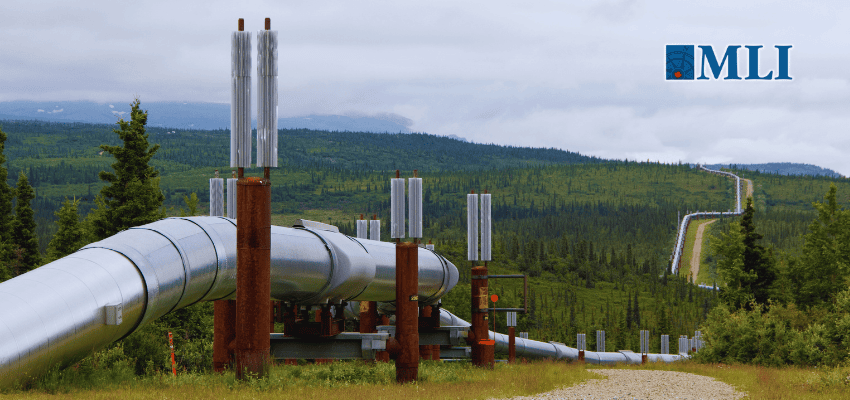
Image via Canva.

This article originally appeared in The Hub.

By Jack Mintz, July 7, 2026

The day after celebrating Canada’s 159th birthday last week, Ottawa, Alberta and British Columbia announced deals on July 2nd that will enable several major resource, infrastructure, and electricity projects to be developed. The most important and controversial one is a new oil million-barrel pipeline to B.C.’s West Coast, a vital project for Canada’s objectives to improve economic growth and diversify trade.

While many technical and financial details underlying the Ottawa-B.C. and Alberta agreements need to be finalized, there is one policy issue that should attract more attention than it has so far. Under the Canada-British Columbia Cooperative Prosperity Agreement, B.C. may, as part of the legally binding revenue framework, be entitled to an annual royalty payment by the new pipeline operator and renegotiation of the existing revenue sharing related to the Trans Mountain Expansion.

Ottawa is blessing an arrangement that should have been resisted. It is extortion, plain and simple.

This is not the first time.

In 2017, the Christy Clark government negotiated with Trans Mountain (purchased by the Trudeau government) to pay a fee of $25 million to $50 million for environmental risks and “social license” over 20 years. The funds were earmarked for the B.C. Clean Communities Fund to build infrastructure to reduce GHG emissions, not just the environmental risks associated with Trans Mountain operations. Besides, Trans Mountain had a $1 billion fund for environmental risks and coal; other oil and natural gas shippers were not subject to the same payment. Just Alberta bitumen.

Think of these arrangements as another Strait of Hormuz with Iran trying to exact tolls on an international waterway. B.C. is given the right by Ottawa to levy an unspecified royalty on the interprovincial pipeline operator to gain its consent so that Alberta oil can be piped through its land for international markets.

Yet under the Constitution Act, the federal government has regulatory and taxing authority over interprovincial transportation. The provinces can levy direct taxes on pipelines exclusively within their territory, but they cannot regulate or tax undertakings going beyond their borders. By implication, provinces should not be permitted to use taxation or fees to discriminate against the flow of resources originating from other provinces. Any provincial tax should treat interprovincial infrastructure fairly and equally compared to other similar businesses.

It is obvious that the Ottawa-B.C. agreement is continuing a bad precedent that could lead to more trade barriers in the coming years. Alberta could establish toll booths to collect fees from trucks crossing the B.C.-Alberta border. Quebec could put a “royalty” on transmission lines carrying electricity from Newfoundland and Labrador.

In fact, B.C. already gets its pound of flesh from pipeline operators by collecting corporate income and property taxes. Enbridge, for example, reported in 2025 that it paid $16.1 million in B.C. corporate income taxes and $81.2 million in property taxes on its pipelines and energy projects. The taxes not only applies to Enbridge but to all other pipeline operators in B.C.

B.C.’s 12 percent corporate income tax on interprovincial pipelines is calculated by taking an average of two factors reflecting provincial shares of salaries and pipeline mileage to the company’s Canada-wide total. While it is possible to have a higher provincial corporate income tax on pipeline income (like the federal tax on banking), it would be discriminatory to apply against only one company while leaving other competitors in the industry unaffected. That is what the Ottawa agrees to by allowing B.C. to target the yet-to-be-approved new Alberta pipeline and the planned TMX expansion optimization.

B.C. also applies the second-highest property tax rate on utilities, including pipelines, of any province, almost nine times the residential rate. In principle, a province could apply even higher property taxes on pipelines alone, but this would not only affect interprovincial pipelines but also local ones distributing products to B.C. consumers.

What about a royalty? Under Canada’s Constitution, provinces are given authority over the land and resources within the province (Alberta, along with Saskatchewan and Manitoba, was given this right only in 1930). A royalty is a payment to extract resources owned by the province, which is, in this case, Alberta.

So, clearly, a B.C. royalty on the pipeline operator can’t be a payment for a resource that is extracted in Alberta, even if the oil is transported through a pipeline. Perhaps the royalty is a payment for the use of B.C. land, but that is the purpose of the property tax. Maybe it is a payment for intellectual property owned by B.C., but obviously that is not the case here.

Instead, we should look at B.C.’s royalty payment and new revenue-sharing agreement for what it is: a Strait of Hormuz-type tariff. Like any tax, it could be shifted forward to consumers or backward on producers. Since Alberta sells its oil at international prices, the effect of the B.C. royalty is shifted back by reducing oil producer profits and Alberta government revenues. Alberta should strenuously object before other provinces decide they can apply “royalties” too.

These complicated agreements require compromise but should be consistent with the principle of removing interprovincial trade barriers. Otherwise, we are left with “unprincipled pragmatism,” which should not be the objective of good public policy.


Jack Mintz is the President’s Fellow of the School of Public Policy at the University of Calgary and a Distinguished Fellow at the Macdonald-Laurier Institute.
Source: The Hub

Related Posts

Terror threat rising in Canada after recent chain of domestic attacks: Hussain Ehsani for Inside Policy
National Security

Terror threat rising in Canada after recent chain of domestic attacks: Hussain Ehsani for Inside Policy

July 7, 2026
Equalization has its problems, but it also has its benefits—even for Alberta: Jared Wesley, Ken Boessenkool, Trevor Tombe, and Peggy Garritty in The Hub
Intergovernmental Affairs

Equalization has its problems, but it also has its benefits—even for Alberta: Jared Wesley, Ken Boessenkool, Trevor Tombe, and Peggy Garritty in The Hub

July 7, 2026
Elbows up … or mea culpa? Canada needs to deliver as a trusted and reliable partner on North American security: Christian Leuprecht and Todd Hataley
North America

Elbows up … or mea culpa? Canada needs to deliver as a trusted and reliable partner on North American security: Christian Leuprecht and Todd Hataley

July 7, 2026
Next Post
Elbows up … or mea culpa? Canada needs to deliver as a trusted and reliable partner on North American security: Christian Leuprecht and Todd Hataley

Elbows up … or mea culpa? Canada needs to deliver as a trusted and reliable partner on North American security: Christian Leuprecht and Todd Hataley

Newsletter Signup

  Thank you for Signing Up
  Please correct the marked field(s) below.
Email Address  *
1,true,6,Contact Email,2
First Name *
1,true,1,First Name,2
Last Name *
1,true,1,Last Name,2
*
*Required Fields

Follow us on

Macdonald-Laurier Institute

323 Chapel Street, Suite #300
Ottawa, Ontario, K1N 7Z2 Canada

613.482.8327

info@macdonaldlaurier.ca
MLI directory

Support Us

Support the Macdonald-Laurier Institute to help ensure that Canada is one of the best governed countries in the world. Click below to learn more or become a sponsor.

Support Us

  • Inside Policy Magazine
  • Annual Reports
  • Jobs
  • Privacy Policy

© 2023 Macdonald-Laurier Institute. All Rights reserved.

This site uses cookies. By continuing to browse the site you are agreeing to our use of cookies.

Privacy Preference Center

Consent Management

Necessary

Advertising

Analytics

Other

No Result
View All Result
  • Home
  • About
    • Who We Are
    • Who Makes MLI Work
    • Fifteenth Anniversary
  • Experts
    • Experts Directory
    • In Memoriam
  • Issues
    • Domestic Policy
      • Economic Policy
      • Justice
      • Rights and Freedoms
      • Assisted Suicide (MAID)
      • Health Care
      • COVID-19
      • Gender Identity
      • Canada’s Political Tradition
      • AI, Technology and Innovation
      • Media and Telecoms
      • Housing
      • Immigration
      • Agriculture and Agri-Food
      • Competition Policy
    • Energy Policy
      • Energy
      • Environment
    • Foreign Policy
      • Israel-Hamas War
      • Ukraine
      • Taiwan
      • China
      • Europe and Russia
      • Indo-Pacific
      • Middle East and North Africa
      • North America
      • Foreign Interference
      • National Defence
      • National Security
      • Foreign Affairs
    • Indigenous Affairs
  • Projects
    • CNAPS (Center for North American Prosperity and Security)
    • Justice Report Card
    • The Promised Land
    • Dragon at the door
    • Canada on top of the world
    • Letter to a minister
    • The Great Energy Crisis
    • DisInfoWatch.org
    • Managing Indigenous Prosperity
    • Judicial Foundations
    • Landmark Cases Council
    • Closing Canada’s Border, Policing, and Legal Gaps
    • Defending The Marketplace of Ideas
    • Reforming the University
    • Digital Policy & Connectivity
    • Past Projects
      • Double Trouble
      • Canada and the Indo-Pacific Initiative
      • The Transatlantic Program
      • COVID Misery Index
      • Speak for Ourselves
      • The Eavesdropping Dragon: Huawei
      • Talkin’ in the Free World with Mariam Memarsadeghi
      • An Intellectual Property Strategy for Canada
      • Munk Senior Fellows
      • A Mandate for Canada
      • Confederation Series
      • Fiscal Reform
      • The Canadian Century project
      • Fixing Canadian health care
      • Internal trade
      • From a mandate for change
      • Size of government in Canada
      • Straight Talk
      • Labour Market Report
      • Leading Economic Indicator
      • Centre for Advancing Canada’s Interests Abroad
      • Indigenous Prosperity at a Crossroads
  • Events
    • Voices that Inspire: The Macdonald-Laurier Vancouver Speaker Series
    • Upcoming Events
    • Past Events
      • MLI Dinners
      • Great Canadian Debates
  • Latest News
  • Libraries
    • Columns
    • Commentary
    • Papers
    • Books
    • Video
  • Donate

© 2023 Macdonald-Laurier Institute. All Rights reserved.