By Christian Leuprecht and Todd Hataley
July 7, 2026
For decades, Canada’s relationship with the United States was characterized by a binational commitment to security, prosperity, and democracy. Rapidly changing US expectations on policy, priorities, and approach – in a volatile international security environment – have added friction to the bilateral relationship.
Given the power asymmetry inherent to the relationship, precedent suggests that Canada comes out ahead when it engages constructively and proactively with the US federal leadership – and fares poorly when it is forced to react and then fight an uphill battle.
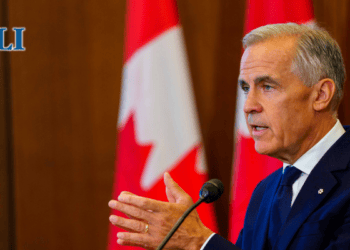
The Carney government, however, initially chose an “elbows up” approach to dealing the Trump administration. In Canada, pandering to latent anti-Americanism often yields domestic electoral rewards – much like “elbows up” hockey draws enthusiastic cheers from the crowd. But puck aficionados appreciate that “elbows up” alone seldom wins games. Politicians – like skaters – still need skill, discipline, and a strong game plan if they hope to stickhandle to victory.
Hemispheric security is a top priority for the Trump administration. It has repeatedly made it clear that Canada is not moving fast enough to secure shared interests and common democratic foundations. Unfortunately, power, speed, and scale do not play to Canadian strength. Notwithstanding divergent threat perceptions and lack of agreement on how to act, should Canada fail to close the North American security gap, the US will simply proceed unilaterally: that never ends well for Canada. Canada playing ahead to “defend against help” by the United States has long been an overarching principle to assert Canadian sovereignty.
Prime Minister Mark Carney is currently enjoying an extended honeymoon with the Canadian electorate that is fuelled in no-small measure by anti-Trump sentiment. If he speeds up the pace of change to placate the US President, his sycophants will impugn him for having caved to Trump’s demands. But if he refuses, Carney will further undermine US trust in Canada as a reliable partner.
Carney recently offered “forward guidance” to Canadians in the form of a short video. He posits Canada’s close interdependence with the United States as a weakness “we must correct.” However, he failed to acknowledge that interdependence and its associated weaknesses are largely a homemade problem. Misdiagnosing Canada’s current economic malaise is causing Carney to prescribe the wrong cure: The Prime Minister reminded Americans that “we’ve been a great neighbour” – but the record suggests otherwise, especially in recent years.
At the onset of the Second World War, Canada and the United States struck a grand bargain, dubbed the “Kingston Dispensation.” The two countries pledged to come to each other’s aid during times of war, not threaten each other’s security, and to work together on a rim strategy to keep threats away from the North American continent. “Suspenders and a belt” made North America the most secure, prosperous and politically stable continent history had ever known.
Over time, Canada unilaterally reneged on the deal – by design and by consequence. Instead making hard decisions to recalibrate Canada’s security posture to fit a rapidly changing world, Canadian governments kept kicking the can – i.e., the costs of modernizing its military and updating its security agencies – down the road.
Hitherto Canadian strengths – immigration, robust border management, financial integrity, the Arctic – became threat vectors, a back door to the United States. This opening has been exploited by state-sponsored crime groups from countries such as China, Russia, and Iran, along with countless transnational organized crime groups that engage in contraband trafficking (drugs, weapons, tobacco), money laundering, unauthorized immigration, and systematic abuse of Canada’s refugee and asylum system.
The Cullen Commission on Money Laundering in British Columbia documented myriad weaknesses that have made Canada a haven to launder illegal money and assets into, within, and through Canada. Defying advice from its own civil servants and dropping the visa requirement for Mexican nationals, the Trudeau government’s decision became an accelerant for cartels to expand Canadian operations. Ill-fated changes to Canadian immigration and refugee policy incentivized transnational organized crime to smuggle people into Canada and, by way of Canada, to the US at an unprecedented scale. With no additional resources for security and intelligence agencies tasked with vetting immigrants, backlogs mounted. Soon, hundreds of thousands of people were allowed to enter country without proper security screening, many from places where political violence is the order of the day.
The government’s fickle posture on security, intelligence, and the border meant that chances of detection, let alone getting caught, were minimal. Changes to sentencing ensured that anyone apprehended was unlikely to face jail time. And overburdening an already burgeoning refugee bureaucracy meant risks of getting deported were minimal.
The consequences were a perfect storm: Cartels would use precursor chemicals shipped to North America by Chinese triads to manufacture fentanyl and other synthetic drugs, and distribute and sell them, while triads launder proceeds back to China. At a time when the US was already worried about Chinese operations by the United Front Work Department, the damage to Canada’s reputation as a reliable ally was swift – but not irreparable.
US President Donald Trump claims that Canada has nothing to offer the United States. To the contrary, Canada has a lot on offer to bolster Trump’s America First agenda: hydrocarbons, critical minerals, Arctic defence, border security, and financial integrity. Introduced to great fanfare by a newly elected Carney government, Bill C-2 signalled to the Trump administration that Canada was (finally) taking US concerns about border integrity seriously. C-2 showed real potential to reset the tenor of the Canada–US relationship, not by placating Trump, but by recommitting Canada to the continental grand bargain. It promptly ran into serious headwinds, to the point where the government took the unusual step of withdrawing the Bill altogether. Reintroduced and watered down as Bill C-12, it is a quintessentially Canadian compromise that squanders the original Bill’s strategic potential for opportunistic domestic political gain.
On March 26, 2026, Bill C-12, the Strengthening Canada’s Immigration System and Borders Act, received Royal Assent. Bill C-12 was initially presented to Parliament as Bill C-2, the Strong Borders Act in June 2025. Bill C-2 sought to remedy many of Canada’s worst structural weaknesses on national security, public safety, and border integrity. The legislation reflects a trend across allied jurisdictions: as allies doubled down, sustained systemic weaknesses made Canada ever more appealing to malign actors: money laundering and unauthorized migration at scale, illicit controlled substances, either manufactured or transiting through Canada, showing up in the United States, Europe and Australia.
It was also a direct response to long-standing diplomatic and political pressure by the US Congress, as well as both the Biden and Trump administrations, for Canada to modernize its approach to border security, become more aggressive at containing sprawling transnational organized crime – particularly groups associated with fentanyl production and distribution – and to curb the flow of southbound migrants from Canada to the United States.
Bill C-2 received wide support from law enforcement but opponents panned it for allegedly violating privacy and refugee rights. C-12 effectively strips the Bill of most frontline enforcement tools for securing Canada, the border and enhancing public safety for Canadians: such as cross-border data sharing, and enhanced legal frameworks for combating money laundering. As effective and important as these measures would have been, they also proved controversial among core Liberal electoral constituencies, and an entrepreneurial minority government chose political opportunism over leadership: rather than explaining the proposed changes to the Canadian public, the government chose the path of least resistance.
However, C-12 also contains encouraging changes. First, it enables the Canadian Coast Guard (CCG) to collect, analyze and disseminate information and intelligence for the purpose of law enforcement. Canada has extensive maritime borders and increasingly busy maritime borders, as the Northwest Passage becomes more accessible. The CCG plays an important role in generating an accurate intelligence picture of Canada’s border domain.
Second, C-12 creates an accelerated pathway for the Minister of Health to add precursor chemicals to the schedule of controlled substances. Although this change will have little impact on the production of synthetic narcotics, the idea is nonetheless right. Most controlled substances are synthesized from dual-use chemicals, and this pathway for production is only increasing as the producers become more sophisticated. It would be difficult, if not impossible to schedule this category of chemicals.
As well, chemicals that are used to produce illegal synthetic drugs change quickly – so much so, that by the time a substance is seized by police, analyzed by the lab, the information fed back to police, and then up to the Minister’s office, the producers will have likely already moved on to a new formulation of synthetic drugs. That said, the premise of understanding substances used to produce illegal synthetic opioids is important. Artificial Intelligence technology is making hitherto sophisticated and technical process increasingly accessible and diverse. The process by which synthetic drugs are seized, analyzed and fed back as useful intelligence needs to be sped up significantly at the operational and intelligence levels to mitigate the impact that synthetic narcotics on communities.
Finally, requiring that the Canada Border Services Agency (CBSA) be provided with facilities, free of charge, for the inspection of outbound or export goods is positive, but only if CBSA is also provided with more capacity for outbound inspections. CBSA has long had the authorities to conduct outbound inspections on both people and goods, but this does not happen as a matter of routine. Rather, it is driven by intelligence or an active investigation (as in stolen automobiles). To be effective, exit inspection by CBSA needs to be formalized and effectively staffed as a regular operation.
A government that is serious about border integrity and public safety would introduce five simple legislative changes that can have an outsized impact, while remaining relatively uncontroversial with the general public:
- Extending enforcement and legal liability to the entire supply chain on a reverse onus basis.
- Expanding the border nexus to a zone 50 kilometres beyond the physical border.
- Allowing access to electronic information within and beyond the border nexus zone.
- Reducing the threshold for accessing digital information with a warrant.
- Making shipping documents available to law enforcement without a warrant at all times.
A key first step toward enhancing border security is controlling the supply chains that move goods into Canada. In 2025, more than 5 million commercial motor vehicles entered Canada by highway, 3.8 million air shipments, over 2 million containers by marine and 1.8 million rail cars. That includes 149 million courier shipments.
Every shipment that enters Canada employs a series of logistics service providers: shippers, brokers, freight forwarders, etc. They should all have a role in ensuring compliance and safety with every package/container shipped. However, when contraband is seized entering Canada, far too often the only person held accountable (provided anyone is actually held to account) is the individual found in possession of the contraband substance. This is generally the commercial motor vehicle operator.
To better share responsibility for security throughout the supply chain, liability for contraband shipping should be extended to the entire stream of logistics service providers, as well as consignees and consigners. This would expand the intelligence and enforcement scope beyond those who simply possess contraband to the network that facilitates its movement.
Moreover, any change in legislation applying to smuggling and aiding and abetting smuggling must reverse the onus, whereby the service providers and/or company must demonstrate their compliance, as opposed to law enforcement having to prove culpability beyond a reasonable doubt.
Next, laws applicable at the border – and the reduced expectation of privacy at the border – need to be expanded to a border zone, or areas having a direct border nexus. For example, in the United States, US Customs and Border Protection has authority 160 kilometres inland from all land and coastal borders. Since most Canadian population centres are within a narrow band of the Canada-US border, Canadian authorities should extend 50 kilometres from any point of the border. Extending authorities beyond the actual borderline would have two important outcomes. First, it would enable border enforcement activities away from the border, including locations such as truck stops, weigh scales, and warehouses. Second, it would likely reduce congestion at the border.
In addition, within the extended border zone, law enforcement officials should have the ability to demand relevant and targeted electronic information from electronic devices without a warrant, based on reasonable suspicion. This differs from the “confirmation of service order” currently proposed in Bill C-22 insofar as it would allow police to access all relevant information, not simply a confirmation (yes or no) as to whether or not a communications company is a service provider. Communication is key to moving trade across the border. That is particularly true for contraband, which leverages many different actors in the smuggling process. Advances in electronic communications, burner phones, and privacy apps necessitate timely access to information in support of successful enforcement and/or intelligence operations. Providing law enforcement officials with unencumbered access to relevant information improves domain awareness and enforcement outcomes, which in turn can deter criminals.
Beyond the extend border zone, access to relevant and targeted electronic information should be available by warrant/production order based on the lower threshold of reasonable suspicion. The current threshold of reasonable grounds to believe unduly limits the speed with which law enforcement agents can obtain a warrant. The higher evidentiary standard of reasonable grounds is problematic insofar as bad actors are known to use disposable communications devices and/or communications apps that can be delete remotely. Gathering data quickly before it is lost is crucial to collecting intelligence and the necessary evidence in enabling a comprehensive investigation. A lower evidentiary threshold would enable law enforcement officers to access information at the speed of relevance while building intelligence and enforcement capacity.
Meanwhile, shipping documents used in cross-border trade should be available without a warrant, at the request of any law enforcement officer. This is already the case at the port of entry, where any CBSA officer can demand these documents. Why, then, should an expectation of privacy should to mere documents beyond the border? Cross-border commercial trade can involve 6 to 10 different documents, any of which can be fraudulently filled in for the purpose of smuggling contraband across the border or engaging in trade-based money laundering. Prompt access to these documents – whether in the possession of brokers, freight forwarders, consignees, consignors, financial institutions or commercial motor vehicle operators – opens a new investigative and intelligence avenue that is currently unavailable to law enforcement.
As a trading nation, Canada depends on the efficient movement of goods and people across its borders. Appearing weak on border security puts Canadian communities, and Canada’s reputation as a good trading partner, at risk. Performative political piecemeal and knee-jerk reactions, such as leasing Black Hawk helicopters for months at a time to the tune of $5.3 million, generate little positive outcome.
Yet, politically, that appears to have been the federal government’s preferred approach to border security: among the Carney government’s first announcements in April 2025 was for CBSA to hire 1,000 new officers, with 800 of them tagged to be front line Border Services Officers. This was a classic Canadian missed opportunity, since the CBSA’s greatest shortfalls are intelligence analysts and inland enforcement – not Border Services. However, adding officers to patrol is far more politically appealing than funding intelligence operations or actual deportations.
Updating outdated legislation, giving police the right powers and using them properly, sharing information better across agencies, and standardizing how rules are enforced helps with daily operations and shores up Canada’s reputation on borders and public safety. Political agendas that favour short-term political payoff over effective intelligence and enforcement benefit organized crime groups that take advantage of Canada to move illegal goods and launder money. The growing gap between criminal intelligence, law enforcement agencies, and organized crime is increasingly harming Canada’s reputation and sovereignty. As the federal government delays difficult political decisions, the gap between what the US and our allies expect from Canada – and what we can actually deliver – continues to widen.
At some point, the US will be forced to act unilaterally to protect its interests, and by-pass Canada as a co-operative partner. That will further erode Canada’s ability to assert sovereign decisions that are in both countries’ mutual interest. To put it bluntly, the government’s current approach to border integrity and public safety is making the country less secure, less prosperous, less sovereign, and, by consequence, less democratic. Bill C-12 is thus fundamentally at odds to deliver on Mark Carney’s electoral promise: “Canada Strong.”
The Kingston Dispensation reminds us that Canada and the United States committed to keeping North America a “fireproof house” by ensuring “flammable materials” remained far from our shared shores. In lieu of “forward guidance,” Prime Minister Carney may want to learn from hard-learned lessons on how to “take back control of our security, our borders and our future.” Bill C-12 falls does not meet the moment: it falls short of reassuring the United States that Canada can be counted on as a trusted and reliable partner in securing in the continent.
About the authors
Todd Hataley is a former professor at Fleming College, a retired member of the Royal Canadian Mounted Police, and an adjunct professor at the Royal Military College. During his tenure as a federal police officer, he worked as an investigator in organized crime, national security, border integrity and sensitive and international investigations.
Christian Leuprecht is an award-winning professor at the Royal Military College at Queen’s University, and a senior fellow at the Macdonald-Laurier Institute.
They are co-editors of Security. Cooperation. Governance. The Canadian United States Open Border Paradox. (University of Michigan Press, 2023) and Patterns in Border Security (Routledge, 2022).