Monday, May 25, 2026
No Result
View All Result
  • Media
Macdonald-Laurier Institute
  • Home
  • About
    • Who We Are
    • Who Makes MLI Work
    • Fifteenth Anniversary
  • Experts
    • Experts Directory
    • In Memoriam
  • Issues
    • Domestic Policy
      • Economic Policy
      • Justice
      • Rights and Freedoms
      • Assisted Suicide (MAID)
      • Health Care
      • COVID-19
      • Gender Identity
      • Canada’s Political Tradition
      • AI, Technology and Innovation
      • Media and Telecoms
      • Housing
      • Immigration
      • Agriculture and Agri-Food
      • Competition Policy
    • Energy Policy
      • Energy
      • Environment
    • Foreign Policy
      • Israel-Hamas War
      • Ukraine
      • Taiwan
      • China
      • Europe and Russia
      • Indo-Pacific
      • Middle East and North Africa
      • North America
      • Foreign Interference
      • National Defence
      • National Security
      • Foreign Affairs
    • Indigenous Affairs
  • Projects
    • CNAPS (Center for North American Prosperity and Security)
    • Justice Report Card
    • The Promised Land
    • Voices that Inspire: The Macdonald-Laurier Vancouver Speaker Series
    • Dragon at the door
    • Canada on top of the world
    • Letter to a minister
    • The Great Energy Crisis
    • DisInfoWatch.org
    • Managing Indigenous Prosperity
    • Judicial Foundations
    • Landmark Cases Council
    • Defending The Marketplace of Ideas
    • Reforming the University
    • Past Projects
      • Digital Policy & Connectivity
      • Double Trouble
      • Canada and the Indo-Pacific Initiative
      • The Transatlantic Program
      • COVID Misery Index
        • Provincial COVID Misery Index
        • Beyond Lockdown
        • COVID and after: A mandate for recovery
      • Speak for Ourselves
      • The Eavesdropping Dragon: Huawei
      • Talkin’ in the Free World with Mariam Memarsadeghi
      • An Intellectual Property Strategy for Canada
      • Munk Senior Fellows
      • A Mandate for Canada
      • Confederation Series
      • Fiscal Reform
      • The Canadian Century project
      • Fixing Canadian health care
      • Internal trade
      • From a mandate for change
      • Size of government in Canada
      • Straight Talk
      • Labour Market Report
      • Leading Economic Indicator
      • Centre for Advancing Canada’s Interests Abroad
      • Indigenous Prosperity at a Crossroads
        • Aboriginal Canada and Natural Resources
  • Events
    • Upcoming Events
    • Past Events
      • MLI Dinners
      • Great Canadian Debates
  • Latest News
  • Libraries
    • Columns
    • Commentary
    • Papers
    • Books
    • Video
  • Donate
  • Home
  • About
    • Who We Are
    • Who Makes MLI Work
    • Fifteenth Anniversary
  • Experts
    • Experts Directory
    • In Memoriam
  • Issues
    • Domestic Policy
      • Economic Policy
      • Justice
      • Rights and Freedoms
      • Assisted Suicide (MAID)
      • Health Care
      • COVID-19
      • Gender Identity
      • Canada’s Political Tradition
      • AI, Technology and Innovation
      • Media and Telecoms
      • Housing
      • Immigration
      • Agriculture and Agri-Food
      • Competition Policy
    • Energy Policy
      • Energy
      • Environment
    • Foreign Policy
      • Israel-Hamas War
      • Ukraine
      • Taiwan
      • China
      • Europe and Russia
      • Indo-Pacific
      • Middle East and North Africa
      • North America
      • Foreign Interference
      • National Defence
      • National Security
      • Foreign Affairs
    • Indigenous Affairs
  • Projects
    • CNAPS (Center for North American Prosperity and Security)
    • Justice Report Card
    • The Promised Land
    • Voices that Inspire: The Macdonald-Laurier Vancouver Speaker Series
    • Dragon at the door
    • Canada on top of the world
    • Letter to a minister
    • The Great Energy Crisis
    • DisInfoWatch.org
    • Managing Indigenous Prosperity
    • Judicial Foundations
    • Landmark Cases Council
    • Defending The Marketplace of Ideas
    • Reforming the University
    • Past Projects
      • Digital Policy & Connectivity
      • Double Trouble
      • Canada and the Indo-Pacific Initiative
      • The Transatlantic Program
      • COVID Misery Index
        • Provincial COVID Misery Index
        • Beyond Lockdown
        • COVID and after: A mandate for recovery
      • Speak for Ourselves
      • The Eavesdropping Dragon: Huawei
      • Talkin’ in the Free World with Mariam Memarsadeghi
      • An Intellectual Property Strategy for Canada
      • Munk Senior Fellows
      • A Mandate for Canada
      • Confederation Series
      • Fiscal Reform
      • The Canadian Century project
      • Fixing Canadian health care
      • Internal trade
      • From a mandate for change
      • Size of government in Canada
      • Straight Talk
      • Labour Market Report
      • Leading Economic Indicator
      • Centre for Advancing Canada’s Interests Abroad
      • Indigenous Prosperity at a Crossroads
        • Aboriginal Canada and Natural Resources
  • Events
    • Upcoming Events
    • Past Events
      • MLI Dinners
      • Great Canadian Debates
  • Latest News
  • Libraries
    • Columns
    • Commentary
    • Papers
    • Books
    • Video
  • Donate
No Result
View All Result
Macdonald-Laurier Institute

The Canadian Armed Forces are right to experiment around recruitment: Charlotte Duval-Lantoine and Richard Shimooka in The Globe and Mail

While fear of poor results fuels risk aversion, the military, defence community, and public must learn to accept risk and understand that it comes with downsides.

May 25, 2026
in Columns, Foreign Policy, National Defence, Latest News, In the Media, Richard Shimooka
Reading Time: 4 mins read
A A
Should Canada scrap the NORAD agreement?: J.L. Granatstein in The Hub

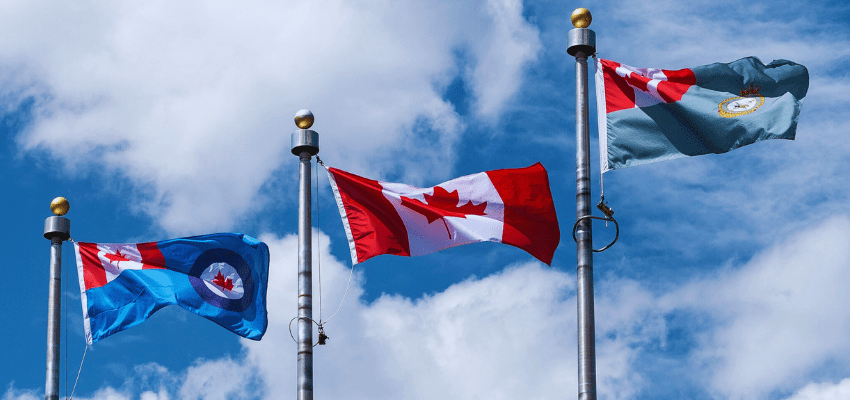
Photo by Master Corporal Robert Mitchell, Royal Canadian Air Force Imagery Technician | Combat Camera via Flickr.

This article originally appeared in The Globe and Mail.

By Charlotte Duval-Lantoine and Richard Shimooka, May 25, 2026

The past few weeks have been a roller coaster for the Canadian Armed Forces (CAF). After celebrating a 30-year high in recruitment, an internal report that raised questions about the quality of these new recruits was leaked.

The report was written by the commander of the school responsible for basic military qualifications. It outlined how changes in entry standards, which started in 2022 with the opening of the military to permanent residents, affected training outcomes. The bottom line stood in sharp contrast with the optimism Canadian generals displayed a week prior: the completion rate of basic training declined from a historical average of 85 per cent to 77 per cent.

These findings sent shockwaves through the defence community, and raised questions around the quality of recruits and future operational effectiveness. But the reaction may miss two key points. First, the report demonstrates that, despite changes in standards to admissions, criteria for success at basic training have not changed.

Donor button.

Second, the report reflects an important shift toward risk-taking, learning, and adaptation within the military. This is what we want for an organization that wants to win the next war. As retired Australian general Mick Ryan noted in assessing the war in Ukraine, “[a]daptation is THE critical contemporary and future capability for nations and their military organizations to win in war.”

The reality is that any modernization plan must address the critical personnel deficiency that has plagued the CAF for the past 30 years, starting with the poorly managed drawdown of the 1990s. Its effects have been crippling and wide-ranging; contributing to low readiness rates among units and systems, poor morale, high attrition rates, and the delayed transition to new capabilities. Without a robust pool of military personnel to fill existing skill deficiencies, as well as emerging ones as the CAF introduces new capabilities, any effort to create a modern fighting force will continue to stall. Thus, innovation in how the military recruits and trains is an essential element towards this objective.

The current effort was a small gambit, moving in the right direction. While the military may have opened to permanent residents, removed aptitude test requirements, and relaxed medical limitations, it did not change any of the criteria defining successful completion of basic training. Thus, enters simple arithmetic: as the CAF widens its pool of candidates and enrollees, the success rate at the recruit school declines. Does it mean that the military will now have lower quality aviators, sailors, and soldiers? No, because expectations for graduation have remained unchanged.

The military has tried to pre-empt the challenges associated with relaxing standards for entry. In 2024, it introduced a probationary period, which, ironically, may contribute to lower completion rates by making it easier to remove recruits who do not meet the standards. Since March 2026, the CAF requires three years of residency before eligibility (the initial policy also never gave permanent residents unconditional eligibility).

The latest recruitment announcement also included measures to modernize application and recruitment processes and increase recruit school capacity.

After decades of difficulty reaching its total strength (the government authorized the Regular Force to grow to 70,000 in 2008, a target that has yet to be met), the military is proactively rethinking recruitment. It was high time the military tried a different approach.

The leaked report suggests the CAF is embracing the kind of risk-taking defence experts have long urged in procurement. While fear of poor results fuels risk aversion, the military, defence community, and public must learn to accept risk and understand that it comes with downsides – this is how one innovates and adapts.

But the CAF could – and should – be bolder.

Instead of tweaking the selection standards, the military should establish entry and basic training standards tailored to recruits’ chosen trades, which would help restore historical training success rates without reducing overall enrollment. Adequately resourcing recruitment and training schools will be crucial, but digitized recruitment now makes it more feasible than a decade ago. It would improve triaging of candidates by skills and interest, and could reduce attrition.

This would require a different way to think about recruitment and who we think aviators, sailors, and soldiers should be. It would be uncomfortable – and difficult – for the military to implement, but not impossible. Doing it would show that the CAF is adapting, and is becoming the learning organization it claims to be. It is time we build this muscle, however uncomfortable the process is.


Charlotte Duval-Lantoine is the vice-president of Ottawa Operations and a fellow at the Canadian Global Affairs Institute.

Richard Shimooka is a senior fellow at the Macdonald-Laurier Institute.

Source: The Globe and Mail
Tags: Charlotte Duval-Lantoine

Related Posts

China doesn’t even have to pressure Canada to keep Liberals in line: Joe Varner in the National Post
Foreign Affairs

China doesn’t even have to pressure Canada to keep Liberals in line: Joe Varner in the National Post

May 25, 2026
Reconciliation on the rocks?: Ken Coates for Inside Policy
Indigenous Affairs

Reconciliation on the rocks?: Ken Coates for Inside Policy

May 22, 2026
The Muslim Brotherhood’s covert presence in the West: Lorenzo Vidino and Casey Babb for Inside Policy Talks
Inside Policy

The Muslim Brotherhood’s covert presence in the West: Lorenzo Vidino and Casey Babb for Inside Policy Talks

May 21, 2026

Newsletter Signup

  Thank you for Signing Up
  Please correct the marked field(s) below.
Email Address  *
1,true,6,Contact Email,2
First Name *
1,true,1,First Name,2
Last Name *
1,true,1,Last Name,2
*
*Required Fields

Follow us on

Macdonald-Laurier Institute

323 Chapel Street, Suite #300
Ottawa, Ontario, K1N 7Z2 Canada

613.482.8327

info@macdonaldlaurier.ca
MLI directory

Support Us

Support the Macdonald-Laurier Institute to help ensure that Canada is one of the best governed countries in the world. Click below to learn more or become a sponsor.

Support Us

  • Inside Policy Magazine
  • Annual Reports
  • Jobs
  • Privacy Policy

© 2023 Macdonald-Laurier Institute. All Rights reserved.

No Result
View All Result
  • Home
  • About
    • Who We Are
    • Who Makes MLI Work
    • Fifteenth Anniversary
  • Experts
    • Experts Directory
    • In Memoriam
  • Issues
    • Domestic Policy
      • Economic Policy
      • Justice
      • Rights and Freedoms
      • Assisted Suicide (MAID)
      • Health Care
      • COVID-19
      • Gender Identity
      • Canada’s Political Tradition
      • AI, Technology and Innovation
      • Media and Telecoms
      • Housing
      • Immigration
      • Agriculture and Agri-Food
      • Competition Policy
    • Energy Policy
      • Energy
      • Environment
    • Foreign Policy
      • Israel-Hamas War
      • Ukraine
      • Taiwan
      • China
      • Europe and Russia
      • Indo-Pacific
      • Middle East and North Africa
      • North America
      • Foreign Interference
      • National Defence
      • National Security
      • Foreign Affairs
    • Indigenous Affairs
  • Projects
    • CNAPS (Center for North American Prosperity and Security)
    • Justice Report Card
    • The Promised Land
    • Voices that Inspire: The Macdonald-Laurier Vancouver Speaker Series
    • Dragon at the door
    • Canada on top of the world
    • Letter to a minister
    • The Great Energy Crisis
    • DisInfoWatch.org
    • Managing Indigenous Prosperity
    • Judicial Foundations
    • Landmark Cases Council
    • Defending The Marketplace of Ideas
    • Reforming the University
    • Past Projects
      • Digital Policy & Connectivity
      • Double Trouble
      • Canada and the Indo-Pacific Initiative
      • The Transatlantic Program
      • COVID Misery Index
      • Speak for Ourselves
      • The Eavesdropping Dragon: Huawei
      • Talkin’ in the Free World with Mariam Memarsadeghi
      • An Intellectual Property Strategy for Canada
      • Munk Senior Fellows
      • A Mandate for Canada
      • Confederation Series
      • Fiscal Reform
      • The Canadian Century project
      • Fixing Canadian health care
      • Internal trade
      • From a mandate for change
      • Size of government in Canada
      • Straight Talk
      • Labour Market Report
      • Leading Economic Indicator
      • Centre for Advancing Canada’s Interests Abroad
      • Indigenous Prosperity at a Crossroads
  • Events
    • Upcoming Events
    • Past Events
      • MLI Dinners
      • Great Canadian Debates
  • Latest News
  • Libraries
    • Columns
    • Commentary
    • Papers
    • Books
    • Video
  • Donate

© 2023 Macdonald-Laurier Institute. All Rights reserved.