
Friday, February 6, 2026
No Result
View All Result
  • Media
Macdonald-Laurier Institute
  • Home
  • About
    • Who We Are
    • Who Makes MLI Work
    • Fifteenth Anniversary
  • Experts
    • Experts Directory
    • In Memoriam
  • Issues
    • Domestic Policy
      • Economic Policy
      • Justice
      • Rights and Freedoms
      • Assisted Suicide (MAID)
      • Health Care
      • COVID-19
      • Gender Identity
      • Canada’s Political Tradition
      • AI, Technology and Innovation
      • Media and Telecoms
      • Housing
      • Immigration
      • Agriculture and Agri-Food
      • Competition Policy
    • Energy Policy
      • Energy
      • Environment
    • Foreign Policy
      • Israel-Hamas War
      • Ukraine
      • Taiwan
      • China
      • Europe and Russia
      • Indo-Pacific
      • Middle East and North Africa
      • North America
      • Foreign Interference
      • National Defence
      • National Security
      • Foreign Affairs
    • Indigenous Affairs
  • Projects
    • CNAPS (Center for North American Prosperity and Security)
    • The Promised Land
    • Voices that Inspire: The Macdonald-Laurier Vancouver Speaker Series
    • Dragon at the door
    • Canada on top of the world
    • Letter to a minister
    • Justice Report Card
    • The Great Energy Crisis
    • DisInfoWatch.org
    • Managing Indigenous Prosperity
    • Judicial Foundations
    • Landmark Cases Council
    • Defending The Marketplace of Ideas
    • Reforming the University
    • Past Projects
      • Digital Policy & Connectivity
      • Double Trouble
      • Canada and the Indo-Pacific Initiative
      • The Transatlantic Program
      • COVID Misery Index
        • Provincial COVID Misery Index
        • Beyond Lockdown
        • COVID and after: A mandate for recovery
      • Speak for Ourselves
      • The Eavesdropping Dragon: Huawei
      • Talkin’ in the Free World with Mariam Memarsadeghi
      • An Intellectual Property Strategy for Canada
      • Munk Senior Fellows
      • A Mandate for Canada
      • Confederation Series
      • Fiscal Reform
      • The Canadian Century project
      • Fixing Canadian health care
      • Internal trade
      • From a mandate for change
      • Size of government in Canada
      • Straight Talk
      • Labour Market Report
      • Leading Economic Indicator
      • Centre for Advancing Canada’s Interests Abroad
      • Indigenous Prosperity at a Crossroads
        • Aboriginal Canada and Natural Resources
  • Events
    • Upcoming Events
    • Past Events
      • MLI Dinners
      • Great Canadian Debates
  • Latest News
  • Libraries
    • Columns
    • Commentary
    • Papers
    • Books
    • Video
  • Donate
  • Home
  • About
    • Who We Are
    • Who Makes MLI Work
    • Fifteenth Anniversary
  • Experts
    • Experts Directory
    • In Memoriam
  • Issues
    • Domestic Policy
      • Economic Policy
      • Justice
      • Rights and Freedoms
      • Assisted Suicide (MAID)
      • Health Care
      • COVID-19
      • Gender Identity
      • Canada’s Political Tradition
      • AI, Technology and Innovation
      • Media and Telecoms
      • Housing
      • Immigration
      • Agriculture and Agri-Food
      • Competition Policy
    • Energy Policy
      • Energy
      • Environment
    • Foreign Policy
      • Israel-Hamas War
      • Ukraine
      • Taiwan
      • China
      • Europe and Russia
      • Indo-Pacific
      • Middle East and North Africa
      • North America
      • Foreign Interference
      • National Defence
      • National Security
      • Foreign Affairs
    • Indigenous Affairs
  • Projects
    • CNAPS (Center for North American Prosperity and Security)
    • The Promised Land
    • Voices that Inspire: The Macdonald-Laurier Vancouver Speaker Series
    • Dragon at the door
    • Canada on top of the world
    • Letter to a minister
    • Justice Report Card
    • The Great Energy Crisis
    • DisInfoWatch.org
    • Managing Indigenous Prosperity
    • Judicial Foundations
    • Landmark Cases Council
    • Defending The Marketplace of Ideas
    • Reforming the University
    • Past Projects
      • Digital Policy & Connectivity
      • Double Trouble
      • Canada and the Indo-Pacific Initiative
      • The Transatlantic Program
      • COVID Misery Index
        • Provincial COVID Misery Index
        • Beyond Lockdown
        • COVID and after: A mandate for recovery
      • Speak for Ourselves
      • The Eavesdropping Dragon: Huawei
      • Talkin’ in the Free World with Mariam Memarsadeghi
      • An Intellectual Property Strategy for Canada
      • Munk Senior Fellows
      • A Mandate for Canada
      • Confederation Series
      • Fiscal Reform
      • The Canadian Century project
      • Fixing Canadian health care
      • Internal trade
      • From a mandate for change
      • Size of government in Canada
      • Straight Talk
      • Labour Market Report
      • Leading Economic Indicator
      • Centre for Advancing Canada’s Interests Abroad
      • Indigenous Prosperity at a Crossroads
        • Aboriginal Canada and Natural Resources
  • Events
    • Upcoming Events
    • Past Events
      • MLI Dinners
      • Great Canadian Debates
  • Latest News
  • Libraries
    • Columns
    • Commentary
    • Papers
    • Books
    • Video
  • Donate
No Result
View All Result
Macdonald-Laurier Institute

A mixed F-35/Gripen fleet will fail us in every way: Richard Shimooka in the National Post

The Gripen is less capable, more expensive and still reliant on U.S. production.

February 6, 2026
in National Defence, Latest News, Columns, Foreign Policy, In the Media, Richard Shimooka
Reading Time: 8 mins read
A A
A mixed F-35/Gripen fleet will fail us in every way: Richard Shimooka in the National Post

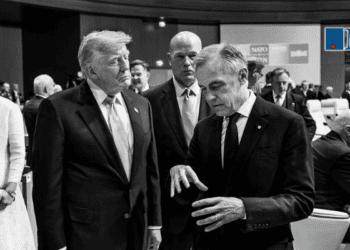
Photo by NATO via Flickr.

This article originally appeared in the National Post.

By Richard Shimooka, February 6, 2026

There are few policy areas in Canadian politics as tortured as the CF-18 replacement program, now entering its 16th year and undergoing its fifth evaluation — which is likely to once again recommend continuing with the purchase of F-35s.

Despite this, it was reported last week that “all the signs point to” the government pursuing a mixed fighter jet fleet, with half F-35s and half Saab Gripens. Yet the mixed fleet option comes with serious consequences that should give decision makers reason to pause.

For those opposed to a fleet of only F-35s the common response is that the fighter’s technical capabilities are not in question, especially after a leak last year of a 2021 competition evaluation carried out by the Department of National Defence. Rather, critics say, the atrocious state of relations with United States President Donald Trump’s administration makes the full purchase untenable.

However, a broader view of U.S. politics tells a different story. A year into his second term, the president’s words and actions are a radical departure from the deeply embedded foundations of American foreign policy, particularly with regards to free trade and maintaining strong alliances. Trump’s approach is hugely destructive to every aspect of U.S. domestic and foreign policy. Consider the president’s threat to “Decertify” Bombardier aircraft — which represent between 40 to 50 per cent of the regional jet market, providing 3,000 direct and tens of thousands of indirect jobs inside the United States.

Therefore, the core question is whether the president’s policies represent a permanent rupture in Canada-U.S. relations? It shouldn’t be surprising that a vast majority of Americans, including Republicans, reject most aspects of the Trump White House’s foreign policy. That means it’s very likely that even the most right-leaning Republican candidates for elected office in the coming years will need to return to old orthodoxies on cooperation with allies, or otherwise face electoral irrelevance. Moreover, given the damage wreaked on America’s international standing by Trump’s current posture, the U.S. will need allies more than ever — especially given the deteriorating state of the international system.

While Canadians are quick to throw rocks at the Trump administration’s reliability as an ally, they should be aware of the glass house from which they’re hurling them. American concerns about Canada’s lack of defence spending — and the vulnerabilities this poses for their own security — far predate this administration. That concern has been regularly expressed by our partners and allies.

U.S. Ambassador to Canada Pete Hoekstra weighed in — suggesting the United States would need to “fill in the gaps” to defend Canada if it did not proceed with the full F-35 fleet. Hoekstra was referencing the future, but many who are familiar with the state of today’s RCAF will take Hoekstra’s remarks as an accurate description of the present. The 40-year-old CF-18 fleet — though modernized with advanced radar and avionics shared with the U.S. Navy’s Super Hornets — are unable to deal with the complex threats facing the North American continent, including cruise missiles, hypersonic weapons and long-range Russian and Chinese bombers. And as the ambassador’s comments underlined, acquiring Swedish made Gripen jets, even in a dual fleet configuration, would only institutionalize that weakness for decades to come.

Proponents of a dual fleet ignore this, and claim the Gripen’s vastly lower costs make up for the capability difference. To support a dual fleet they advocate for a “hi-lo mix” — a few more capable but costlier aircraft, supported by a fleet of less capable but cheaper aircraft. Yet Canada made a conscious decision in the 1980s to consolidate into a single fleet — with the advent of flexible multi-role aircraft like the CF-18 — in order to maximize the value of its spending. Besides, the Gripen does not provide a cost savings over the F-35: a reflection of the latter’s massive production scale that drives down the per-unit cost of aircraft procurement and upgrades. Lockheed Martin delivers more F-35s in a year than the Gripen program’s lifetime order book of 117 aircraft. Consequently, savings from the Gripen’s lower operational expenses are erased when the total costs of ownership are considered. Operating two fleets is inefficient and costs far more in personnel and resources than a single one. It makes zero sense when the “lo” portion costs more than the “hi” portion of the mix. The combination of capability and economics are a key reason why by 2035 the most common fighter in Europe will be the F-35, with six states, including Denmark and Finland opting to go the single fleet route.

The final reasoning behind purchasing Gripens would be to support the Canadian aviation industry, which is even more fanciful. The cost of establishing a production line in Canada would obliterate the tenuous cost argument for the fighter, and may only bring hundreds of jobs — not the ten thousand promised by Saab. To obtain more jobs, Canada would need to internalize more of the supply chain, which could lead the “cheap” Gripen to have a purchase cost double the F-35 for a largely obsolete capability. Moreover it does not offer greater sovereign control over operations compared to the F35. In fact, critical portions of the Gripen, including its core avionics, are built in the United States, and therefore subject to American controls.

It is rare that one encounters a policy decision where the facts are so one-sidedly in favour of one option, yet, 16 years in, another Canadian government seems incapable of following through. Purchasing fighters, or any defence capability, should be based on a careful consideration of long-term trends and technical evaluation. By considering a dual fleet, Canada is doing the exact opposite — courting a decision that would have deleterious consequences for Canada’s defence, fiscal solvency and industrial outcomes, and will extend far beyond Trump’s time in office.


Richard Shimooka is a senior fellow at the Macdonald-Laurier Institute.

Source: National Post

Related Posts

No, Canada didn’t give the U.S. a trillion-dollar gift—but there’s still reason to worry: Trevor Tombe in The Hub
Economic Policy

Trade policy uncertainty is bad for investment and jobs: Jack Mintz in the Financial Post

February 6, 2026
Memo to middle powers – Time for a reality check: Stephen Nagy in the Japan Times
China: The dragon at the door

Memo to middle powers – Time for a reality check: Stephen Nagy in the Japan Times

February 6, 2026
Carney’s energy superpower talk isn’t cutting it—we need action: Heather Exner-Pirot in The Hub
Energy

Carney’s energy superpower talk isn’t cutting it—we need action: Heather Exner-Pirot in The Hub

February 6, 2026
Next Post
Canada’s digital and AI governance must account for geopolitics: André Côté and Peter Copeland for Inside Policy Talks

Canada's digital and AI governance must account for geopolitics: André Côté and Peter Copeland for Inside Policy Talks

Newsletter Signup

  Thank you for Signing Up
  Please correct the marked field(s) below.
Email Address  *
1,true,6,Contact Email,2
First Name *
1,true,1,First Name,2
Last Name *
1,true,1,Last Name,2
*
*Required Fields

Follow us on

Macdonald-Laurier Institute

323 Chapel Street, Suite #300
Ottawa, Ontario, K1N 7Z2 Canada

613.482.8327

info@macdonaldlaurier.ca
MLI directory

Support Us

Support the Macdonald-Laurier Institute to help ensure that Canada is one of the best governed countries in the world. Click below to learn more or become a sponsor.

Support Us

  • Inside Policy Magazine
  • Annual Reports
  • Jobs
  • Privacy Policy

© 2023 Macdonald-Laurier Institute. All Rights reserved.

This site uses cookies. By continuing to browse the site you are agreeing to our use of cookies.

Privacy Preference Center

Consent Management

Necessary

Advertising

Analytics

Other

No Result
View All Result
  • Home
  • About
    • Who We Are
    • Who Makes MLI Work
    • Fifteenth Anniversary
  • Experts
    • Experts Directory
    • In Memoriam
  • Issues
    • Domestic Policy
      • Economic Policy
      • Justice
      • Rights and Freedoms
      • Assisted Suicide (MAID)
      • Health Care
      • COVID-19
      • Gender Identity
      • Canada’s Political Tradition
      • AI, Technology and Innovation
      • Media and Telecoms
      • Housing
      • Immigration
      • Agriculture and Agri-Food
      • Competition Policy
    • Energy Policy
      • Energy
      • Environment
    • Foreign Policy
      • Israel-Hamas War
      • Ukraine
      • Taiwan
      • China
      • Europe and Russia
      • Indo-Pacific
      • Middle East and North Africa
      • North America
      • Foreign Interference
      • National Defence
      • National Security
      • Foreign Affairs
    • Indigenous Affairs
  • Projects
    • CNAPS (Center for North American Prosperity and Security)
    • The Promised Land
    • Voices that Inspire: The Macdonald-Laurier Vancouver Speaker Series
    • Dragon at the door
    • Canada on top of the world
    • Letter to a minister
    • Justice Report Card
    • The Great Energy Crisis
    • DisInfoWatch.org
    • Managing Indigenous Prosperity
    • Judicial Foundations
    • Landmark Cases Council
    • Defending The Marketplace of Ideas
    • Reforming the University
    • Past Projects
      • Digital Policy & Connectivity
      • Double Trouble
      • Canada and the Indo-Pacific Initiative
      • The Transatlantic Program
      • COVID Misery Index
      • Speak for Ourselves
      • The Eavesdropping Dragon: Huawei
      • Talkin’ in the Free World with Mariam Memarsadeghi
      • An Intellectual Property Strategy for Canada
      • Munk Senior Fellows
      • A Mandate for Canada
      • Confederation Series
      • Fiscal Reform
      • The Canadian Century project
      • Fixing Canadian health care
      • Internal trade
      • From a mandate for change
      • Size of government in Canada
      • Straight Talk
      • Labour Market Report
      • Leading Economic Indicator
      • Centre for Advancing Canada’s Interests Abroad
      • Indigenous Prosperity at a Crossroads
  • Events
    • Upcoming Events
    • Past Events
      • MLI Dinners
      • Great Canadian Debates
  • Latest News
  • Libraries
    • Columns
    • Commentary
    • Papers
    • Books
    • Video
  • Donate

© 2023 Macdonald-Laurier Institute. All Rights reserved.