Thursday, January 29, 2026
No Result
View All Result
  • Media
Macdonald-Laurier Institute
  • Home
  • About
    • Who We Are
    • Who Makes MLI Work
    • Fifteenth Anniversary
  • Experts
    • Experts Directory
    • In Memoriam
  • Issues
    • Domestic Policy
      • Economic Policy
      • Justice
      • Rights and Freedoms
      • Assisted Suicide (MAID)
      • Health Care
      • COVID-19
      • Gender Identity
      • Canada’s Political Tradition
      • AI, Technology and Innovation
      • Media and Telecoms
      • Housing
      • Immigration
      • Agriculture and Agri-Food
      • Competition Policy
    • Energy Policy
      • Energy
      • Environment
    • Foreign Policy
      • Israel-Hamas War
      • Ukraine
      • Taiwan
      • China
      • Europe and Russia
      • Indo-Pacific
      • Middle East and North Africa
      • North America
      • Foreign Interference
      • National Defence
      • National Security
      • Foreign Affairs
    • Indigenous Affairs
  • Projects
    • CNAPS (Center for North American Prosperity and Security)
    • The Promised Land
    • Voices that Inspire: The Macdonald-Laurier Vancouver Speaker Series
    • Dragon at the door
    • Canada on top of the world
    • Letter to a minister
    • Justice Report Card
    • The Great Energy Crisis
    • DisInfoWatch.org
    • Managing Indigenous Prosperity
    • Judicial Foundations
    • Landmark Cases Council
    • Defending The Marketplace of Ideas
    • Reforming the University
    • Past Projects
      • Digital Policy & Connectivity
      • Double Trouble
      • Canada and the Indo-Pacific Initiative
      • The Transatlantic Program
      • COVID Misery Index
        • Provincial COVID Misery Index
        • Beyond Lockdown
        • COVID and after: A mandate for recovery
      • Speak for Ourselves
      • The Eavesdropping Dragon: Huawei
      • Talkin’ in the Free World with Mariam Memarsadeghi
      • An Intellectual Property Strategy for Canada
      • Munk Senior Fellows
      • A Mandate for Canada
      • Confederation Series
      • Fiscal Reform
      • The Canadian Century project
      • Fixing Canadian health care
      • Internal trade
      • From a mandate for change
      • Size of government in Canada
      • Straight Talk
      • Labour Market Report
      • Leading Economic Indicator
      • Centre for Advancing Canada’s Interests Abroad
      • Indigenous Prosperity at a Crossroads
        • Aboriginal Canada and Natural Resources
  • Events
    • Upcoming Events
    • Past Events
      • MLI Dinners
      • Great Canadian Debates
  • Latest News
  • Libraries
    • Columns
    • Commentary
    • Papers
    • Books
    • Video
  • Donate
  • Home
  • About
    • Who We Are
    • Who Makes MLI Work
    • Fifteenth Anniversary
  • Experts
    • Experts Directory
    • In Memoriam
  • Issues
    • Domestic Policy
      • Economic Policy
      • Justice
      • Rights and Freedoms
      • Assisted Suicide (MAID)
      • Health Care
      • COVID-19
      • Gender Identity
      • Canada’s Political Tradition
      • AI, Technology and Innovation
      • Media and Telecoms
      • Housing
      • Immigration
      • Agriculture and Agri-Food
      • Competition Policy
    • Energy Policy
      • Energy
      • Environment
    • Foreign Policy
      • Israel-Hamas War
      • Ukraine
      • Taiwan
      • China
      • Europe and Russia
      • Indo-Pacific
      • Middle East and North Africa
      • North America
      • Foreign Interference
      • National Defence
      • National Security
      • Foreign Affairs
    • Indigenous Affairs
  • Projects
    • CNAPS (Center for North American Prosperity and Security)
    • The Promised Land
    • Voices that Inspire: The Macdonald-Laurier Vancouver Speaker Series
    • Dragon at the door
    • Canada on top of the world
    • Letter to a minister
    • Justice Report Card
    • The Great Energy Crisis
    • DisInfoWatch.org
    • Managing Indigenous Prosperity
    • Judicial Foundations
    • Landmark Cases Council
    • Defending The Marketplace of Ideas
    • Reforming the University
    • Past Projects
      • Digital Policy & Connectivity
      • Double Trouble
      • Canada and the Indo-Pacific Initiative
      • The Transatlantic Program
      • COVID Misery Index
        • Provincial COVID Misery Index
        • Beyond Lockdown
        • COVID and after: A mandate for recovery
      • Speak for Ourselves
      • The Eavesdropping Dragon: Huawei
      • Talkin’ in the Free World with Mariam Memarsadeghi
      • An Intellectual Property Strategy for Canada
      • Munk Senior Fellows
      • A Mandate for Canada
      • Confederation Series
      • Fiscal Reform
      • The Canadian Century project
      • Fixing Canadian health care
      • Internal trade
      • From a mandate for change
      • Size of government in Canada
      • Straight Talk
      • Labour Market Report
      • Leading Economic Indicator
      • Centre for Advancing Canada’s Interests Abroad
      • Indigenous Prosperity at a Crossroads
        • Aboriginal Canada and Natural Resources
  • Events
    • Upcoming Events
    • Past Events
      • MLI Dinners
      • Great Canadian Debates
  • Latest News
  • Libraries
    • Columns
    • Commentary
    • Papers
    • Books
    • Video
  • Donate
No Result
View All Result
Macdonald-Laurier Institute

In an uncertain climate, Canada needs a civil defence corps: Marcus Kolga in the Globe and Mail

The defence of Canada in a serious crisis would not rest solely on uniformed forces. It would require citizens who are prepared, trained, and organized

January 29, 2026
in National Security, National Defence, Latest News, Columns, Foreign Policy, Foreign Interference, In the Media, Marcus Kolga
Reading Time: 4 mins read
A A
In an uncertain climate, Canada needs a civil defence corps: Marcus Kolga in the Globe and Mail

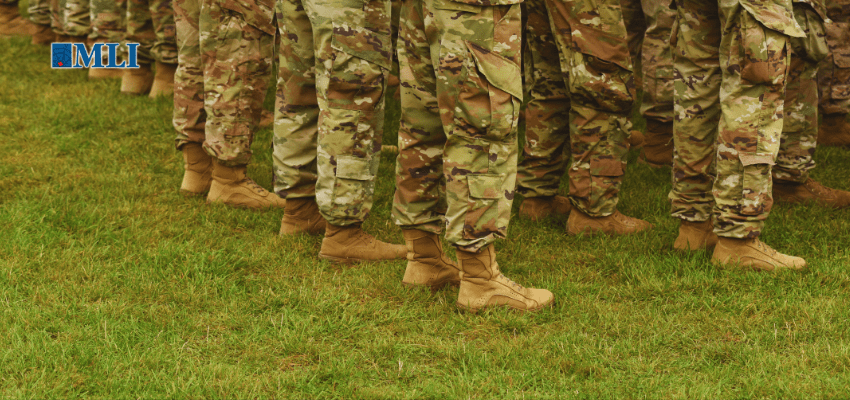
Image via Canva.

This article originally appeared in the Globe and Mail.

By Marcus Kolga, January 29, 2026

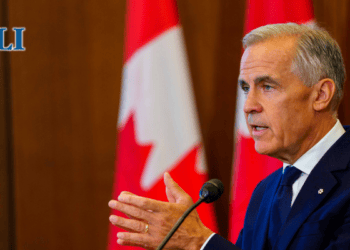
In his speech at the World Economic Forum in Davos, Prime Minister Mark Carney warned that Canadians’ long-standing assumptions about security and stability no longer hold. The world, he said, is more dangerous, volatile, and unpredictable than at any point in recent memory.

His warning came just hours after U.S. President Donald Trump posted an image depicting much of North America, including Canada and Greenland, draped in American flags – a provocation some dismissed as trolling. It should not be.

Combined with Russian provocations, Arctic claims, and Mr. Trump’s increasingly explicit rhetoric targeting America’s allies, the message is clear: Canada’s strategic environment has shifted. Canada’s own military planners are now quietly reassessing scenarios that would have been unthinkable until recently, including modelling by the Canadian Armed Forces for unconventional warfare in the event of a hypothetical U.S. military invasion on Canadian soil.

These are necessary preparations. The ability to defend the nation contributes to deterrence and sovereignty. In the current global climate, the military should be modelling all hypothetical attacks from powers such as Russia, China, or any other adversaries.

This underscores a sobering reality: the global security environment has shifted faster in the past decade than in the quarter-century preceding it. Yet Canada’s military is more strained and less ready than it should be.

Recruitment shortfalls, aging equipment, and years of political neglect have left gaps that cannot be filled overnight. That’s why the defence of Canada in a serious crisis would not rest solely on uniformed forces. It would require – as the CAF invasion response plans have confirmed – citizens who are prepared, trained, and organized. Today, they are not.

That must change, urgently.

Our allies have already accepted the reality of potential conflict. Sweden and Estonia, in particular, offer clear models for how democratic societies prepare their citizens for modern conflict without panic or militarization.

Sweden has recognized that contemporary warfare begins long before the first shot is fired. Through its Psychological Defence Agency, Sweden treats information resilience, civic trust, and public preparedness as pillars of national defence. Citizens are educated on how foreign actors manipulate fear and division. Public handbooks – like the pamphlet In Case of Crisis or War, distributed to every Swedish household – educate Swedes on preparing for crises from cyberattacks to full-scale war.

Estonia has internalized these lessons even more deeply, shaped by decades of exposure to Russian threats and grey-zone warfare. Central to its preparedness is the Estonian Defence League, a nationwide volunteer force that operates alongside the military. Estonia also equips citizens with practical tools, such as the “Ole valmis!” (“Be Prepared!”) mobile app, which provides clear emergency guidance from evacuation and psychological first aid. Preparedness is embedded in daily life.

Canada, by contrast, has done little to equip citizens for sustained crisis.

This is why the CAF’s recently developed defence mobilization plan deserves serious attention rather than reflexive criticism. Some commentators have falsely portrayed it as a scheme to conscript civil servants and rush them into combat. That is simply not what the document proposes.

The plan is a framework, not yet an activated program. The much-quoted figures – 100,000 primary reservists and up to 300,000 in supplemental capacity – are modelling assumptions to test logistics, legal authorities, and training pathways for a future volunteer corps. In Estonia, roughly 2.5 per cent of the population belongs to its national Defence League.

For Canada to reach a comparable level, a civil defence corps would require around one million volunteers.

There is nothing radical about this. It mirrors what many NATO allies have done for decades. Finland, Norway, Estonia, Latvia, Lithuania, Poland, and Denmark all maintain structured, disciplined volunteer or home-guard forces that supplement regular militaries and support civil defence. These are not militias. They are democratically accountable, professionally trained formations designed to strengthen national resilience.

Canada now faces a choice it has long avoided. We must accept that modern conflict tests societies before it tests armies. When Mr. Trump openly flirts with confrontation and annexation of allied territory, and Canada’s own military quietly models unconventional warfare scenarios at home, we must not hesitate to prepare Canadians for crisis.

In a crisis, defence will depend on citizens who are informed, trained and organized. We have not prepared them, and at present, Canada is not ready.

Sweden and Estonia have demonstrated that democratic preparedness does not require panic – only honesty and foresight. Canada needs a civil defence corps to strengthen resilience, support the CAF, and prepare for the crises that we already face.

The real danger is waiting until preparation is no longer a choice.


Marcus Kolga is a senior fellow at the Macdonald-Laurier Institute.
Source: The Globe and Mail

Related Posts

Canada is under assault from Chinese state interference: Dennis Molinaro and Christopher Coates for Inside Policy Talks
Foreign Affairs

Canada is under assault from Chinese state interference: Dennis Molinaro and Christopher Coates for Inside Policy Talks

January 29, 2026
Job Posting: Project Manager
Jobs

Job Posting: Domestic Policy Program Coordinator and Executive Assistant

January 29, 2026
breakthrough nation
Latest News

Breakthrough Nation with Karen Restoule: Claire Sault Series 2, Ep. 7

January 29, 2026
Next Post
Job Posting: Project Manager

Job Posting: Domestic Policy Program Coordinator and Executive Assistant

Newsletter Signup

  Thank you for Signing Up
  Please correct the marked field(s) below.
Email Address  *
1,true,6,Contact Email,2
First Name *
1,true,1,First Name,2
Last Name *
1,true,1,Last Name,2
*
*Required Fields

Follow us on

Macdonald-Laurier Institute

323 Chapel Street, Suite #300
Ottawa, Ontario, K1N 7Z2 Canada

613.482.8327

info@macdonaldlaurier.ca
MLI directory

Support Us

Support the Macdonald-Laurier Institute to help ensure that Canada is one of the best governed countries in the world. Click below to learn more or become a sponsor.

Support Us

  • Inside Policy Magazine
  • Annual Reports
  • Jobs
  • Privacy Policy

© 2023 Macdonald-Laurier Institute. All Rights reserved.

No Result
View All Result
  • Home
  • About
    • Who We Are
    • Who Makes MLI Work
    • Fifteenth Anniversary
  • Experts
    • Experts Directory
    • In Memoriam
  • Issues
    • Domestic Policy
      • Economic Policy
      • Justice
      • Rights and Freedoms
      • Assisted Suicide (MAID)
      • Health Care
      • COVID-19
      • Gender Identity
      • Canada’s Political Tradition
      • AI, Technology and Innovation
      • Media and Telecoms
      • Housing
      • Immigration
      • Agriculture and Agri-Food
      • Competition Policy
    • Energy Policy
      • Energy
      • Environment
    • Foreign Policy
      • Israel-Hamas War
      • Ukraine
      • Taiwan
      • China
      • Europe and Russia
      • Indo-Pacific
      • Middle East and North Africa
      • North America
      • Foreign Interference
      • National Defence
      • National Security
      • Foreign Affairs
    • Indigenous Affairs
  • Projects
    • CNAPS (Center for North American Prosperity and Security)
    • The Promised Land
    • Voices that Inspire: The Macdonald-Laurier Vancouver Speaker Series
    • Dragon at the door
    • Canada on top of the world
    • Letter to a minister
    • Justice Report Card
    • The Great Energy Crisis
    • DisInfoWatch.org
    • Managing Indigenous Prosperity
    • Judicial Foundations
    • Landmark Cases Council
    • Defending The Marketplace of Ideas
    • Reforming the University
    • Past Projects
      • Digital Policy & Connectivity
      • Double Trouble
      • Canada and the Indo-Pacific Initiative
      • The Transatlantic Program
      • COVID Misery Index
      • Speak for Ourselves
      • The Eavesdropping Dragon: Huawei
      • Talkin’ in the Free World with Mariam Memarsadeghi
      • An Intellectual Property Strategy for Canada
      • Munk Senior Fellows
      • A Mandate for Canada
      • Confederation Series
      • Fiscal Reform
      • The Canadian Century project
      • Fixing Canadian health care
      • Internal trade
      • From a mandate for change
      • Size of government in Canada
      • Straight Talk
      • Labour Market Report
      • Leading Economic Indicator
      • Centre for Advancing Canada’s Interests Abroad
      • Indigenous Prosperity at a Crossroads
  • Events
    • Upcoming Events
    • Past Events
      • MLI Dinners
      • Great Canadian Debates
  • Latest News
  • Libraries
    • Columns
    • Commentary
    • Papers
    • Books
    • Video
  • Donate

© 2023 Macdonald-Laurier Institute. All Rights reserved.