Thursday, December 4, 2025
No Result
View All Result
  • Media
Macdonald-Laurier Institute
  • Home
  • About
    • Who We Are
    • Who Makes MLI Work
    • Fifteenth Anniversary
  • Experts
    • Experts Directory
    • In Memoriam
  • Issues
    • Domestic Policy
      • Economic Policy
      • Justice
      • Rights and Freedoms
      • Assisted Suicide (MAID)
      • Health Care
      • COVID-19
      • Gender Identity
      • Canada’s Political Tradition
      • AI, Technology and Innovation
      • Media and Telecoms
      • Housing
      • Immigration
      • Agriculture and Agri-Food
      • Competition Policy
    • Energy Policy
      • Energy
      • Environment
    • Foreign Policy
      • Israel-Hamas War
      • Ukraine
      • Taiwan
      • China
      • Europe and Russia
      • Indo-Pacific
      • Middle East and North Africa
      • North America
      • Foreign Interference
      • National Defence
      • National Security
      • Foreign Affairs
    • Indigenous Affairs
  • Projects
    • CNAPS (Center for North American Prosperity and Security)
    • The Promised Land
    • Voices that Inspire: The Macdonald-Laurier Vancouver Speaker Series
    • Dragon at the door
    • Canada on top of the world
    • Letter to a minister
    • Justice Report Card
    • The Great Energy Crisis
    • DisInfoWatch.org
    • Managing Indigenous Prosperity
    • Judicial Foundations
    • Landmark Cases Council
    • Defending The Marketplace of Ideas
    • Reforming the University
    • Past Projects
      • Digital Policy & Connectivity
      • Double Trouble
      • Canada and the Indo-Pacific Initiative
      • The Transatlantic Program
      • COVID Misery Index
        • Provincial COVID Misery Index
        • Beyond Lockdown
        • COVID and after: A mandate for recovery
      • Speak for Ourselves
      • The Eavesdropping Dragon: Huawei
      • Talkin’ in the Free World with Mariam Memarsadeghi
      • An Intellectual Property Strategy for Canada
      • Munk Senior Fellows
      • A Mandate for Canada
      • Confederation Series
      • Fiscal Reform
      • The Canadian Century project
      • Fixing Canadian health care
      • Internal trade
      • From a mandate for change
      • Size of government in Canada
      • Straight Talk
      • Labour Market Report
      • Leading Economic Indicator
      • Centre for Advancing Canada’s Interests Abroad
      • Indigenous Prosperity at a Crossroads
        • Aboriginal Canada and Natural Resources
  • Events
    • Upcoming Events
    • Past Events
      • MLI Dinners
      • Great Canadian Debates
  • Latest News
  • Libraries
    • Columns
    • Commentary
    • Papers
    • Books
    • Video
  • Donate
  • Home
  • About
    • Who We Are
    • Who Makes MLI Work
    • Fifteenth Anniversary
  • Experts
    • Experts Directory
    • In Memoriam
  • Issues
    • Domestic Policy
      • Economic Policy
      • Justice
      • Rights and Freedoms
      • Assisted Suicide (MAID)
      • Health Care
      • COVID-19
      • Gender Identity
      • Canada’s Political Tradition
      • AI, Technology and Innovation
      • Media and Telecoms
      • Housing
      • Immigration
      • Agriculture and Agri-Food
      • Competition Policy
    • Energy Policy
      • Energy
      • Environment
    • Foreign Policy
      • Israel-Hamas War
      • Ukraine
      • Taiwan
      • China
      • Europe and Russia
      • Indo-Pacific
      • Middle East and North Africa
      • North America
      • Foreign Interference
      • National Defence
      • National Security
      • Foreign Affairs
    • Indigenous Affairs
  • Projects
    • CNAPS (Center for North American Prosperity and Security)
    • The Promised Land
    • Voices that Inspire: The Macdonald-Laurier Vancouver Speaker Series
    • Dragon at the door
    • Canada on top of the world
    • Letter to a minister
    • Justice Report Card
    • The Great Energy Crisis
    • DisInfoWatch.org
    • Managing Indigenous Prosperity
    • Judicial Foundations
    • Landmark Cases Council
    • Defending The Marketplace of Ideas
    • Reforming the University
    • Past Projects
      • Digital Policy & Connectivity
      • Double Trouble
      • Canada and the Indo-Pacific Initiative
      • The Transatlantic Program
      • COVID Misery Index
        • Provincial COVID Misery Index
        • Beyond Lockdown
        • COVID and after: A mandate for recovery
      • Speak for Ourselves
      • The Eavesdropping Dragon: Huawei
      • Talkin’ in the Free World with Mariam Memarsadeghi
      • An Intellectual Property Strategy for Canada
      • Munk Senior Fellows
      • A Mandate for Canada
      • Confederation Series
      • Fiscal Reform
      • The Canadian Century project
      • Fixing Canadian health care
      • Internal trade
      • From a mandate for change
      • Size of government in Canada
      • Straight Talk
      • Labour Market Report
      • Leading Economic Indicator
      • Centre for Advancing Canada’s Interests Abroad
      • Indigenous Prosperity at a Crossroads
        • Aboriginal Canada and Natural Resources
  • Events
    • Upcoming Events
    • Past Events
      • MLI Dinners
      • Great Canadian Debates
  • Latest News
  • Libraries
    • Columns
    • Commentary
    • Papers
    • Books
    • Video
  • Donate
No Result
View All Result
Macdonald-Laurier Institute

Ottawa needs to shake its procurement paralysis: Tony Clement in iPolitics

For the sake of actually getting defence procurement done, I believe we need a cultural shift — away from endless bureaucratic battles and politicization, and toward the prime minister and his team making decisions efficiently.

December 2, 2025
in National Defence, Latest News, Columns, Foreign Policy, In the Media
Reading Time: 3 mins read
A A
It’s time for national military service: J.L. Granatstein in The Hub

Image via Canva.

This article originally appeared in iPolitics.

By Tony Clement, December 2, 2025

Canada’s defence procurement system is back in the news and on the public policy agenda. And rightly so.

Meeting our NATO defence spending commitments is front and centre for the Carney government. And commentators have noticed this kind of project cannot occur overnight. Moreover, how Canada chooses and funds defence procurements has been neither smooth nor efficient for decades.

I served in two key defence procurement roles in the Harper Government: industry minister and Treasury Board president — essentially the government’s chief operating officer. In those roles, I participated in procurement decisions for Canada’s shipbuilding strategy, and the purchasing of items like F-35 fighter jets and fixed-wing search and rescue planes, among others. Much can still be learned from these procurements.

Why do these decisions take so long and why do costs escalate so greatly? There are many culprits, but two come to mind: industrial and technology benefits (ITBs) and the oversight process.

ITB policy — known as industrial and regional benefits (IRBs) during my time government — requires awardees of defence contracts to undertake business activity in Canada close or equal to the contract’s value. This holds the potential for Canadian jobs, and exports for Canadian firms as part of the defence supply chain. But a major failing with ITBs is that they tend to not result in long-term economic benefits. Rather, they are short-term reciprocal contractual arrangements that end with the original procurement.

This limitation is partly why the national shipbuilding strategy — which is now producing ships in Quebec, British Columbia, and Nova Scotia—was created. However, it also comes with a downside. Establishing a domestic supply base often results in delays and cost overruns. That was the case with Canadian shipbuilders, who were more expensive than other options, like South Korean shipyards. But the political imperative was to create local jobs for these massive purchases and keep the defence supply chain within Canada.

The push and pull of ITBs versus value for money is pertinent. Both Korea’s Hanwha Ocean and Germany’s Thyssen Krupp Marine Systems are pitching for the contract to build Canadian Navy subs. They’re also promising technology transfer and job creation in Canada, and accelerated delivery. With local supply chain resilience now part of the discussion, the balancing act of local versus foreign will continue.

The F-35 fighter jets also offer lessons. The Harper Government announced the F-35 as the replacement to the CF-18s in 2010, when I was industry minister. There were significant benefits to local defence suppliers, who would be manufacturing F-35 parts for the global supply chain. But the whole thing was derailed by a 2012 Auditor General’s report, insisting on a life-cycle costing mechanism which escalated costs multifold. Media and the Liberal opposition termed this a “fiasco.” That sucked the life out of getting things moving with the prime minister and cabinet. Under the new normal, the AG’s insistence on “life-cycle” cost calculations means very large numbers —even if some costs like fuel and maintenance could be as large or larger if carrying on with older equipment. This produces eye-watering total costs that are harder to defend politically.

The lesson from this last procurement — still in limbo and now a victim of the Trump tariff situation — is that the Auditor General process has made it extremely difficult to actually get deals done and decisions made in official Ottawa. Bureaucrats and politicians don’t want to fall victim to the next Auditor General report. I contend large procurement decisions are paralyzed as a result.

The Carney government is poised to announce its own defence industrial strategy, focusing on a new Defence Investment Agency, longer-term strategic partnerships, and support for Canadian industry through local supply chains and industrial benefits. It remains to be seen whether this Defence Investment Agency — another cook in the kitchen — will cut the Gordian knot of procurement delays, or simply add another bureaucratic layer.

For the sake of actually getting defence procurement done, I believe we need a cultural shift — away from endless bureaucratic battles and politicization, and toward the prime minister and his team making decisions efficiently. This means sometimes choosing lower cost alternatives without Canadian benefits, while others can truly proceed with bolstering a Canadian supply chain.

Assessing which procurement path is better suited for a given program will be difficult, but should be weighed between a grounded assessment of the CAF’s needs and the potential economic benefits that could be accrued if being sourced from a domestic supplier. That might be unpalatable to some, but the government will need to be able to justify these decisions to the public. Allowing superfluous considerations — like misleading Auditor General reporting, parochial political interests that do not serve the state’s overall needs, or any number of other distractions — will only serve to perpetuate the existing problem.

The rest of the world will no longer wait for Canada’s present unfit-for-purpose defence procurement disaster.


The Honourable Tony Clement was an MP from 2006-2019, serving in cabinet as health minister, industry minister, and Treasury Board president. He is a contributor to the Macdonald-Laurier Institute.
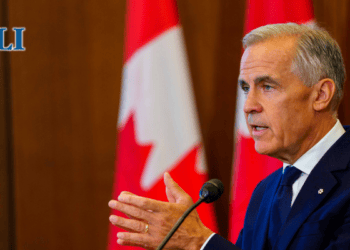

Source: iPolitics
Tags: Tony Clement

Related Posts

Property rights are “precarious” in Canada: Paul Warchuk and Peter Copeland for Inside Policy Talks
Domestic Policy

Property rights are “precarious” in Canada: Paul Warchuk and Peter Copeland for Inside Policy Talks

December 4, 2025
Harvard eschews ingrained ideology in order to tackle ‘genuinely hard problems’: Peter MacKinnon in the National Post
Reforming Universities

Harvard eschews ingrained ideology in order to tackle ‘genuinely hard problems’: Peter MacKinnon in the National Post

December 3, 2025
Risking public backlash? Canadian universities and demographic-based faculty hiring
Education

Risking public backlash? Canadian universities and demographic-based faculty hiring

December 3, 2025
Next Post
Will “The Great Feminization” displace the “old” male-dominated model?: Brian Lee Crowley in Civitas Outlook

Will "The Great Feminization" displace the “old” male-dominated model?: Brian Lee Crowley in Civitas Outlook

Newsletter Signup

  Thank you for Signing Up
  Please correct the marked field(s) below.
Email Address  *
1,true,6,Contact Email,2
First Name *
1,true,1,First Name,2
Last Name *
1,true,1,Last Name,2
*
*Required Fields

Follow us on

Macdonald-Laurier Institute

323 Chapel Street, Suite #300
Ottawa, Ontario, K1N 7Z2 Canada

613.482.8327

info@macdonaldlaurier.ca
MLI directory

Support Us

Support the Macdonald-Laurier Institute to help ensure that Canada is one of the best governed countries in the world. Click below to learn more or become a sponsor.

Support Us

  • Inside Policy Magazine
  • Annual Reports
  • Jobs
  • Privacy Policy

© 2023 Macdonald-Laurier Institute. All Rights reserved.

No Result
View All Result
  • Home
  • About
    • Who We Are
    • Who Makes MLI Work
    • Fifteenth Anniversary
  • Experts
    • Experts Directory
    • In Memoriam
  • Issues
    • Domestic Policy
      • Economic Policy
      • Justice
      • Rights and Freedoms
      • Assisted Suicide (MAID)
      • Health Care
      • COVID-19
      • Gender Identity
      • Canada’s Political Tradition
      • AI, Technology and Innovation
      • Media and Telecoms
      • Housing
      • Immigration
      • Agriculture and Agri-Food
      • Competition Policy
    • Energy Policy
      • Energy
      • Environment
    • Foreign Policy
      • Israel-Hamas War
      • Ukraine
      • Taiwan
      • China
      • Europe and Russia
      • Indo-Pacific
      • Middle East and North Africa
      • North America
      • Foreign Interference
      • National Defence
      • National Security
      • Foreign Affairs
    • Indigenous Affairs
  • Projects
    • CNAPS (Center for North American Prosperity and Security)
    • The Promised Land
    • Voices that Inspire: The Macdonald-Laurier Vancouver Speaker Series
    • Dragon at the door
    • Canada on top of the world
    • Letter to a minister
    • Justice Report Card
    • The Great Energy Crisis
    • DisInfoWatch.org
    • Managing Indigenous Prosperity
    • Judicial Foundations
    • Landmark Cases Council
    • Defending The Marketplace of Ideas
    • Reforming the University
    • Past Projects
      • Digital Policy & Connectivity
      • Double Trouble
      • Canada and the Indo-Pacific Initiative
      • The Transatlantic Program
      • COVID Misery Index
      • Speak for Ourselves
      • The Eavesdropping Dragon: Huawei
      • Talkin’ in the Free World with Mariam Memarsadeghi
      • An Intellectual Property Strategy for Canada
      • Munk Senior Fellows
      • A Mandate for Canada
      • Confederation Series
      • Fiscal Reform
      • The Canadian Century project
      • Fixing Canadian health care
      • Internal trade
      • From a mandate for change
      • Size of government in Canada
      • Straight Talk
      • Labour Market Report
      • Leading Economic Indicator
      • Centre for Advancing Canada’s Interests Abroad
      • Indigenous Prosperity at a Crossroads
  • Events
    • Upcoming Events
    • Past Events
      • MLI Dinners
      • Great Canadian Debates
  • Latest News
  • Libraries
    • Columns
    • Commentary
    • Papers
    • Books
    • Video
  • Donate

© 2023 Macdonald-Laurier Institute. All Rights reserved.