Saturday, December 13, 2025
No Result
View All Result
  • Media
Macdonald-Laurier Institute
  • Home
  • About
    • Who We Are
    • Who Makes MLI Work
    • Fifteenth Anniversary
  • Experts
    • Experts Directory
    • In Memoriam
  • Issues
    • Domestic Policy
      • Economic Policy
      • Justice
      • Rights and Freedoms
      • Assisted Suicide (MAID)
      • Health Care
      • COVID-19
      • Gender Identity
      • Canada’s Political Tradition
      • AI, Technology and Innovation
      • Media and Telecoms
      • Housing
      • Immigration
      • Agriculture and Agri-Food
      • Competition Policy
    • Energy Policy
      • Energy
      • Environment
    • Foreign Policy
      • Israel-Hamas War
      • Ukraine
      • Taiwan
      • China
      • Europe and Russia
      • Indo-Pacific
      • Middle East and North Africa
      • North America
      • Foreign Interference
      • National Defence
      • National Security
      • Foreign Affairs
    • Indigenous Affairs
  • Projects
    • CNAPS (Center for North American Prosperity and Security)
    • The Promised Land
    • Voices that Inspire: The Macdonald-Laurier Vancouver Speaker Series
    • Dragon at the door
    • Canada on top of the world
    • Letter to a minister
    • Justice Report Card
    • The Great Energy Crisis
    • DisInfoWatch.org
    • Managing Indigenous Prosperity
    • Judicial Foundations
    • Landmark Cases Council
    • Defending The Marketplace of Ideas
    • Reforming the University
    • Past Projects
      • Digital Policy & Connectivity
      • Double Trouble
      • Canada and the Indo-Pacific Initiative
      • The Transatlantic Program
      • COVID Misery Index
        • Provincial COVID Misery Index
        • Beyond Lockdown
        • COVID and after: A mandate for recovery
      • Speak for Ourselves
      • The Eavesdropping Dragon: Huawei
      • Talkin’ in the Free World with Mariam Memarsadeghi
      • An Intellectual Property Strategy for Canada
      • Munk Senior Fellows
      • A Mandate for Canada
      • Confederation Series
      • Fiscal Reform
      • The Canadian Century project
      • Fixing Canadian health care
      • Internal trade
      • From a mandate for change
      • Size of government in Canada
      • Straight Talk
      • Labour Market Report
      • Leading Economic Indicator
      • Centre for Advancing Canada’s Interests Abroad
      • Indigenous Prosperity at a Crossroads
        • Aboriginal Canada and Natural Resources
  • Events
    • Upcoming Events
    • Past Events
      • MLI Dinners
      • Great Canadian Debates
  • Latest News
  • Libraries
    • Columns
    • Commentary
    • Papers
    • Books
    • Video
  • Donate
  • Home
  • About
    • Who We Are
    • Who Makes MLI Work
    • Fifteenth Anniversary
  • Experts
    • Experts Directory
    • In Memoriam
  • Issues
    • Domestic Policy
      • Economic Policy
      • Justice
      • Rights and Freedoms
      • Assisted Suicide (MAID)
      • Health Care
      • COVID-19
      • Gender Identity
      • Canada’s Political Tradition
      • AI, Technology and Innovation
      • Media and Telecoms
      • Housing
      • Immigration
      • Agriculture and Agri-Food
      • Competition Policy
    • Energy Policy
      • Energy
      • Environment
    • Foreign Policy
      • Israel-Hamas War
      • Ukraine
      • Taiwan
      • China
      • Europe and Russia
      • Indo-Pacific
      • Middle East and North Africa
      • North America
      • Foreign Interference
      • National Defence
      • National Security
      • Foreign Affairs
    • Indigenous Affairs
  • Projects
    • CNAPS (Center for North American Prosperity and Security)
    • The Promised Land
    • Voices that Inspire: The Macdonald-Laurier Vancouver Speaker Series
    • Dragon at the door
    • Canada on top of the world
    • Letter to a minister
    • Justice Report Card
    • The Great Energy Crisis
    • DisInfoWatch.org
    • Managing Indigenous Prosperity
    • Judicial Foundations
    • Landmark Cases Council
    • Defending The Marketplace of Ideas
    • Reforming the University
    • Past Projects
      • Digital Policy & Connectivity
      • Double Trouble
      • Canada and the Indo-Pacific Initiative
      • The Transatlantic Program
      • COVID Misery Index
        • Provincial COVID Misery Index
        • Beyond Lockdown
        • COVID and after: A mandate for recovery
      • Speak for Ourselves
      • The Eavesdropping Dragon: Huawei
      • Talkin’ in the Free World with Mariam Memarsadeghi
      • An Intellectual Property Strategy for Canada
      • Munk Senior Fellows
      • A Mandate for Canada
      • Confederation Series
      • Fiscal Reform
      • The Canadian Century project
      • Fixing Canadian health care
      • Internal trade
      • From a mandate for change
      • Size of government in Canada
      • Straight Talk
      • Labour Market Report
      • Leading Economic Indicator
      • Centre for Advancing Canada’s Interests Abroad
      • Indigenous Prosperity at a Crossroads
        • Aboriginal Canada and Natural Resources
  • Events
    • Upcoming Events
    • Past Events
      • MLI Dinners
      • Great Canadian Debates
  • Latest News
  • Libraries
    • Columns
    • Commentary
    • Papers
    • Books
    • Video
  • Donate
No Result
View All Result
Macdonald-Laurier Institute

Canada’s student-absenteeism epidemic: Paul W. Bennett in Maclean’s

One way to stop kids from skipping school? House calls by teachers.

September 4, 2025
in Domestic Policy, Latest News, Columns, In the Media, Social Issues, Education, Paul W. Bennett
Reading Time: 4 mins read
A A
Canada’s student-absenteeism epidemic: Paul W. Bennett in Maclean’s

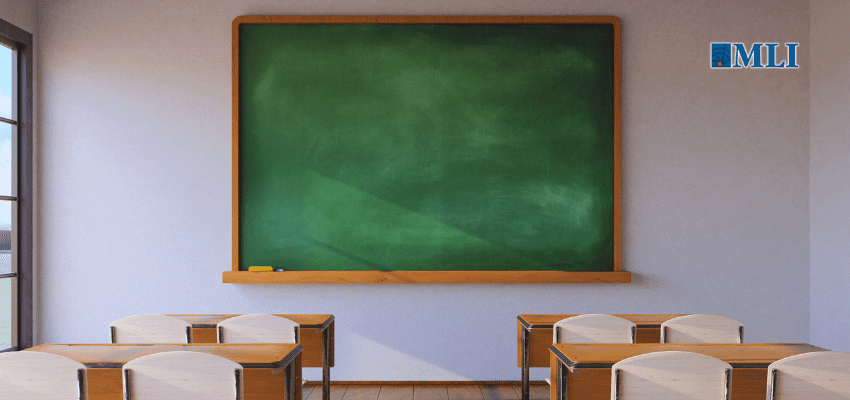
Image via Canva.

This article originally appeared in Maclean’s.

By Paul W. Bennett, September 4, 2025

Preventing students from cutting class used to be serious business in Canadian schools. Back in the ’70s, when I taught history at Aurora High School, an hour’s drive north of Toronto, the number of kids who skipped was relatively small—normally fewer than a dozen out of the 1,000 students that went there. To keep a lid on the problem, we employed the educational equivalent of SWAT teams. The initiative was led by our then-principal, Don MacKinnon, a former math teacher, and his second-in-command, Wayne Houston, our vice-principal, who rode herd on the dragnet operation.

Each day, homeroom teachers filed first-period attendance reports, and a dedicated attendance secretary produced sheets listing any absentees, known then as “anomalies.” Regular teachers like me were the “chasers.” We roamed the halls to round up lates and even swept the stairwells of the apartment buildings across the street. This routine consumed hours each day, but it had its benefits: for one, members of Principal MacKinnon’s SWAT squad were rewarded with lighter lunch supervision duty.

This level of enforcement weakened over the decades, as school districts across the country cut budgets for attendance secretaries. By the 2010s, chronic absenteeism—defined as missing 16 to 18 school days a year, or 10 per cent of instructional time—was no longer rare in Canada, even though school attendance is the law for minors in every province and territory. Roughly 23 per cent of Canadian students sampled in the 2018 Programme for International Student Assessment reported skipping school at least once every two weeks. In 2019, data from Saskatchewan’s Ministry of Education provided similar shocking findings, with 23.9 per cent of K-12 students missing more than 20 per cent of their classes that year.

The pandemic made things exponentially worse. Being out of school for weeks on end was habit-forming. COVID birthed a new student subgroup: “third-bucket kids,” a term coined by Canadian policy analyst Irvin Studin to describe kids who didn’t attend classes in-person or online. They simply opted out of school entirely. A CBC investigation from last March produced more shockers: within the Toronto Catholic District School Board, for example, the proportion of elementary-aged students absent for 10 per cent of the school year (or more) rose by almost 20 per cent between 2018 and 2023. And out in the New Brunswick Anglophone West school district, an alarming 70 per cent of secondary students were chronically absent as of 2023. Between experiments with remote learning, and the more general proliferation of screen-based childhoods, the need for—and value of—in-person, brick-and-mortar school attendance has been minimized. The once near-universal consensus that attending school was not only expected but crucial to success in life is no more.

Until recently, the student-absenteeism epidemic wasn’t a major focus of academic research. The good news is chronic absentees are now viewed through a much different lens than they were in the ’70s, thanks in part to groups like the Canadian School Attendance Partnership, established to correct the dearth of data in this country. We’re now aware that there are different types of absenteeism—skipping, social-anxiety avoidance, parent-excused absences and school-sanctioned absences. Some students are struggling with mental issues or juggling their studies with a part-time job to supplement their family’s income. Others simply exhibit what’s known as “school refusal behaviour”—or just not wanting to go. In the U.S., where attendance initiatives are now a growth industry in the education sector, advocacy organizations like Attendance Works are providing advice to school districts on how to target chronic absence and support students in reversing course.

One approach to rebuilding bridges between schools and families is reminiscent of the intrepid attendance-chasers model active at Aurora High School decades ago. Shortly before the pandemic, a team of researchers at Baltimore’s Johns Hopkins School of Education produced a series of studies that tracked the efficacy of an under-utilized strategy: home visits by teachers. In a program developed by the university’s Parent Teacher Home Visit Project, pairs of educators would meet with families at home on an as-needed basis to discuss the root causes of why kids were missing from lessons and how they could best tailor their instruction to encourage more class participation. And unlike the home check-ins by the scary truancy officers of the olden days, the program was voluntary for students. (After all, honey is more enticing than vinegar.) The latest of the three studies, which tracked progress among four large, diverse school districts encompassing some 100,000 students, showed promising results: schools with systematic home-visit programs didn’t only report lower rates of absenteeism, they also recorded improvements in students’ reading and math proficiency.

Getting a pilot project going in Canada would mean breaking entirely new ground. Initially, it would be critical to identify neighbourhoods with high incidences of absenteeism and recruit an initial cohort of teachers with plenty of empathy and a student-centred outlook. At the outset, it would be more or less missionary work—reaching out to make connections with families. I’d compare it to the work of VON Canada, a pioneering in-home nursing program that works outside the conventional reach of medical settings to meet people where they are—in this case, students. The more that word of the program spreads in these communities, the more student uptake we should expect. (This was true for the American pilots.)

Having worked as a teacher, a school head and now in educational policy, my experience (and gut) tells me that home visits would go a long way toward reconnecting students and families to schools. The pandemic closures taught us all an important lesson: there is no substitute for in-person education. The friendships and relationships with peers and teachers are key to building attachment to the school experience. Pervasive absenteeism won’t be an easy trend to reverse, but the human touch of home visits is a more effective approach than simply compelling kids to show up. They have to want to learn.


Paul W. Bennett is the director of the Schoolhouse Institute, senior fellow of education policy at the Macdonald-Laurier Institute, and the chair and national coordinator of ResearchED Canada.

Source: Maclean's

Related Posts

Breakthrough Nation with Karen Restoule: Crystal Smith, Ep. 1
Energy

Breakthrough Nation with Karen Restoule: Crystal Smith, Ep. 1

December 12, 2025
Asia Map
Latest News

Survival in Trump, Xi and Putin’s ‘great power’ world: Stephen Nagy in the Japan Times

December 12, 2025
Westminster parliament
Domestic Policy

Dec. 11 is the day Canada gained autonomy. Progressives want us to forget: Christopher Dummitt in the National Post

December 11, 2025
Next Post
As US-Canada ties unravel, Beijing pulls the threads: Stephen Nagy in Real Clear World

As US-Canada ties unravel, Beijing pulls the threads: Stephen Nagy in Real Clear World

Newsletter Signup

  Thank you for Signing Up
  Please correct the marked field(s) below.
Email Address  *
1,true,6,Contact Email,2
First Name *
1,true,1,First Name,2
Last Name *
1,true,1,Last Name,2
*
*Required Fields

Follow us on

Macdonald-Laurier Institute

323 Chapel Street, Suite #300
Ottawa, Ontario, K1N 7Z2 Canada

613.482.8327

info@macdonaldlaurier.ca
MLI directory

Support Us

Support the Macdonald-Laurier Institute to help ensure that Canada is one of the best governed countries in the world. Click below to learn more or become a sponsor.

Support Us

  • Inside Policy Magazine
  • Annual Reports
  • Jobs
  • Privacy Policy

© 2023 Macdonald-Laurier Institute. All Rights reserved.

No Result
View All Result
  • Home
  • About
    • Who We Are
    • Who Makes MLI Work
    • Fifteenth Anniversary
  • Experts
    • Experts Directory
    • In Memoriam
  • Issues
    • Domestic Policy
      • Economic Policy
      • Justice
      • Rights and Freedoms
      • Assisted Suicide (MAID)
      • Health Care
      • COVID-19
      • Gender Identity
      • Canada’s Political Tradition
      • AI, Technology and Innovation
      • Media and Telecoms
      • Housing
      • Immigration
      • Agriculture and Agri-Food
      • Competition Policy
    • Energy Policy
      • Energy
      • Environment
    • Foreign Policy
      • Israel-Hamas War
      • Ukraine
      • Taiwan
      • China
      • Europe and Russia
      • Indo-Pacific
      • Middle East and North Africa
      • North America
      • Foreign Interference
      • National Defence
      • National Security
      • Foreign Affairs
    • Indigenous Affairs
  • Projects
    • CNAPS (Center for North American Prosperity and Security)
    • The Promised Land
    • Voices that Inspire: The Macdonald-Laurier Vancouver Speaker Series
    • Dragon at the door
    • Canada on top of the world
    • Letter to a minister
    • Justice Report Card
    • The Great Energy Crisis
    • DisInfoWatch.org
    • Managing Indigenous Prosperity
    • Judicial Foundations
    • Landmark Cases Council
    • Defending The Marketplace of Ideas
    • Reforming the University
    • Past Projects
      • Digital Policy & Connectivity
      • Double Trouble
      • Canada and the Indo-Pacific Initiative
      • The Transatlantic Program
      • COVID Misery Index
      • Speak for Ourselves
      • The Eavesdropping Dragon: Huawei
      • Talkin’ in the Free World with Mariam Memarsadeghi
      • An Intellectual Property Strategy for Canada
      • Munk Senior Fellows
      • A Mandate for Canada
      • Confederation Series
      • Fiscal Reform
      • The Canadian Century project
      • Fixing Canadian health care
      • Internal trade
      • From a mandate for change
      • Size of government in Canada
      • Straight Talk
      • Labour Market Report
      • Leading Economic Indicator
      • Centre for Advancing Canada’s Interests Abroad
      • Indigenous Prosperity at a Crossroads
  • Events
    • Upcoming Events
    • Past Events
      • MLI Dinners
      • Great Canadian Debates
  • Latest News
  • Libraries
    • Columns
    • Commentary
    • Papers
    • Books
    • Video
  • Donate

© 2023 Macdonald-Laurier Institute. All Rights reserved.