Saturday, December 13, 2025
No Result
View All Result
  • Media
Macdonald-Laurier Institute
  • Home
  • About
    • Who We Are
    • Who Makes MLI Work
    • Fifteenth Anniversary
  • Experts
    • Experts Directory
    • In Memoriam
  • Issues
    • Domestic Policy
      • Economic Policy
      • Justice
      • Rights and Freedoms
      • Assisted Suicide (MAID)
      • Health Care
      • COVID-19
      • Gender Identity
      • Canada’s Political Tradition
      • AI, Technology and Innovation
      • Media and Telecoms
      • Housing
      • Immigration
      • Agriculture and Agri-Food
      • Competition Policy
    • Energy Policy
      • Energy
      • Environment
    • Foreign Policy
      • Israel-Hamas War
      • Ukraine
      • Taiwan
      • China
      • Europe and Russia
      • Indo-Pacific
      • Middle East and North Africa
      • North America
      • Foreign Interference
      • National Defence
      • National Security
      • Foreign Affairs
    • Indigenous Affairs
  • Projects
    • CNAPS (Center for North American Prosperity and Security)
    • The Promised Land
    • Voices that Inspire: The Macdonald-Laurier Vancouver Speaker Series
    • Dragon at the door
    • Canada on top of the world
    • Letter to a minister
    • Justice Report Card
    • The Great Energy Crisis
    • DisInfoWatch.org
    • Managing Indigenous Prosperity
    • Judicial Foundations
    • Landmark Cases Council
    • Defending The Marketplace of Ideas
    • Reforming the University
    • Past Projects
      • Digital Policy & Connectivity
      • Double Trouble
      • Canada and the Indo-Pacific Initiative
      • The Transatlantic Program
      • COVID Misery Index
        • Provincial COVID Misery Index
        • Beyond Lockdown
        • COVID and after: A mandate for recovery
      • Speak for Ourselves
      • The Eavesdropping Dragon: Huawei
      • Talkin’ in the Free World with Mariam Memarsadeghi
      • An Intellectual Property Strategy for Canada
      • Munk Senior Fellows
      • A Mandate for Canada
      • Confederation Series
      • Fiscal Reform
      • The Canadian Century project
      • Fixing Canadian health care
      • Internal trade
      • From a mandate for change
      • Size of government in Canada
      • Straight Talk
      • Labour Market Report
      • Leading Economic Indicator
      • Centre for Advancing Canada’s Interests Abroad
      • Indigenous Prosperity at a Crossroads
        • Aboriginal Canada and Natural Resources
  • Events
    • Upcoming Events
    • Past Events
      • MLI Dinners
      • Great Canadian Debates
  • Latest News
  • Libraries
    • Columns
    • Commentary
    • Papers
    • Books
    • Video
  • Donate
  • Home
  • About
    • Who We Are
    • Who Makes MLI Work
    • Fifteenth Anniversary
  • Experts
    • Experts Directory
    • In Memoriam
  • Issues
    • Domestic Policy
      • Economic Policy
      • Justice
      • Rights and Freedoms
      • Assisted Suicide (MAID)
      • Health Care
      • COVID-19
      • Gender Identity
      • Canada’s Political Tradition
      • AI, Technology and Innovation
      • Media and Telecoms
      • Housing
      • Immigration
      • Agriculture and Agri-Food
      • Competition Policy
    • Energy Policy
      • Energy
      • Environment
    • Foreign Policy
      • Israel-Hamas War
      • Ukraine
      • Taiwan
      • China
      • Europe and Russia
      • Indo-Pacific
      • Middle East and North Africa
      • North America
      • Foreign Interference
      • National Defence
      • National Security
      • Foreign Affairs
    • Indigenous Affairs
  • Projects
    • CNAPS (Center for North American Prosperity and Security)
    • The Promised Land
    • Voices that Inspire: The Macdonald-Laurier Vancouver Speaker Series
    • Dragon at the door
    • Canada on top of the world
    • Letter to a minister
    • Justice Report Card
    • The Great Energy Crisis
    • DisInfoWatch.org
    • Managing Indigenous Prosperity
    • Judicial Foundations
    • Landmark Cases Council
    • Defending The Marketplace of Ideas
    • Reforming the University
    • Past Projects
      • Digital Policy & Connectivity
      • Double Trouble
      • Canada and the Indo-Pacific Initiative
      • The Transatlantic Program
      • COVID Misery Index
        • Provincial COVID Misery Index
        • Beyond Lockdown
        • COVID and after: A mandate for recovery
      • Speak for Ourselves
      • The Eavesdropping Dragon: Huawei
      • Talkin’ in the Free World with Mariam Memarsadeghi
      • An Intellectual Property Strategy for Canada
      • Munk Senior Fellows
      • A Mandate for Canada
      • Confederation Series
      • Fiscal Reform
      • The Canadian Century project
      • Fixing Canadian health care
      • Internal trade
      • From a mandate for change
      • Size of government in Canada
      • Straight Talk
      • Labour Market Report
      • Leading Economic Indicator
      • Centre for Advancing Canada’s Interests Abroad
      • Indigenous Prosperity at a Crossroads
        • Aboriginal Canada and Natural Resources
  • Events
    • Upcoming Events
    • Past Events
      • MLI Dinners
      • Great Canadian Debates
  • Latest News
  • Libraries
    • Columns
    • Commentary
    • Papers
    • Books
    • Video
  • Donate
No Result
View All Result
Macdonald-Laurier Institute

Will the Online Streaming Act survive trade talks with the Americans? Don’t count on it: Peter Menzies in The Hub

The Carney government needs a totally new approach to digital cultural policy.

August 18, 2025
in Domestic Policy, Latest News, Columns, In the Media, Media and Telecoms, North America, Peter Menzies
Reading Time: 5 mins read
A A
Will the Online Streaming Act survive trade talks with the Americans? Don’t count on it: Peter Menzies in The Hub

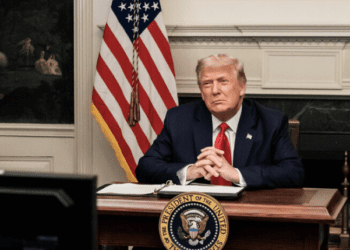
Official White House Photo by Daniel Torok.

This article originally appeared in The Hub.

By Peter Menzies, August 18, 2025

The odds that Canada will ever successfully implement, let alone get the outcome it desired from the Online Streaming Act, are growing increasingly long, setting the stage for absolute mayhem within the nation’s broadcasting sector.

Passed in the spring of 2023 and notorious as Bill C-11, the Online Streaming Act was intended to “modernize” the Broadcasting Act through the false assumption that online audio and video content is broadcasting. Like so much of Justin Trudeau’s digital legislation, it was this fundamental misunderstanding of 21st-century technology and the challenges it posed to 20th-century structures that doomed the act from its conception.

But, nevertheless, the Canadian Radio-television and Telecommunications Commission (CRTC) was put in charge, and its chair, Vicky Eatrides, along with the heritage minister of the day, Pablo Rodriguez, both assured the public that the act would be effectively implemented by the end of 2024. By now, we were assured, money from “web giants” would be quickly flowing into the regulatory system, and all would be well. Others were skeptical and predicted years of procedural sludge, uncertainty, and reduced investment.

As it has turned out, those of us in the latter category were closer to the mark. The CRTC, which put most of its other broadcasting obligations on hold, has made some progress, but in a fashion best described as plodding. Its efforts to make foreign streaming companies—which, with the exception of Spotify, are all American—pay into designated funds that support those in the Canadian film and television production sector have yet to produce the cash bonanza Team Trudeau once confidently predicted. Matters have been delayed further by predictable court challenges, fuelled by the CRTC getting sidetracked by Bell and Rogers into funding news. In the meantime, the decade or more of record investment—foreign and domestic—in Canadian film and television production has come to a crashing halt.

Framed as “[levelling] the playing field,” the scheme was designed to make streaming companies like Netflix pay 5 percent of their Canadian revenue into designated funds in a manner similar to that required of the nation’s satellite and cable companies. The streamers’ pleas to be credited for the investments they were already making in Canada have so far been rejected, while the nation’s vertically integrated cable companies are working to get their obligations reduced. At the end of the day, the government, the CRTC, and the domestic industry have been coordinating to shift the burden of funding Canadian film and television content offshore.

Offshore—a.k.a. America, in the form of President Biden—didn’t like Trudeau’s digital legislation. When Donald Trump entered the White House, they liked it even less. Bigly less.

The Digital Services Tax disappeared over a weekend after Trump threw a fit and Prime Minister Mark Carney swiftly caved.

The Online News Act, which shook $100 million out of Google’s pockets and Facebook out of the business of carrying news links, was another effort to permanently link Canadian corporate sustainability to companies based in Trump’s America.

It, along with the news industry’s increasing dependency on government subsidies, has now been targeted in a U.S. State Department report as posing a threat to press freedom.

“The public media and majority of private media were substantially dependent on government sources of funding for their activities,” detailed the report. “Government intervention in the media market favored means of communication that did not diverge from government-suggested bounds of political speech, and government policy and practices often disadvantaged independent media.”

While some Canadian media—The Hub among them—have refused to take the subsidies for just that reason, those conscientious objections were suspiciously left unmentioned in the Canadian Press’s report on the controversy, something only those close to the issue were likely to notice. Stranger still that CP found someone to describe concerns about government funding of journalists being a threat to press freedom as “Orwellian”—a twist of reality so mind-boggling it could only have been conceived in the Matrix.

That news came on the heels of reports that 18 U.S. senators were calling on Trump to put the elimination of the Online Streaming Act on the table in trade negotiations. Given that the U.S. didn’t like it in the first place, this came as no surprise, although the allegation that Canada discriminates against American content is bizarre. Canadian cable companies love cheap U.S. content, and if they had their way, would offer nothing but.

Given all that, and the perilous position Canada finds itself in regarding trade negotiations, there’s a good chance the Online Streaming Act will be sacrificed.

If that occurs and Canada is unable to shift the burden of its cultural funding to American companies as it hoped, Carney is going to have to come up with what his Liberal predecessor should have come up with: a 21st-century plan for 21st-century problems. Trying to stuff an online world into structures and mentalities designed for cable and limited airwaves was never going to work—let alone what to do about the paradigm-shifting emergence of AI. And, as is easy to conclude watching an overwhelmed CRTC and its corporate codependents lumber through their ponderous processes, it wasn’t working anyway.

None of this means Canadian cultural content needs to go under the bus. In fact, it’s never been more important for the nation to be standing on its own two feet. There are ways to do this, but it will take people who understand the century we live in and the technology driving it to do so.

Carney best hurry up and find them. Because his government’s digital cultural policies, built on faulty foundations as they were, are poised to collapse.


Peter Menzies is a commentator and consultant on media, a Macdonald-Laurier Institute Senior Fellow, a past publisher of the Calgary Herald, and a former vice chair of the CRTC.
Source: The Hub

Related Posts

Breakthrough Nation with Karen Restoule: Crystal Smith, Ep. 1
Energy

Breakthrough Nation with Karen Restoule: Crystal Smith, Ep. 1

December 12, 2025
Asia Map
Latest News

Survival in Trump, Xi and Putin’s ‘great power’ world: Stephen Nagy in the Japan Times

December 12, 2025
Westminster parliament
Domestic Policy

Dec. 11 is the day Canada gained autonomy. Progressives want us to forget: Christopher Dummitt in the National Post

December 11, 2025
Next Post
Is mass student immigration the solution – or the problem?: David L. Thomas for Inside Policy

Is mass student immigration the solution – or the problem?: David L. Thomas for Inside Policy

Newsletter Signup

  Thank you for Signing Up
  Please correct the marked field(s) below.
Email Address  *
1,true,6,Contact Email,2
First Name *
1,true,1,First Name,2
Last Name *
1,true,1,Last Name,2
*
*Required Fields

Follow us on

Macdonald-Laurier Institute

323 Chapel Street, Suite #300
Ottawa, Ontario, K1N 7Z2 Canada

613.482.8327

info@macdonaldlaurier.ca
MLI directory

Support Us

Support the Macdonald-Laurier Institute to help ensure that Canada is one of the best governed countries in the world. Click below to learn more or become a sponsor.

Support Us

  • Inside Policy Magazine
  • Annual Reports
  • Jobs
  • Privacy Policy

© 2023 Macdonald-Laurier Institute. All Rights reserved.

No Result
View All Result
  • Home
  • About
    • Who We Are
    • Who Makes MLI Work
    • Fifteenth Anniversary
  • Experts
    • Experts Directory
    • In Memoriam
  • Issues
    • Domestic Policy
      • Economic Policy
      • Justice
      • Rights and Freedoms
      • Assisted Suicide (MAID)
      • Health Care
      • COVID-19
      • Gender Identity
      • Canada’s Political Tradition
      • AI, Technology and Innovation
      • Media and Telecoms
      • Housing
      • Immigration
      • Agriculture and Agri-Food
      • Competition Policy
    • Energy Policy
      • Energy
      • Environment
    • Foreign Policy
      • Israel-Hamas War
      • Ukraine
      • Taiwan
      • China
      • Europe and Russia
      • Indo-Pacific
      • Middle East and North Africa
      • North America
      • Foreign Interference
      • National Defence
      • National Security
      • Foreign Affairs
    • Indigenous Affairs
  • Projects
    • CNAPS (Center for North American Prosperity and Security)
    • The Promised Land
    • Voices that Inspire: The Macdonald-Laurier Vancouver Speaker Series
    • Dragon at the door
    • Canada on top of the world
    • Letter to a minister
    • Justice Report Card
    • The Great Energy Crisis
    • DisInfoWatch.org
    • Managing Indigenous Prosperity
    • Judicial Foundations
    • Landmark Cases Council
    • Defending The Marketplace of Ideas
    • Reforming the University
    • Past Projects
      • Digital Policy & Connectivity
      • Double Trouble
      • Canada and the Indo-Pacific Initiative
      • The Transatlantic Program
      • COVID Misery Index
      • Speak for Ourselves
      • The Eavesdropping Dragon: Huawei
      • Talkin’ in the Free World with Mariam Memarsadeghi
      • An Intellectual Property Strategy for Canada
      • Munk Senior Fellows
      • A Mandate for Canada
      • Confederation Series
      • Fiscal Reform
      • The Canadian Century project
      • Fixing Canadian health care
      • Internal trade
      • From a mandate for change
      • Size of government in Canada
      • Straight Talk
      • Labour Market Report
      • Leading Economic Indicator
      • Centre for Advancing Canada’s Interests Abroad
      • Indigenous Prosperity at a Crossroads
  • Events
    • Upcoming Events
    • Past Events
      • MLI Dinners
      • Great Canadian Debates
  • Latest News
  • Libraries
    • Columns
    • Commentary
    • Papers
    • Books
    • Video
  • Donate

© 2023 Macdonald-Laurier Institute. All Rights reserved.