Thursday, March 12, 2026
No Result
View All Result
  • Media
Macdonald-Laurier Institute
  • Home
  • About
    • Who We Are
    • Who Makes MLI Work
    • Fifteenth Anniversary
  • Experts
    • Experts Directory
    • In Memoriam
  • Issues
    • Domestic Policy
      • Economic Policy
      • Justice
      • Rights and Freedoms
      • Assisted Suicide (MAID)
      • Health Care
      • COVID-19
      • Gender Identity
      • Canada’s Political Tradition
      • AI, Technology and Innovation
      • Media and Telecoms
      • Housing
      • Immigration
      • Agriculture and Agri-Food
      • Competition Policy
    • Energy Policy
      • Energy
      • Environment
    • Foreign Policy
      • Israel-Hamas War
      • Ukraine
      • Taiwan
      • China
      • Europe and Russia
      • Indo-Pacific
      • Middle East and North Africa
      • North America
      • Foreign Interference
      • National Defence
      • National Security
      • Foreign Affairs
    • Indigenous Affairs
  • Projects
    • CNAPS (Center for North American Prosperity and Security)
    • Justice Report Card
    • The Promised Land
    • Voices that Inspire: The Macdonald-Laurier Vancouver Speaker Series
    • Dragon at the door
    • Canada on top of the world
    • Letter to a minister
    • The Great Energy Crisis
    • DisInfoWatch.org
    • Managing Indigenous Prosperity
    • Judicial Foundations
    • Landmark Cases Council
    • Defending The Marketplace of Ideas
    • Reforming the University
    • Past Projects
      • Digital Policy & Connectivity
      • Double Trouble
      • Canada and the Indo-Pacific Initiative
      • The Transatlantic Program
      • COVID Misery Index
        • Provincial COVID Misery Index
        • Beyond Lockdown
        • COVID and after: A mandate for recovery
      • Speak for Ourselves
      • The Eavesdropping Dragon: Huawei
      • Talkin’ in the Free World with Mariam Memarsadeghi
      • An Intellectual Property Strategy for Canada
      • Munk Senior Fellows
      • A Mandate for Canada
      • Confederation Series
      • Fiscal Reform
      • The Canadian Century project
      • Fixing Canadian health care
      • Internal trade
      • From a mandate for change
      • Size of government in Canada
      • Straight Talk
      • Labour Market Report
      • Leading Economic Indicator
      • Centre for Advancing Canada’s Interests Abroad
      • Indigenous Prosperity at a Crossroads
        • Aboriginal Canada and Natural Resources
  • Events
    • Upcoming Events
    • Past Events
      • MLI Dinners
      • Great Canadian Debates
  • Latest News
  • Libraries
    • Columns
    • Commentary
    • Papers
    • Books
    • Video
  • Donate
  • Home
  • About
    • Who We Are
    • Who Makes MLI Work
    • Fifteenth Anniversary
  • Experts
    • Experts Directory
    • In Memoriam
  • Issues
    • Domestic Policy
      • Economic Policy
      • Justice
      • Rights and Freedoms
      • Assisted Suicide (MAID)
      • Health Care
      • COVID-19
      • Gender Identity
      • Canada’s Political Tradition
      • AI, Technology and Innovation
      • Media and Telecoms
      • Housing
      • Immigration
      • Agriculture and Agri-Food
      • Competition Policy
    • Energy Policy
      • Energy
      • Environment
    • Foreign Policy
      • Israel-Hamas War
      • Ukraine
      • Taiwan
      • China
      • Europe and Russia
      • Indo-Pacific
      • Middle East and North Africa
      • North America
      • Foreign Interference
      • National Defence
      • National Security
      • Foreign Affairs
    • Indigenous Affairs
  • Projects
    • CNAPS (Center for North American Prosperity and Security)
    • Justice Report Card
    • The Promised Land
    • Voices that Inspire: The Macdonald-Laurier Vancouver Speaker Series
    • Dragon at the door
    • Canada on top of the world
    • Letter to a minister
    • The Great Energy Crisis
    • DisInfoWatch.org
    • Managing Indigenous Prosperity
    • Judicial Foundations
    • Landmark Cases Council
    • Defending The Marketplace of Ideas
    • Reforming the University
    • Past Projects
      • Digital Policy & Connectivity
      • Double Trouble
      • Canada and the Indo-Pacific Initiative
      • The Transatlantic Program
      • COVID Misery Index
        • Provincial COVID Misery Index
        • Beyond Lockdown
        • COVID and after: A mandate for recovery
      • Speak for Ourselves
      • The Eavesdropping Dragon: Huawei
      • Talkin’ in the Free World with Mariam Memarsadeghi
      • An Intellectual Property Strategy for Canada
      • Munk Senior Fellows
      • A Mandate for Canada
      • Confederation Series
      • Fiscal Reform
      • The Canadian Century project
      • Fixing Canadian health care
      • Internal trade
      • From a mandate for change
      • Size of government in Canada
      • Straight Talk
      • Labour Market Report
      • Leading Economic Indicator
      • Centre for Advancing Canada’s Interests Abroad
      • Indigenous Prosperity at a Crossroads
        • Aboriginal Canada and Natural Resources
  • Events
    • Upcoming Events
    • Past Events
      • MLI Dinners
      • Great Canadian Debates
  • Latest News
  • Libraries
    • Columns
    • Commentary
    • Papers
    • Books
    • Video
  • Donate
No Result
View All Result
Macdonald-Laurier Institute

Why we should be leery of Reza Pahlavi as a leader of Iran: Kaveh Shahrooz in the Globe and Mail

Mr. Pahlavi claims he stands above partisan politics, yet his movement is unmistakably far‑right and blood‑and‑soil nationalist.

March 12, 2026
in Foreign Affairs, Latest News, Columns, Foreign Policy, In the Media, Middle East and North Africa, Kaveh Shahrooz
Reading Time: 5 mins read
A A
Why we should be leery of Reza Pahlavi as a leader of Iran: Kaveh Shahrooz in the Globe and Mail

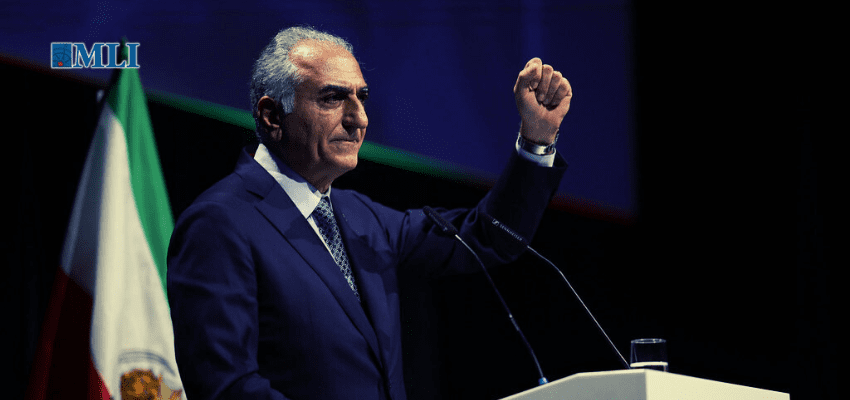
Photo by Reza Pahlavi via Flickr.

This article originally appeared in the Globe and Mail.

By Kaveh Shahrooz, March 12, 2026

With the war in Iran in its second week, the question of who might lead if the Islamic regime collapses has taken on new urgency.

Reza Pahlavi, the 65‑year‑old son of Iran’s deposed Shah, believes it should be him.

In a development few anticipated, protesters inside Iran chant his name, rallies abroad feature oversized portraits of him, and social media is full of AI‑generated images that cast him as something between an action star and a Persian mythological hero.

Several forces have fuelled this unlikely resurgence.

Mr. Pahlavi, whose father and grandfather modernized Iran while invoking ancient Persian identity, has benefited from the revival of Iranian nationalism in defiance of a regime that emphasizes the ummat (global Muslim community) over the mellat (nation). That sentiment has been amplified by pro‑Pahlavi satellite channels with shadowy funding that, for nearly two decades, have broadcast airbrushed portrayals of the Pahlavi era into Iranian homes.

The rise of global populism has also given Mr. Pahlavi an opening. Iranians have become receptive to anyone willing to rail against Western governments, NGOs, and the United Nations – institutions they believe have appeased Tehran. And if a New York real‑estate developer can become an anti-elite populist icon, why not a wealthy crown prince?

Finally, Iranians in open revolt against their repressive, sclerotic theocracy have long lacked a leader. Mr. Pahlavi has eagerly stepped into that void.

For a brief moment, Mr. Pahlavi appeared willing to share the leadership. In 2023, after the “Woman, Life, Freedom” uprising, he entered into a political coalition with a prominent feminist, a Nobel Peace Prize laureate, a Kurdish leader, and a victims’ advocate. But he withdrew within two months after his supporters launched vicious attacks on his coalition partners.

Since then, he has proclaimed himself Iran’s transition leader. Anyone who challenges this self‑appointment is met with online harassment and character attacks, by everyone from anonymous trolls, to celebrities, to, occasionally, Mr. Pahlavi’s wife. (I speak from experience; a deluge of vitriol arrives in my inbox daily.)

Mr. Pahlavi’s rhetoric about equality, the rule of law, and the ballot box should appeal to liberal democracy activists like me.

So why are so many of us alarmed?

First, because the illiberal, thuggish behaviour of the movement he has cultivated contradicts his polished speeches. His celebrity allies direct crude abuse at the mothers of his critics, insults that are then celebrated by Mr. Pahlavi’s spouse. His supporters glorify the Savak, the Shah’s notorious secret police. A favoured chant at his rallies, again amplified by Ms. Pahlavi, calls for death to leftists. Speakers at pro‑Pahlavi gatherings fantasize about hanging adversaries, a sentiment Pahlavi advisers echo. Supporters even celebrate an attack on Nobel Peace Prize laureate Narges Mohammadi, again with Mr. Pahlavi’s wife applauding. The cumulative effect permits his followers to indulge their most aggressive and vengeful impulses. Combined with a cult of personality forming around him, this is hardly the foundation for a liberal democracy.

Mr. Pahlavi also claims he stands above partisan politics, yet his movement is unmistakably far‑right and blood‑and‑soil nationalist. For example, Mr. Pahlavi removed the revolutionary slogan “woman, life, freedom” from his media channels, apparently because supporters disliked its feminist undertones and the fact that it originated among Kurds. In its place, the movement has embraced the slogan “one homeland, one flag, one leader,” a chilling echo of “ein Volk, ein Reich, ein Führer.”

And despite his professed respect for Iran’s ethnic minorities, Mr. Pahlavi refuses to even discuss federalism or language rights. When Kurdish parties recently formed a coalition, his response was to threaten sending in an army he does not yet command, to crush “separatists.” This centralized, coercive approach mirrors that of his father and grandfather, whose policies alienated the minorities that make up at least forty percent of Iran’s population.

Finally, Mr. Pahlavi insists he seeks only to shepherd a transition and would accept the role of monarch solely if Iranians choose it in a referendum. Yet his transition blueprint grants him near‑absolute authority for up to two years (with potential for extensions). Coupled with interviews in which he laments symbolic monarchy without executive power, it is reasonable to fear he envisions a return to his father’s autocracy.

Donald Trump cast doubt on Mr. Pahlavi as America’s choice, but says the U.S. should be involved in choosing Iran’s next leader. Mr. Pahlavi cannot simply be dismissed; he commands sizable support inside Iran. But only if he is embedded in a broad, pluralistic coalition, which includes those who oppose him, can there be any hope of liberal democracy taking root.

Without real constraints, Iran risks trading one form of unchecked rule for another. After decades of struggle, Iranians deserve more than a new face atop an old system.


Kaveh Shahrooz is a lawyer and a senior fellow at the Macdonald-Laurier Institute.
Source: The Globe and Mail

Related Posts

What is the potential impact of Iran laying mines in the Strait of Hormuz?: Joe Varner on CTV News
Middle East and North Africa

What is the potential impact of Iran laying mines in the Strait of Hormuz?: Joe Varner on CTV News

March 12, 2026
shadow image.
National Security

Canada can no longer ignore Iran’s dangerous shadow network: Joe Adam George in the National Post

March 12, 2026
How Canadian universities can avoid the American dumpster fire of de-woking: Christopher Dummitt in the National Post
Education

Political agendas have no place in university research applications: Peter MacKinnon in the National Post

March 12, 2026
Next Post
What is the potential impact of Iran laying mines in the Strait of Hormuz?: Joe Varner on CTV News

What is the potential impact of Iran laying mines in the Strait of Hormuz?: Joe Varner on CTV News

Newsletter Signup

  Thank you for Signing Up
  Please correct the marked field(s) below.
Email Address  *
1,true,6,Contact Email,2
First Name *
1,true,1,First Name,2
Last Name *
1,true,1,Last Name,2
*
*Required Fields

Follow us on

Macdonald-Laurier Institute

323 Chapel Street, Suite #300
Ottawa, Ontario, K1N 7Z2 Canada

613.482.8327

info@macdonaldlaurier.ca
MLI directory

Support Us

Support the Macdonald-Laurier Institute to help ensure that Canada is one of the best governed countries in the world. Click below to learn more or become a sponsor.

Support Us

  • Inside Policy Magazine
  • Annual Reports
  • Jobs
  • Privacy Policy

© 2023 Macdonald-Laurier Institute. All Rights reserved.

This site uses cookies. By continuing to browse the site you are agreeing to our use of cookies.

Privacy Preference Center

Consent Management

Necessary

Advertising

Analytics

Other

No Result
View All Result
  • Home
  • About
    • Who We Are
    • Who Makes MLI Work
    • Fifteenth Anniversary
  • Experts
    • Experts Directory
    • In Memoriam
  • Issues
    • Domestic Policy
      • Economic Policy
      • Justice
      • Rights and Freedoms
      • Assisted Suicide (MAID)
      • Health Care
      • COVID-19
      • Gender Identity
      • Canada’s Political Tradition
      • AI, Technology and Innovation
      • Media and Telecoms
      • Housing
      • Immigration
      • Agriculture and Agri-Food
      • Competition Policy
    • Energy Policy
      • Energy
      • Environment
    • Foreign Policy
      • Israel-Hamas War
      • Ukraine
      • Taiwan
      • China
      • Europe and Russia
      • Indo-Pacific
      • Middle East and North Africa
      • North America
      • Foreign Interference
      • National Defence
      • National Security
      • Foreign Affairs
    • Indigenous Affairs
  • Projects
    • CNAPS (Center for North American Prosperity and Security)
    • Justice Report Card
    • The Promised Land
    • Voices that Inspire: The Macdonald-Laurier Vancouver Speaker Series
    • Dragon at the door
    • Canada on top of the world
    • Letter to a minister
    • The Great Energy Crisis
    • DisInfoWatch.org
    • Managing Indigenous Prosperity
    • Judicial Foundations
    • Landmark Cases Council
    • Defending The Marketplace of Ideas
    • Reforming the University
    • Past Projects
      • Digital Policy & Connectivity
      • Double Trouble
      • Canada and the Indo-Pacific Initiative
      • The Transatlantic Program
      • COVID Misery Index
      • Speak for Ourselves
      • The Eavesdropping Dragon: Huawei
      • Talkin’ in the Free World with Mariam Memarsadeghi
      • An Intellectual Property Strategy for Canada
      • Munk Senior Fellows
      • A Mandate for Canada
      • Confederation Series
      • Fiscal Reform
      • The Canadian Century project
      • Fixing Canadian health care
      • Internal trade
      • From a mandate for change
      • Size of government in Canada
      • Straight Talk
      • Labour Market Report
      • Leading Economic Indicator
      • Centre for Advancing Canada’s Interests Abroad
      • Indigenous Prosperity at a Crossroads
  • Events
    • Upcoming Events
    • Past Events
      • MLI Dinners
      • Great Canadian Debates
  • Latest News
  • Libraries
    • Columns
    • Commentary
    • Papers
    • Books
    • Video
  • Donate

© 2023 Macdonald-Laurier Institute. All Rights reserved.