Thursday, March 5, 2026
No Result
View All Result
  • Media
Macdonald-Laurier Institute
  • Home
  • About
    • Who We Are
    • Who Makes MLI Work
    • Fifteenth Anniversary
  • Experts
    • Experts Directory
    • In Memoriam
  • Issues
    • Domestic Policy
      • Economic Policy
      • Justice
      • Rights and Freedoms
      • Assisted Suicide (MAID)
      • Health Care
      • COVID-19
      • Gender Identity
      • Canada’s Political Tradition
      • AI, Technology and Innovation
      • Media and Telecoms
      • Housing
      • Immigration
      • Agriculture and Agri-Food
      • Competition Policy
    • Energy Policy
      • Energy
      • Environment
    • Foreign Policy
      • Israel-Hamas War
      • Ukraine
      • Taiwan
      • China
      • Europe and Russia
      • Indo-Pacific
      • Middle East and North Africa
      • North America
      • Foreign Interference
      • National Defence
      • National Security
      • Foreign Affairs
    • Indigenous Affairs
  • Projects
    • CNAPS (Center for North American Prosperity and Security)
    • Justice Report Card
    • The Promised Land
    • Voices that Inspire: The Macdonald-Laurier Vancouver Speaker Series
    • Dragon at the door
    • Canada on top of the world
    • Letter to a minister
    • The Great Energy Crisis
    • DisInfoWatch.org
    • Managing Indigenous Prosperity
    • Judicial Foundations
    • Landmark Cases Council
    • Defending The Marketplace of Ideas
    • Reforming the University
    • Past Projects
      • Digital Policy & Connectivity
      • Double Trouble
      • Canada and the Indo-Pacific Initiative
      • The Transatlantic Program
      • COVID Misery Index
        • Provincial COVID Misery Index
        • Beyond Lockdown
        • COVID and after: A mandate for recovery
      • Speak for Ourselves
      • The Eavesdropping Dragon: Huawei
      • Talkin’ in the Free World with Mariam Memarsadeghi
      • An Intellectual Property Strategy for Canada
      • Munk Senior Fellows
      • A Mandate for Canada
      • Confederation Series
      • Fiscal Reform
      • The Canadian Century project
      • Fixing Canadian health care
      • Internal trade
      • From a mandate for change
      • Size of government in Canada
      • Straight Talk
      • Labour Market Report
      • Leading Economic Indicator
      • Centre for Advancing Canada’s Interests Abroad
      • Indigenous Prosperity at a Crossroads
        • Aboriginal Canada and Natural Resources
  • Events
    • Upcoming Events
    • Past Events
      • MLI Dinners
      • Great Canadian Debates
  • Latest News
  • Libraries
    • Columns
    • Commentary
    • Papers
    • Books
    • Video
  • Donate
  • Home
  • About
    • Who We Are
    • Who Makes MLI Work
    • Fifteenth Anniversary
  • Experts
    • Experts Directory
    • In Memoriam
  • Issues
    • Domestic Policy
      • Economic Policy
      • Justice
      • Rights and Freedoms
      • Assisted Suicide (MAID)
      • Health Care
      • COVID-19
      • Gender Identity
      • Canada’s Political Tradition
      • AI, Technology and Innovation
      • Media and Telecoms
      • Housing
      • Immigration
      • Agriculture and Agri-Food
      • Competition Policy
    • Energy Policy
      • Energy
      • Environment
    • Foreign Policy
      • Israel-Hamas War
      • Ukraine
      • Taiwan
      • China
      • Europe and Russia
      • Indo-Pacific
      • Middle East and North Africa
      • North America
      • Foreign Interference
      • National Defence
      • National Security
      • Foreign Affairs
    • Indigenous Affairs
  • Projects
    • CNAPS (Center for North American Prosperity and Security)
    • Justice Report Card
    • The Promised Land
    • Voices that Inspire: The Macdonald-Laurier Vancouver Speaker Series
    • Dragon at the door
    • Canada on top of the world
    • Letter to a minister
    • The Great Energy Crisis
    • DisInfoWatch.org
    • Managing Indigenous Prosperity
    • Judicial Foundations
    • Landmark Cases Council
    • Defending The Marketplace of Ideas
    • Reforming the University
    • Past Projects
      • Digital Policy & Connectivity
      • Double Trouble
      • Canada and the Indo-Pacific Initiative
      • The Transatlantic Program
      • COVID Misery Index
        • Provincial COVID Misery Index
        • Beyond Lockdown
        • COVID and after: A mandate for recovery
      • Speak for Ourselves
      • The Eavesdropping Dragon: Huawei
      • Talkin’ in the Free World with Mariam Memarsadeghi
      • An Intellectual Property Strategy for Canada
      • Munk Senior Fellows
      • A Mandate for Canada
      • Confederation Series
      • Fiscal Reform
      • The Canadian Century project
      • Fixing Canadian health care
      • Internal trade
      • From a mandate for change
      • Size of government in Canada
      • Straight Talk
      • Labour Market Report
      • Leading Economic Indicator
      • Centre for Advancing Canada’s Interests Abroad
      • Indigenous Prosperity at a Crossroads
        • Aboriginal Canada and Natural Resources
  • Events
    • Upcoming Events
    • Past Events
      • MLI Dinners
      • Great Canadian Debates
  • Latest News
  • Libraries
    • Columns
    • Commentary
    • Papers
    • Books
    • Video
  • Donate
No Result
View All Result
Macdonald-Laurier Institute

Why the world needs even more Canadian coal: Heather Exner-Pirot in The Hub

Coal is Canada’s dirty little secret—it shouldn’t be.

March 5, 2026
in Energy, Energy Policy, Resources, Latest News, Columns, In the Media, Heather Exner-Pirot
Reading Time: 5 mins read
A A
Why the world needs even more Canadian coal: Heather Exner-Pirot in The Hub

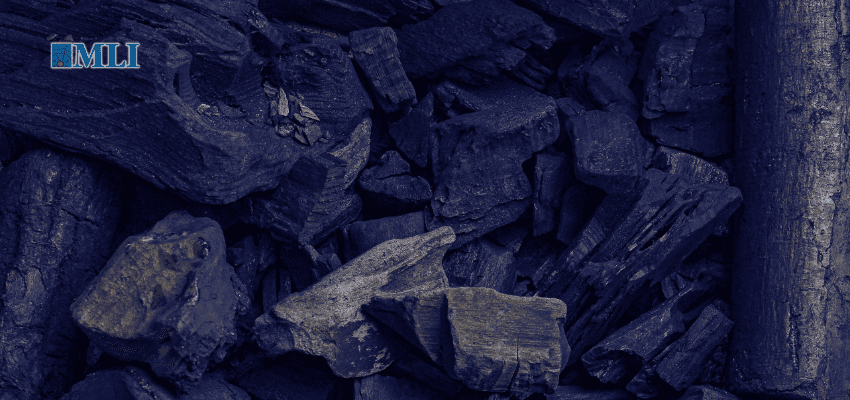
Image via Canva.

This article originally appeared in The Hub.

By Heather Exner-Pirot, March 5, 2026

There is probably no commodity more hated or villainized than coal. Although it propelled human civilization into the Industrial Revolution and still comprises the world’s largest source of electricity, it is a major source of greenhouse gas emissions and thus enemy number one for climate change.

The comparative ease and affordability of switching from coal to natural gas-fired generation represent one of the most successful global climate actions undertaken to date. This has led to the extreme distaste for coal, because getting off of it is probably the easiest thing humans can do for the environment.

As a result, the world has become very black and white for coal, leading to divestment, restrictions, and bans. Inevitably, this has oversimplified things on the ground, where coal use continues to grow.

This next statement will sound provocative, but I believe it to be true.

Canada should produce and export more coal.

That is because almost all of what Canada exports is steel-making or metallurgical coal, not the thermal kind used in electricity generation. There is no cheap substitute for it in the steel-making process—hydrogen steel costs at least double—and 70 percent of the world’s hundreds of steel-making facilities have been built to require it. There is no civilization without enough steel, and there is nowhere near enough steel without metallurgical coal.

If you need to use the stuff anyway, it is far better to get the most responsible, lowest-emitting product you can get your hands on. That is what Canada—B.C., actually—produces. Thanks to high-quality grades, clean grids, and environmental standards, B.C. produces amongst the lowest GHG-intensive metallurgical coal in the world. Because of this, it fetches a premium in Asia.

Despite what should be a source of pride, coal in Canada is rarely discussed or mentioned, even as we have fully embraced the identity of an energy and critical minerals superpower. Because coal has been kept a dirty little secret, you almost certainly did not know that coal is the single largest export by volume at both the Port of Vancouver and Port of Prince Rupert, beating out grains, potash, oil, propane, and forest products by a healthy margin.

Similarly, while B.C. may be associated with lumber, copper, gold, and LNG, coal is king in the Pacific province. Concentrated in the Elk Valley of the east Kootenays, along the southern border with Alberta, B.C. produces the vast majority of Canada’s coal, and it represents over half of the total mineral production revenues in the province. Coal is Canada’s second-ranking mineral product by value, ahead of potash, iron, and copper, and behind only gold.

It is therefore curious that, amidst all of the talk of doubling non-U.S. exports and successive trade missions to Asia, the word “coal” hasn’t even been whispered. We have become pretty comfortable touting the prospects for increased LNG, uranium, and propane to Asia, and even crude oil is starting to be mentioned by name rather than euphemisms such as “conventional energy.” But coal remains verboten, despite Canadian coal exports in 2025, primarily to South Korea, Japan, and China, averaging $628 million a month, rivalling the value of crude oil exports from Transmountain.

It is also curious because there is a clear path to producing and exporting more metallurgical coal from Canada to Asia. The seaborne metallurgical coal market, in which Canada is the fourth-largest exporter, is anticipated to grow substantially over the coming years, by around 50 million tonnes/year to 2035. This demand will come mostly from India and Southeast Asia.

While B.C. produces almost all of Canada’s metallurgical coal, about 29.9 million tonnes/year worth, Alberta has significant reserves right across the border from where the majority of BC’s production takes place. The Grassy Mountain coal mine, originally closed in 1983, has the capacity to produce 4.5 million tonnes of steelmaking coal. The modern-day proponent, a subsidiary of an Australian miner, has spent more than a billion dollars advancing the project, but faced political and regulatory headwinds every step of the way.
Because it is coal, it has faced concerted opposition. The most common objection is around concerns of selenium being released into watersheds. While the concern is legitimate, the nearby, large, and long-standing operations in B.C.’s Elk Valley demonstrate what best-in-class selenium management looks like, using source control and water treatment technologies.

The irony is not lost that the political and regulatory environment to mine coal is far better in B.C., where selenium management is largely treated as a cost of doing business, than in Alberta, where selenium has become a symbol of whether coal mining should be done at all. The local politics of the project could come straight out of an episode of Yellowstone, with wealthy ranchers downstream of proposed operations organizing to oppose coal mining, and the economically depressed town of Crowsnest Pass, adjacent to the mine site, passing a referendum with over 70 percent to support it. Country singer Corb Lund is now actively collecting signatures for a petition to outlaw coal mining in the region, another referendum to be added to Alberta’s pile.

All of this belies a certain lack of maturity in how Canada and Canadians deal with resource development. Certain commodities—and certain producing regions—get treated very differently based on our feelings. But our resource policy should not be based on popularity contests: it should be based on the public interest and grounded in objective realities.

The reality of Canadian metallurgical coal is this: it is a high-quality, high-value, high-volume product that Asian markets already know and like. It is a necessary element of any strategy to double non-U.S. exports and diversify trading partners. It is an essential component in supply chains and infrastructure development and has been declared a critical mineral by the European Union, the United States, and India. Low-GHG intense Canadian exports are far more preferable environmentally than higher-emitting products from competitors.

Coal has a bad reputation that Canadian metallurgical coal does not deserve to wear. Canada has had to grow up a lot as a nation over the past year. This is one more conversation the adults in the room need to start leading.


Heather Exner-Pirot is the director of energy, natural resources and environment at the Macdonald-Laurier Institute.


Source: The Hub

Related Posts

Trump and Netanyahu have the law, and the facts, on their side: Brian Cox in Real Clear World
Foreign Affairs

Trump and Netanyahu have the law, and the facts, on their side: Brian Cox in Real Clear World

March 5, 2026
Canada has an opportunity to redefine its role in the Pacific: Stephen Nagy in the Japan Times
Indo-Pacific

Canada has an opportunity to redefine its role in the Pacific: Stephen Nagy in the Japan Times

March 5, 2026
Canada’s reactive engagement with Greenland a missed opportunity: Rob Huebert in the Calgary Herald
Arctic

Canada’s reactive engagement with Greenland a missed opportunity: Rob Huebert in the Calgary Herald

March 5, 2026

Newsletter Signup

  Thank you for Signing Up
  Please correct the marked field(s) below.
Email Address  *
1,true,6,Contact Email,2
First Name *
1,true,1,First Name,2
Last Name *
1,true,1,Last Name,2
*
*Required Fields

Follow us on

Macdonald-Laurier Institute

323 Chapel Street, Suite #300
Ottawa, Ontario, K1N 7Z2 Canada

613.482.8327

info@macdonaldlaurier.ca
MLI directory

Support Us

Support the Macdonald-Laurier Institute to help ensure that Canada is one of the best governed countries in the world. Click below to learn more or become a sponsor.

Support Us

  • Inside Policy Magazine
  • Annual Reports
  • Jobs
  • Privacy Policy

© 2023 Macdonald-Laurier Institute. All Rights reserved.

This site uses cookies. By continuing to browse the site you are agreeing to our use of cookies.

Privacy Preference Center

Consent Management

Necessary

Advertising

Analytics

Other

No Result
View All Result
  • Home
  • About
    • Who We Are
    • Who Makes MLI Work
    • Fifteenth Anniversary
  • Experts
    • Experts Directory
    • In Memoriam
  • Issues
    • Domestic Policy
      • Economic Policy
      • Justice
      • Rights and Freedoms
      • Assisted Suicide (MAID)
      • Health Care
      • COVID-19
      • Gender Identity
      • Canada’s Political Tradition
      • AI, Technology and Innovation
      • Media and Telecoms
      • Housing
      • Immigration
      • Agriculture and Agri-Food
      • Competition Policy
    • Energy Policy
      • Energy
      • Environment
    • Foreign Policy
      • Israel-Hamas War
      • Ukraine
      • Taiwan
      • China
      • Europe and Russia
      • Indo-Pacific
      • Middle East and North Africa
      • North America
      • Foreign Interference
      • National Defence
      • National Security
      • Foreign Affairs
    • Indigenous Affairs
  • Projects
    • CNAPS (Center for North American Prosperity and Security)
    • Justice Report Card
    • The Promised Land
    • Voices that Inspire: The Macdonald-Laurier Vancouver Speaker Series
    • Dragon at the door
    • Canada on top of the world
    • Letter to a minister
    • The Great Energy Crisis
    • DisInfoWatch.org
    • Managing Indigenous Prosperity
    • Judicial Foundations
    • Landmark Cases Council
    • Defending The Marketplace of Ideas
    • Reforming the University
    • Past Projects
      • Digital Policy & Connectivity
      • Double Trouble
      • Canada and the Indo-Pacific Initiative
      • The Transatlantic Program
      • COVID Misery Index
      • Speak for Ourselves
      • The Eavesdropping Dragon: Huawei
      • Talkin’ in the Free World with Mariam Memarsadeghi
      • An Intellectual Property Strategy for Canada
      • Munk Senior Fellows
      • A Mandate for Canada
      • Confederation Series
      • Fiscal Reform
      • The Canadian Century project
      • Fixing Canadian health care
      • Internal trade
      • From a mandate for change
      • Size of government in Canada
      • Straight Talk
      • Labour Market Report
      • Leading Economic Indicator
      • Centre for Advancing Canada’s Interests Abroad
      • Indigenous Prosperity at a Crossroads
  • Events
    • Upcoming Events
    • Past Events
      • MLI Dinners
      • Great Canadian Debates
  • Latest News
  • Libraries
    • Columns
    • Commentary
    • Papers
    • Books
    • Video
  • Donate

© 2023 Macdonald-Laurier Institute. All Rights reserved.