Thursday, December 4, 2025
No Result
View All Result
  • Media
Macdonald-Laurier Institute
  • Home
  • About
    • Who We Are
    • Who Makes MLI Work
    • Fifteenth Anniversary
  • Experts
    • Experts Directory
    • In Memoriam
  • Issues
    • Domestic Policy
      • Economic Policy
      • Justice
      • Rights and Freedoms
      • Assisted Suicide (MAID)
      • Health Care
      • COVID-19
      • Gender Identity
      • Canada’s Political Tradition
      • AI, Technology and Innovation
      • Media and Telecoms
      • Housing
      • Immigration
      • Agriculture and Agri-Food
      • Competition Policy
    • Energy Policy
      • Energy
      • Environment
    • Foreign Policy
      • Israel-Hamas War
      • Ukraine
      • Taiwan
      • China
      • Europe and Russia
      • Indo-Pacific
      • Middle East and North Africa
      • North America
      • Foreign Interference
      • National Defence
      • National Security
      • Foreign Affairs
    • Indigenous Affairs
  • Projects
    • CNAPS (Center for North American Prosperity and Security)
    • The Promised Land
    • Voices that Inspire: The Macdonald-Laurier Vancouver Speaker Series
    • Dragon at the door
    • Canada on top of the world
    • Letter to a minister
    • Justice Report Card
    • The Great Energy Crisis
    • DisInfoWatch.org
    • Managing Indigenous Prosperity
    • Judicial Foundations
    • Landmark Cases Council
    • Defending The Marketplace of Ideas
    • Reforming the University
    • Past Projects
      • Digital Policy & Connectivity
      • Double Trouble
      • Canada and the Indo-Pacific Initiative
      • The Transatlantic Program
      • COVID Misery Index
        • Provincial COVID Misery Index
        • Beyond Lockdown
        • COVID and after: A mandate for recovery
      • Speak for Ourselves
      • The Eavesdropping Dragon: Huawei
      • Talkin’ in the Free World with Mariam Memarsadeghi
      • An Intellectual Property Strategy for Canada
      • Munk Senior Fellows
      • A Mandate for Canada
      • Confederation Series
      • Fiscal Reform
      • The Canadian Century project
      • Fixing Canadian health care
      • Internal trade
      • From a mandate for change
      • Size of government in Canada
      • Straight Talk
      • Labour Market Report
      • Leading Economic Indicator
      • Centre for Advancing Canada’s Interests Abroad
      • Indigenous Prosperity at a Crossroads
        • Aboriginal Canada and Natural Resources
  • Events
    • Upcoming Events
    • Past Events
      • MLI Dinners
      • Great Canadian Debates
  • Latest News
  • Libraries
    • Columns
    • Commentary
    • Papers
    • Books
    • Video
  • Donate
  • Home
  • About
    • Who We Are
    • Who Makes MLI Work
    • Fifteenth Anniversary
  • Experts
    • Experts Directory
    • In Memoriam
  • Issues
    • Domestic Policy
      • Economic Policy
      • Justice
      • Rights and Freedoms
      • Assisted Suicide (MAID)
      • Health Care
      • COVID-19
      • Gender Identity
      • Canada’s Political Tradition
      • AI, Technology and Innovation
      • Media and Telecoms
      • Housing
      • Immigration
      • Agriculture and Agri-Food
      • Competition Policy
    • Energy Policy
      • Energy
      • Environment
    • Foreign Policy
      • Israel-Hamas War
      • Ukraine
      • Taiwan
      • China
      • Europe and Russia
      • Indo-Pacific
      • Middle East and North Africa
      • North America
      • Foreign Interference
      • National Defence
      • National Security
      • Foreign Affairs
    • Indigenous Affairs
  • Projects
    • CNAPS (Center for North American Prosperity and Security)
    • The Promised Land
    • Voices that Inspire: The Macdonald-Laurier Vancouver Speaker Series
    • Dragon at the door
    • Canada on top of the world
    • Letter to a minister
    • Justice Report Card
    • The Great Energy Crisis
    • DisInfoWatch.org
    • Managing Indigenous Prosperity
    • Judicial Foundations
    • Landmark Cases Council
    • Defending The Marketplace of Ideas
    • Reforming the University
    • Past Projects
      • Digital Policy & Connectivity
      • Double Trouble
      • Canada and the Indo-Pacific Initiative
      • The Transatlantic Program
      • COVID Misery Index
        • Provincial COVID Misery Index
        • Beyond Lockdown
        • COVID and after: A mandate for recovery
      • Speak for Ourselves
      • The Eavesdropping Dragon: Huawei
      • Talkin’ in the Free World with Mariam Memarsadeghi
      • An Intellectual Property Strategy for Canada
      • Munk Senior Fellows
      • A Mandate for Canada
      • Confederation Series
      • Fiscal Reform
      • The Canadian Century project
      • Fixing Canadian health care
      • Internal trade
      • From a mandate for change
      • Size of government in Canada
      • Straight Talk
      • Labour Market Report
      • Leading Economic Indicator
      • Centre for Advancing Canada’s Interests Abroad
      • Indigenous Prosperity at a Crossroads
        • Aboriginal Canada and Natural Resources
  • Events
    • Upcoming Events
    • Past Events
      • MLI Dinners
      • Great Canadian Debates
  • Latest News
  • Libraries
    • Columns
    • Commentary
    • Papers
    • Books
    • Video
  • Donate
No Result
View All Result
Macdonald-Laurier Institute

When the West wavers, dictators advance—that’s why Trump’s Ukraine ‘peace plan’ threatens global security: Joe Varner for Inside Policy

Dictators are watching closely. They see an American political system consumed by partisanship, legislative paralysis, and short-term transactional solutions.

November 26, 2025
in Foreign Affairs, Foreign Policy, Latest News, Columns, In the Media, Europe and Russia, Ukraine, Joe Varner
Reading Time: 4 mins read
A A
When the West wavers, dictators advance—that’s why Trump’s Ukraine ‘peace plan’ threatens global security: Joe Varner for Inside Policy

Image via Canva.

By Joe Varner, November 26, 2025

The greatest danger facing the West today is not the strength of its adversaries – it is the weakening will of its own democracies.

Autocrats understand that they cannot defeat the combined military power of NATO, the United States, and the democratic Indo-Pacific. But they believe they can fracture it – politically, psychologically, and economically. Their strategy is clear: break Western unity long before the battlefield decides anything.

This is the context in which Russian President Vladimir Putin views US President Donald Trump’s proposed “peace plan” for Ukraine. The Kremlin knows it cannot impose a decisive military victory on Ukraine with conventional forces. But Moscow also knows that if Washington pressures Kyiv into territorial concessions, limits on sovereignty, or a frozen conflict that locks in Russian gains, Russia will be handed what it could never earn through force of arms: a political strategic victory born of Western division.

This would not only endanger Ukraine. It would destabilize NATO, shake confidence in US leadership, and send an unmistakable signal to every dictator watching – from Beijing to Tehran – that Western resolve can be negotiated away. Putin has long understood that modern war is a contest of wills. His strategy has shifted from attrition on the battlefield to attrition of Western political cohesion. A Ukraine settlement on Moscow’s terms would validate that approach. It would signal to China that US commitments to the Indo-Pacific can be bent under domestic political pressure. It would reassure Iran that sustained aggression will fracture Western alignment. It would leave Israel, already fighting a war on seven fronts, questioning how long its most important ally will remain steadfast.

Dictators are watching this moment closely. They see an American political system consumed by partisanship, legislative paralysis, and an appetite for short-term transactional solutions. They see Europeans balancing rising defence needs with economic strain. They see an international system taxed by regional conflicts from Gaza to the Taiwan Strait. Their conclusion is that they can exploit democratic hesitation.

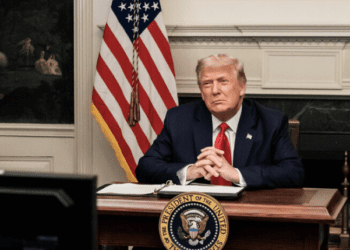
Trump’s proposed Ukraine “deal,” whatever its specifics, reinforces that belief. The danger is not just the policy. It is the precedent. The revelation that Trump’s special envoy Steve Witkoff coached the Russians on how to sell what amounts to Moscow’s peace plan to the American president further erodes confidence in the US administration and NATO solidarity. If the West accepts the idea that borders can be redrawn by force, that a nuclear-armed aggressor can be rewarded, or that alliance commitments can be adjusted to suit the politics of the moment, then the global order begins to unravel.

Those lessons will be heard loudly in Beijing. China sees Ukraine as a testing ground for American resolve. If Russia is allowed to keep what it has taken, China will draw its own conclusions about Taiwan. Sadly, Trump’s recent phone call to Chinese Secretary General Xi Jinping also appears to call into question the US commitment to Japan and Taiwan in the face of Chinese aggression. In Tehran, Iranian leaders will see weakness as an invitation for more aggression. In North Korea, Kim Jong-un will interpret Western division as a licence to escalate. These are not isolated theatres. They are linked arenas in a single strategic contest between authoritarian ambition and democratic resolve. A fracture in one region reverberates across all others. A political defeat in Ukraine would embolden dictators everywhere.

Western unity has always been the backbone of global stability. During the Cold War, NATO deterred Soviet aggression not simply because it was militarily strong but because it was politically cohesive. Adversaries knew that if they tested one NATO state, they would face all of them. That credibility prevented war. The same principle must guide us now. NATO and the wider Western alliance remain the critical counterweight to revisionist states that believe force, coercion, or expansionism can reshape borders and silence democratic societies. The strength of this coalition has never been measured solely in battalions or budgets, but in a shared commitment to common values – liberty, self-determination, the rule of law, and the inherent dignity of sovereign nations – that bind democracies together even when politics diverge. Alliance cohesion is not a diplomatic nicety. It is deterrence.
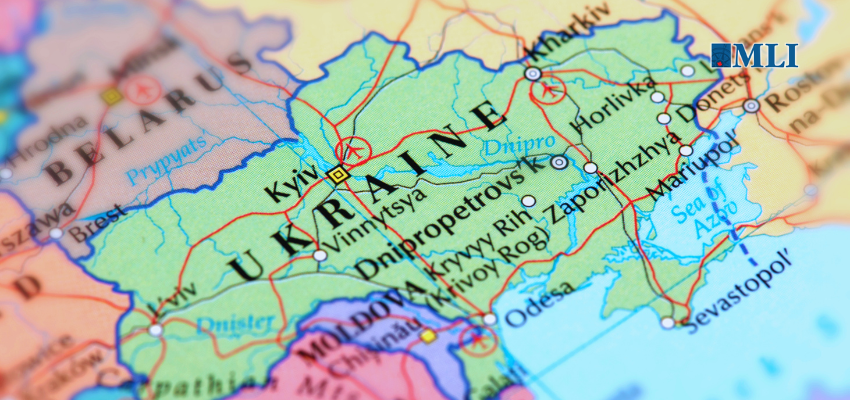
Ukraine’s fight is part of a broader defence of the international order that has enabled democratic prosperity. Support for Israel’s security, the defence of Taiwan, and the maintenance of Indo-Pacific sea lanes all depend on a perception that the US and its allies stand firm, not when convenient but when necessary.

That is why national will is now the decisive front. Autocrats are not betting that they can outgun the West. They are betting that they can outlast it – that democratic fatigue will outweigh strategic necessity, that partisanship will overwhelm principle, and that alliances built on consent will prove weaker than regimes built on coercion. They are wrong – but only if we show them they are wrong.

This is a moment that demands clarity of purpose: sustained military support for Ukraine; renewed commitment to NATO’s eastern and northern flanks; expanded partnerships in the Indo-Pacific; and unwavering backing for Israel’s right to defend itself. These are investments not in distant conflicts but in the stability of the world – which Canada, the United States, and their allies depend upon. If the West stands together, no combination of dictators can match its power, its prosperity, or its legitimacy. But if we allow ourselves to fracture – if we trade long-term security for short-term political gain – then our adversaries will not need to win on the battlefield. They will have already won where it matters most: in our resolve.

The dictators believe this is their moment. Whether they are right depends on us.


Joe Varner is the deputy director of the Conference of Defence Associations, and a senior fellow at the Macdonald-Laurier Institute in Ottawa and the Center for North American Prosperity and Security in Washington, D.C.
Related Posts

Property rights are “precarious” in Canada: Paul Warchuk and Peter Copeland for Inside Policy Talks
Domestic Policy

Property rights are “precarious” in Canada: Paul Warchuk and Peter Copeland for Inside Policy Talks

December 4, 2025
Harvard eschews ingrained ideology in order to tackle ‘genuinely hard problems’: Peter MacKinnon in the National Post
Reforming Universities

Harvard eschews ingrained ideology in order to tackle ‘genuinely hard problems’: Peter MacKinnon in the National Post

December 3, 2025
Risking public backlash? Canadian universities and demographic-based faculty hiring
Education

Risking public backlash? Canadian universities and demographic-based faculty hiring

December 3, 2025
Next Post
Beyond patchwork protection: Towards comprehensive property rights in Canadian law

Canadians' property rights must be defended

Newsletter Signup

  Thank you for Signing Up
  Please correct the marked field(s) below.
Email Address  *
1,true,6,Contact Email,2
First Name *
1,true,1,First Name,2
Last Name *
1,true,1,Last Name,2
*
*Required Fields

Follow us on

Macdonald-Laurier Institute

323 Chapel Street, Suite #300
Ottawa, Ontario, K1N 7Z2 Canada

613.482.8327

info@macdonaldlaurier.ca
MLI directory

Support Us

Support the Macdonald-Laurier Institute to help ensure that Canada is one of the best governed countries in the world. Click below to learn more or become a sponsor.

Support Us

  • Inside Policy Magazine
  • Annual Reports
  • Jobs
  • Privacy Policy

© 2023 Macdonald-Laurier Institute. All Rights reserved.

No Result
View All Result
  • Home
  • About
    • Who We Are
    • Who Makes MLI Work
    • Fifteenth Anniversary
  • Experts
    • Experts Directory
    • In Memoriam
  • Issues
    • Domestic Policy
      • Economic Policy
      • Justice
      • Rights and Freedoms
      • Assisted Suicide (MAID)
      • Health Care
      • COVID-19
      • Gender Identity
      • Canada’s Political Tradition
      • AI, Technology and Innovation
      • Media and Telecoms
      • Housing
      • Immigration
      • Agriculture and Agri-Food
      • Competition Policy
    • Energy Policy
      • Energy
      • Environment
    • Foreign Policy
      • Israel-Hamas War
      • Ukraine
      • Taiwan
      • China
      • Europe and Russia
      • Indo-Pacific
      • Middle East and North Africa
      • North America
      • Foreign Interference
      • National Defence
      • National Security
      • Foreign Affairs
    • Indigenous Affairs
  • Projects
    • CNAPS (Center for North American Prosperity and Security)
    • The Promised Land
    • Voices that Inspire: The Macdonald-Laurier Vancouver Speaker Series
    • Dragon at the door
    • Canada on top of the world
    • Letter to a minister
    • Justice Report Card
    • The Great Energy Crisis
    • DisInfoWatch.org
    • Managing Indigenous Prosperity
    • Judicial Foundations
    • Landmark Cases Council
    • Defending The Marketplace of Ideas
    • Reforming the University
    • Past Projects
      • Digital Policy & Connectivity
      • Double Trouble
      • Canada and the Indo-Pacific Initiative
      • The Transatlantic Program
      • COVID Misery Index
      • Speak for Ourselves
      • The Eavesdropping Dragon: Huawei
      • Talkin’ in the Free World with Mariam Memarsadeghi
      • An Intellectual Property Strategy for Canada
      • Munk Senior Fellows
      • A Mandate for Canada
      • Confederation Series
      • Fiscal Reform
      • The Canadian Century project
      • Fixing Canadian health care
      • Internal trade
      • From a mandate for change
      • Size of government in Canada
      • Straight Talk
      • Labour Market Report
      • Leading Economic Indicator
      • Centre for Advancing Canada’s Interests Abroad
      • Indigenous Prosperity at a Crossroads
  • Events
    • Upcoming Events
    • Past Events
      • MLI Dinners
      • Great Canadian Debates
  • Latest News
  • Libraries
    • Columns
    • Commentary
    • Papers
    • Books
    • Video
  • Donate

© 2023 Macdonald-Laurier Institute. All Rights reserved.