Thursday, March 5, 2026
No Result
View All Result
  • Media
Macdonald-Laurier Institute
  • Home
  • About
    • Who We Are
    • Who Makes MLI Work
    • Fifteenth Anniversary
  • Experts
    • Experts Directory
    • In Memoriam
  • Issues
    • Domestic Policy
      • Economic Policy
      • Justice
      • Rights and Freedoms
      • Assisted Suicide (MAID)
      • Health Care
      • COVID-19
      • Gender Identity
      • Canada’s Political Tradition
      • AI, Technology and Innovation
      • Media and Telecoms
      • Housing
      • Immigration
      • Agriculture and Agri-Food
      • Competition Policy
    • Energy Policy
      • Energy
      • Environment
    • Foreign Policy
      • Israel-Hamas War
      • Ukraine
      • Taiwan
      • China
      • Europe and Russia
      • Indo-Pacific
      • Middle East and North Africa
      • North America
      • Foreign Interference
      • National Defence
      • National Security
      • Foreign Affairs
    • Indigenous Affairs
  • Projects
    • CNAPS (Center for North American Prosperity and Security)
    • Justice Report Card
    • The Promised Land
    • Voices that Inspire: The Macdonald-Laurier Vancouver Speaker Series
    • Dragon at the door
    • Canada on top of the world
    • Letter to a minister
    • The Great Energy Crisis
    • DisInfoWatch.org
    • Managing Indigenous Prosperity
    • Judicial Foundations
    • Landmark Cases Council
    • Defending The Marketplace of Ideas
    • Reforming the University
    • Past Projects
      • Digital Policy & Connectivity
      • Double Trouble
      • Canada and the Indo-Pacific Initiative
      • The Transatlantic Program
      • COVID Misery Index
        • Provincial COVID Misery Index
        • Beyond Lockdown
        • COVID and after: A mandate for recovery
      • Speak for Ourselves
      • The Eavesdropping Dragon: Huawei
      • Talkin’ in the Free World with Mariam Memarsadeghi
      • An Intellectual Property Strategy for Canada
      • Munk Senior Fellows
      • A Mandate for Canada
      • Confederation Series
      • Fiscal Reform
      • The Canadian Century project
      • Fixing Canadian health care
      • Internal trade
      • From a mandate for change
      • Size of government in Canada
      • Straight Talk
      • Labour Market Report
      • Leading Economic Indicator
      • Centre for Advancing Canada’s Interests Abroad
      • Indigenous Prosperity at a Crossroads
        • Aboriginal Canada and Natural Resources
  • Events
    • Upcoming Events
    • Past Events
      • MLI Dinners
      • Great Canadian Debates
  • Latest News
  • Libraries
    • Columns
    • Commentary
    • Papers
    • Books
    • Video
  • Donate
  • Home
  • About
    • Who We Are
    • Who Makes MLI Work
    • Fifteenth Anniversary
  • Experts
    • Experts Directory
    • In Memoriam
  • Issues
    • Domestic Policy
      • Economic Policy
      • Justice
      • Rights and Freedoms
      • Assisted Suicide (MAID)
      • Health Care
      • COVID-19
      • Gender Identity
      • Canada’s Political Tradition
      • AI, Technology and Innovation
      • Media and Telecoms
      • Housing
      • Immigration
      • Agriculture and Agri-Food
      • Competition Policy
    • Energy Policy
      • Energy
      • Environment
    • Foreign Policy
      • Israel-Hamas War
      • Ukraine
      • Taiwan
      • China
      • Europe and Russia
      • Indo-Pacific
      • Middle East and North Africa
      • North America
      • Foreign Interference
      • National Defence
      • National Security
      • Foreign Affairs
    • Indigenous Affairs
  • Projects
    • CNAPS (Center for North American Prosperity and Security)
    • Justice Report Card
    • The Promised Land
    • Voices that Inspire: The Macdonald-Laurier Vancouver Speaker Series
    • Dragon at the door
    • Canada on top of the world
    • Letter to a minister
    • The Great Energy Crisis
    • DisInfoWatch.org
    • Managing Indigenous Prosperity
    • Judicial Foundations
    • Landmark Cases Council
    • Defending The Marketplace of Ideas
    • Reforming the University
    • Past Projects
      • Digital Policy & Connectivity
      • Double Trouble
      • Canada and the Indo-Pacific Initiative
      • The Transatlantic Program
      • COVID Misery Index
        • Provincial COVID Misery Index
        • Beyond Lockdown
        • COVID and after: A mandate for recovery
      • Speak for Ourselves
      • The Eavesdropping Dragon: Huawei
      • Talkin’ in the Free World with Mariam Memarsadeghi
      • An Intellectual Property Strategy for Canada
      • Munk Senior Fellows
      • A Mandate for Canada
      • Confederation Series
      • Fiscal Reform
      • The Canadian Century project
      • Fixing Canadian health care
      • Internal trade
      • From a mandate for change
      • Size of government in Canada
      • Straight Talk
      • Labour Market Report
      • Leading Economic Indicator
      • Centre for Advancing Canada’s Interests Abroad
      • Indigenous Prosperity at a Crossroads
        • Aboriginal Canada and Natural Resources
  • Events
    • Upcoming Events
    • Past Events
      • MLI Dinners
      • Great Canadian Debates
  • Latest News
  • Libraries
    • Columns
    • Commentary
    • Papers
    • Books
    • Video
  • Donate
No Result
View All Result
Macdonald-Laurier Institute

Trump and Netanyahu have the law, and the facts, on their side: Brian Cox in Real Clear World

As a matter of international law, these claims typically constitute a valid expression of relevant legal principles. But the law operates in the context of the facts of the case.

March 5, 2026
in Foreign Affairs, Columns, Foreign Policy, Latest News, In the Media, The Promised Land, Middle East and North Africa
Reading Time: 6 mins read
A A
Trump and Netanyahu have the law, and the facts, on their side: Brian Cox in Real Clear World

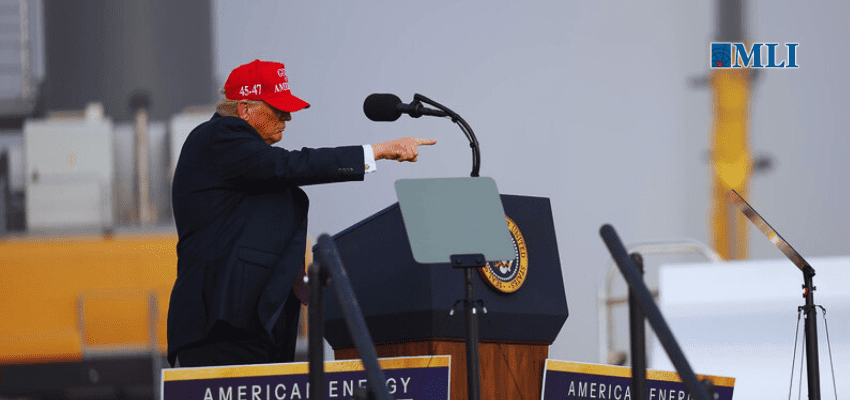
Official White House Photo by Molly Riley via Flickr.

This article originally appeared in Real Clear World.

By Brian Cox, March 5, 2026

Within hours of the United States and Israel launching their attack on the Iranian government, allegations that the operations were illegal filled airwaves and social media feeds around the world.

New York Mayor Zohran Mamdani claimed the strikes “mark a catastrophic escalation in an illegal war of aggression.” International law specialist Oona Hathaway insisted the attacks “are blatantly illegal,” while referring to an opinion article in which she reaches the same conclusion for the previous attack against Iran’s nuclear capabilities. UK Member of Parliament Jeremy Corbyn declared the “attacks on Iran by Israel and the United States are illegal, unprovoked and unjustifiable.”

Though they are prevalent and may appear convincing, assertions such as these are mistaken. There is, in fact, legal basis for these actions under both international and domestic law.

The UN Charter

The standard interpretation of the use of force model reflected in the UN Charter suggests self-defense is the only permissible justification to resort to armed attack in the absence of a Security Council authorization or consent of the host nation.

Allegations that attacking Iran is inconsistent with the Charter fail to account for at least one pivotal factor: Israel has publicly acknowledged it is an “ongoing armed conflict” against Iran and its regional proxies. Israel has been exercising the inherent right of self-defense since then against all adversarial co-belligerents, including Iran.

Because the UN Charter recognizes the right of individual and collective self-defense, this provides a legal basis for both Israel and the United States to use force against Iran.

Even so, claims that these attacks constitute aggression are flawed for a separate but related reason.

Crime of aggression and law of neutrality

Aggression is defined pursuant to international law as an attack against another country in a manner “inconsistent with” the UN Charter.

By participating in the conflict along with Israel, the United States merely forfeits neutral status and Iran may now regard America as an adversarial co-belligerent.

Still, joining an ongoing armed conflict does not qualify as “the first use of force” according to the definition of aggression.

Because Israel continues to act in self-defense during an ongoing armed conflict against Iran and its regional proxies, neither Israel nor the United States violated international law by launching Operation Roaring Lion and Operation Epic Fury, respectively.

Constitutional authority and the War Powers Resolution

The decision to deploy the US military in support of this operation is consistent with American domestic law as well.

Although Congress has sole constitutional authority to declare war, not every use of force qualifies as “war” such that the legislature must authorize it.

There have only been eleven declarations of war in US history, covering five separate conflicts. Yet hundreds of occasions of the use of force abroad have been documented from 1798 to 2023.

For hostilities that fall short of war on the spectrum of conflict—including the current operation against Iran—the president typically relies on Article II commander-in-chief constitutional authority.

On the legislative front, Senator Tim Kaine recently called on the Senate to return to session so a bill he introduced to block the administration from engaging in hostilities can come to a vote. The draft legislation is structured upon and cites the War Powers Resolution adopted by Congress in 1973.

However, Kaine’s measure is unlikely to actually halt the conflict considering every president since Nixon has regarded the War Powers Resolution as an unconstitutional attempt to constrain executive authority.

Congressional ‘authorization’

Former State Department official Gabriel Noronha suggested that the 2001 Authorization to Use Military Force (AUMF) passed by Congress in 2001 may provide a domestic legal basis for attacking Iran, though this conclusion will predictably be rejected by critics of the operation.

Even so, this perennial debate about the AUMF misses a vital point: Congress doesn’t actually “authorize” military force by adopting this type of legislation. Instead, the legislature is merely expressing approval of executive action.

This is what Justice Robert Jackson famously described in his landmark Youngstown concurrence as the “maximum” extent of presidential authority since “it includes all that he possesses in his own right plus all that Congress can delegate.”

However, in the absence of Congressional authority, Jackson maintains that the commander-in-chief still can still take action: either in the “zone of twilight” in the absence of legislation, or operating within the “lowest ebb”—acting in a manner incompatible with the will of Congress based on executive authority alone.

Getting the facts right

There has been no shortage of assertions that joint Israeli and American operations against Iran are illegal.

As a matter of international law, these claims typically constitute a valid expression of relevant legal principles. But the law operates in the context of the facts of the case. Failing to acknowledge the ongoing armed conflict Israel is fighting against Iran and its regional proxies results in mistaken conclusions that these latest operations violate the UN Charter.

Domestically, misleading impressions regarding the role of the War Powers Resolution and “authorizations” to use military force complicate popular perceptions of executive authority in this area. Congress declares war, and long-standing precedent supports presidential power to authorize operations—such as this one—that fall short of war.

Whether international or domestic, an accurate understanding of relevant facts is just as important to reaching valid conclusions as properly articulating applicable law.

The only valid conclusion here is the attacks against Iran by Israel and the United States are, indeed, lawful.


Brian L. Cox is an adjunct professor at Cornell Law School and a contributor for the Macdonald-Laurier Institute in Ottawa. He retired from the U.S. Army in 2018 after 22 years of military service, including seven years as a military lawyer and several combat deployments.

Source: Real Clear World

Related Posts

Why the world needs even more Canadian coal: Heather Exner-Pirot in The Hub
Resources

Why the world needs even more Canadian coal: Heather Exner-Pirot in The Hub

March 5, 2026
Canada has an opportunity to redefine its role in the Pacific: Stephen Nagy in the Japan Times
Indo-Pacific

Canada has an opportunity to redefine its role in the Pacific: Stephen Nagy in the Japan Times

March 5, 2026
Canada’s reactive engagement with Greenland a missed opportunity: Rob Huebert in the Calgary Herald
Arctic

Canada’s reactive engagement with Greenland a missed opportunity: Rob Huebert in the Calgary Herald

March 5, 2026
Next Post
Why the world needs even more Canadian coal: Heather Exner-Pirot in The Hub

Why the world needs even more Canadian coal: Heather Exner-Pirot in The Hub

Newsletter Signup

  Thank you for Signing Up
  Please correct the marked field(s) below.
Email Address  *
1,true,6,Contact Email,2
First Name *
1,true,1,First Name,2
Last Name *
1,true,1,Last Name,2
*
*Required Fields

Follow us on

Macdonald-Laurier Institute

323 Chapel Street, Suite #300
Ottawa, Ontario, K1N 7Z2 Canada

613.482.8327

info@macdonaldlaurier.ca
MLI directory

Support Us

Support the Macdonald-Laurier Institute to help ensure that Canada is one of the best governed countries in the world. Click below to learn more or become a sponsor.

Support Us

  • Inside Policy Magazine
  • Annual Reports
  • Jobs
  • Privacy Policy

© 2023 Macdonald-Laurier Institute. All Rights reserved.

This site uses cookies. By continuing to browse the site you are agreeing to our use of cookies.

Privacy Preference Center

Consent Management

Necessary

Advertising

Analytics

Other

No Result
View All Result
  • Home
  • About
    • Who We Are
    • Who Makes MLI Work
    • Fifteenth Anniversary
  • Experts
    • Experts Directory
    • In Memoriam
  • Issues
    • Domestic Policy
      • Economic Policy
      • Justice
      • Rights and Freedoms
      • Assisted Suicide (MAID)
      • Health Care
      • COVID-19
      • Gender Identity
      • Canada’s Political Tradition
      • AI, Technology and Innovation
      • Media and Telecoms
      • Housing
      • Immigration
      • Agriculture and Agri-Food
      • Competition Policy
    • Energy Policy
      • Energy
      • Environment
    • Foreign Policy
      • Israel-Hamas War
      • Ukraine
      • Taiwan
      • China
      • Europe and Russia
      • Indo-Pacific
      • Middle East and North Africa
      • North America
      • Foreign Interference
      • National Defence
      • National Security
      • Foreign Affairs
    • Indigenous Affairs
  • Projects
    • CNAPS (Center for North American Prosperity and Security)
    • Justice Report Card
    • The Promised Land
    • Voices that Inspire: The Macdonald-Laurier Vancouver Speaker Series
    • Dragon at the door
    • Canada on top of the world
    • Letter to a minister
    • The Great Energy Crisis
    • DisInfoWatch.org
    • Managing Indigenous Prosperity
    • Judicial Foundations
    • Landmark Cases Council
    • Defending The Marketplace of Ideas
    • Reforming the University
    • Past Projects
      • Digital Policy & Connectivity
      • Double Trouble
      • Canada and the Indo-Pacific Initiative
      • The Transatlantic Program
      • COVID Misery Index
      • Speak for Ourselves
      • The Eavesdropping Dragon: Huawei
      • Talkin’ in the Free World with Mariam Memarsadeghi
      • An Intellectual Property Strategy for Canada
      • Munk Senior Fellows
      • A Mandate for Canada
      • Confederation Series
      • Fiscal Reform
      • The Canadian Century project
      • Fixing Canadian health care
      • Internal trade
      • From a mandate for change
      • Size of government in Canada
      • Straight Talk
      • Labour Market Report
      • Leading Economic Indicator
      • Centre for Advancing Canada’s Interests Abroad
      • Indigenous Prosperity at a Crossroads
  • Events
    • Upcoming Events
    • Past Events
      • MLI Dinners
      • Great Canadian Debates
  • Latest News
  • Libraries
    • Columns
    • Commentary
    • Papers
    • Books
    • Video
  • Donate

© 2023 Macdonald-Laurier Institute. All Rights reserved.