
Friday, December 5, 2025
No Result
View All Result
  • Media
Macdonald-Laurier Institute
  • Home
  • About
    • Who We Are
    • Who Makes MLI Work
    • Fifteenth Anniversary
  • Experts
    • Experts Directory
    • In Memoriam
  • Issues
    • Domestic Policy
      • Economic Policy
      • Justice
      • Rights and Freedoms
      • Assisted Suicide (MAID)
      • Health Care
      • COVID-19
      • Gender Identity
      • Canada’s Political Tradition
      • AI, Technology and Innovation
      • Media and Telecoms
      • Housing
      • Immigration
      • Agriculture and Agri-Food
      • Competition Policy
    • Energy Policy
      • Energy
      • Environment
    • Foreign Policy
      • Israel-Hamas War
      • Ukraine
      • Taiwan
      • China
      • Europe and Russia
      • Indo-Pacific
      • Middle East and North Africa
      • North America
      • Foreign Interference
      • National Defence
      • National Security
      • Foreign Affairs
    • Indigenous Affairs
  • Projects
    • CNAPS (Center for North American Prosperity and Security)
    • The Promised Land
    • Voices that Inspire: The Macdonald-Laurier Vancouver Speaker Series
    • Dragon at the door
    • Canada on top of the world
    • Letter to a minister
    • Justice Report Card
    • The Great Energy Crisis
    • DisInfoWatch.org
    • Managing Indigenous Prosperity
    • Judicial Foundations
    • Landmark Cases Council
    • Defending The Marketplace of Ideas
    • Reforming the University
    • Past Projects
      • Digital Policy & Connectivity
      • Double Trouble
      • Canada and the Indo-Pacific Initiative
      • The Transatlantic Program
      • COVID Misery Index
        • Provincial COVID Misery Index
        • Beyond Lockdown
        • COVID and after: A mandate for recovery
      • Speak for Ourselves
      • The Eavesdropping Dragon: Huawei
      • Talkin’ in the Free World with Mariam Memarsadeghi
      • An Intellectual Property Strategy for Canada
      • Munk Senior Fellows
      • A Mandate for Canada
      • Confederation Series
      • Fiscal Reform
      • The Canadian Century project
      • Fixing Canadian health care
      • Internal trade
      • From a mandate for change
      • Size of government in Canada
      • Straight Talk
      • Labour Market Report
      • Leading Economic Indicator
      • Centre for Advancing Canada’s Interests Abroad
      • Indigenous Prosperity at a Crossroads
        • Aboriginal Canada and Natural Resources
  • Events
    • Upcoming Events
    • Past Events
      • MLI Dinners
      • Great Canadian Debates
  • Latest News
  • Libraries
    • Columns
    • Commentary
    • Papers
    • Books
    • Video
  • Donate
  • Home
  • About
    • Who We Are
    • Who Makes MLI Work
    • Fifteenth Anniversary
  • Experts
    • Experts Directory
    • In Memoriam
  • Issues
    • Domestic Policy
      • Economic Policy
      • Justice
      • Rights and Freedoms
      • Assisted Suicide (MAID)
      • Health Care
      • COVID-19
      • Gender Identity
      • Canada’s Political Tradition
      • AI, Technology and Innovation
      • Media and Telecoms
      • Housing
      • Immigration
      • Agriculture and Agri-Food
      • Competition Policy
    • Energy Policy
      • Energy
      • Environment
    • Foreign Policy
      • Israel-Hamas War
      • Ukraine
      • Taiwan
      • China
      • Europe and Russia
      • Indo-Pacific
      • Middle East and North Africa
      • North America
      • Foreign Interference
      • National Defence
      • National Security
      • Foreign Affairs
    • Indigenous Affairs
  • Projects
    • CNAPS (Center for North American Prosperity and Security)
    • The Promised Land
    • Voices that Inspire: The Macdonald-Laurier Vancouver Speaker Series
    • Dragon at the door
    • Canada on top of the world
    • Letter to a minister
    • Justice Report Card
    • The Great Energy Crisis
    • DisInfoWatch.org
    • Managing Indigenous Prosperity
    • Judicial Foundations
    • Landmark Cases Council
    • Defending The Marketplace of Ideas
    • Reforming the University
    • Past Projects
      • Digital Policy & Connectivity
      • Double Trouble
      • Canada and the Indo-Pacific Initiative
      • The Transatlantic Program
      • COVID Misery Index
        • Provincial COVID Misery Index
        • Beyond Lockdown
        • COVID and after: A mandate for recovery
      • Speak for Ourselves
      • The Eavesdropping Dragon: Huawei
      • Talkin’ in the Free World with Mariam Memarsadeghi
      • An Intellectual Property Strategy for Canada
      • Munk Senior Fellows
      • A Mandate for Canada
      • Confederation Series
      • Fiscal Reform
      • The Canadian Century project
      • Fixing Canadian health care
      • Internal trade
      • From a mandate for change
      • Size of government in Canada
      • Straight Talk
      • Labour Market Report
      • Leading Economic Indicator
      • Centre for Advancing Canada’s Interests Abroad
      • Indigenous Prosperity at a Crossroads
        • Aboriginal Canada and Natural Resources
  • Events
    • Upcoming Events
    • Past Events
      • MLI Dinners
      • Great Canadian Debates
  • Latest News
  • Libraries
    • Columns
    • Commentary
    • Papers
    • Books
    • Video
  • Donate
No Result
View All Result
Macdonald-Laurier Institute

Don’t lose sight of the other global crisis point – The South China Sea: Jonathan Berkshire Miller in the Globe and Mail

If Beijing succeeds in stamping its authority on the South China Sea, the move will embolden it elsewhere, from the Arctic to cyberspace.

August 25, 2025
in Canada and the Indo-Pacific Initiative, Foreign Affairs, Foreign Policy, Latest News, Columns, In the Media, Indo-Pacific, Jonathan Berkshire Miller
Reading Time: 4 mins read
A A
Don’t lose sight of the other global crisis point – The South China Sea: Jonathan Berkshire Miller in the Globe and Mail

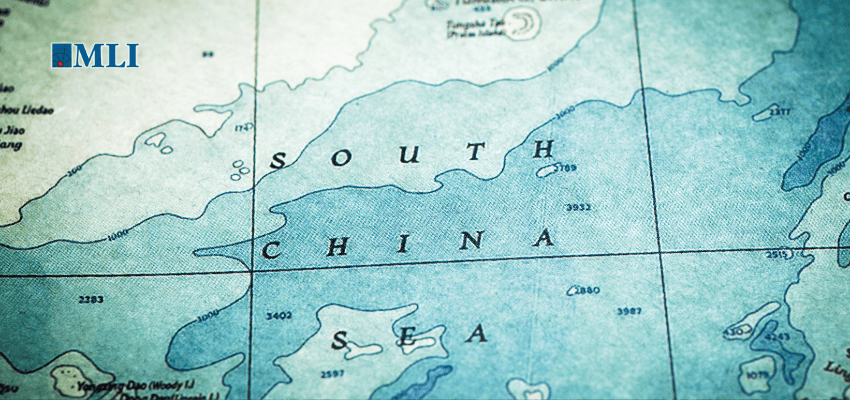
Image via Canva.

This article originally appeared in the Globe and Mail.

By Jonathan Berkshire Miller, August 25, 2025

On Aug. 11, two Chinese ships – one a coast guard cutter, the other a navy destroyer – collided with each other in a dramatic maritime incident near the disputed Scarborough Shoal in the South China Sea. The Chinese ships engaged in aggressive manoeuvres against a Philippine coast guard resupply mission, ramming, water-cannoning and boxing in the BRP Suluan while the patrol vessel was on a humanitarian mission to Filipino fishermen in the area. China accused the Filipinos of “dangerous manoeuvres,” defended its actions as lawful, and warned of countermeasures.

In a striking response, Australia and the Philippines kicked off Exercise Alon 25 last Friday, marking their largest-ever joint military exercises in the region, joined by observers from countries, including Canada, in a vivid signal of reinforced international solidarity.

The incident was a reminder that while global attention remains absorbed by Ukraine and the Middle East, a quieter yet equally dangerous tectonic shift is unfolding in the South China Sea. It underscores not only Beijing’s tenacious efforts to assert control over contested waters and secure its commercial and fishing interests in the region by establishing naval presence, but also the growing peril these tensions pose to regional security, global biodiversity, food security and maritime supply chains in one of the world’s most productive fishing zones.

China’s aggressive maritime posture is escalating. Chinese warships and fighter jets have recently deployed near Scarborough Shoal, seeking to deter both Philippine and U.S. presence. Such efforts are emblematic of Beijing’s wider strategy: the militarization of artificial islands, the brazen use of a maritime militia, regular water-cannon attacks and provocations such as the 2023 Second Thomas Shoal confrontation, in which a blinding laser was fired at a Philippine resupply ship. These tactics don’t just threaten the sovereignty of Southeast Asian countries – they also drive unsustainable fishing, diminishing marine biodiversity and threatening the livelihood of millions.

But there is a deeper and more ominous backdrop to this conflict: the growing overlap between South China Sea rivalries and the potential for conflict between Taiwan and China. Last week, Philippine President Ferdinand (Bongbong) Marcos Jr. offered a rare, candid admission: in the event of what experts called the Taiwan contingency, the Philippines will be dragged “kicking and screaming” into the fray, regardless of its preferences. This blunt confession – which Beijing responded to angrily – draws a direct strategic line connecting the Western Pacific flashpoints.

In this context, Manila has quietly repositioned itself as a strategic pivot in the region. Under Mr. Marcos, the Enhanced Defense Cooperation Agreement with Washington has been expanded to include sites within 500 kilometres of Taiwan. Its 2023–2028 National Security Policy explicitly lists a Taiwanese conflict among its greatest threats. Manila has also deployed coast-guard monitoring near the Bashi Channel and allowed U.S. Typhon missile systems in the north of the archipelago.

This convergence of pressure in the South China Sea and Taiwan contingency raises an alarming nexus of risk, as a conflict or even heightened tension in one theatre could cascade into the other. The Philippines is not only a front line claimant state in the West Philippine Sea, but also a geographic buffer between China and Taiwan. This dual role increases Manila’s vulnerability, but also its strategic value to like-minded democracies.

So where does Canada stand amidst all this tension?

Canada has demonstrated growing interest in the Indo-Pacific, and is now three years into the implementation of a regional strategy there. Fisheries enforcement, surveillance technology and conservation science are areas of expertise for Canada. Ottawa should continue to actively partner with the Philippines and Vietnam to detect and deter illegal, unregulated and destructive fishing, including maritime militia activity. Coastal monitoring systems, vessel-track sharing and dark-vessel detection technologies are also ready-made domains for Canadian support.

Further steps include deepening defence engagement, which should complement diplomacy through groups like the ASEAN-Canada Strategic Partnership and ad hoc coalitions of maritime democracies. On the regulatory front, Canada should champion toughened rules against illegal, unreported and unregulated fishing and support transparency initiatives in naval and coast guard operations.

Canada’s sustained involvement would deliver a dual advantage: supporting Southeast Asia at a vulnerable juncture, while underscoring its own commitment to upholding international law and the maritime commons. After all, if Beijing succeeds in stamping its authority on the South China Sea, the move will embolden it elsewhere, from the Arctic to cyberspace.

But Canada’s approach must match its rhetoric. The choice is stark: either pro-active engagement now, or reactive scrambling later. The collision near Scarborough Shoal is not just a passing headline, it is a warning shot – and the global community must parse the message that Beijing is sending.


Jonathan Berkshire Miller is co-founder and principal of Pendulum Geopolitical Advisory and a senior fellow at the Macdonald-Laurier Institute.
Source: The Globe and Mail

Related Posts

Property rights are “precarious” in Canada: Paul Warchuk and Peter Copeland for Inside Policy Talks
Domestic Policy

Property rights are “precarious” in Canada: Paul Warchuk and Peter Copeland for Inside Policy Talks

December 4, 2025
Harvard eschews ingrained ideology in order to tackle ‘genuinely hard problems’: Peter MacKinnon in the National Post
Reforming Universities

Harvard eschews ingrained ideology in order to tackle ‘genuinely hard problems’: Peter MacKinnon in the National Post

December 3, 2025
Risking public backlash? Canadian universities and demographic-based faculty hiring
Education

Risking public backlash? Canadian universities and demographic-based faculty hiring

December 3, 2025
Next Post
Rethinking arts and media funding – A new vision for Canada: Peter Menzies

Rethinking arts and media funding - A new vision for Canada: Peter Menzies

Newsletter Signup

  Thank you for Signing Up
  Please correct the marked field(s) below.
Email Address  *
1,true,6,Contact Email,2
First Name *
1,true,1,First Name,2
Last Name *
1,true,1,Last Name,2
*
*Required Fields

Follow us on

Macdonald-Laurier Institute

323 Chapel Street, Suite #300
Ottawa, Ontario, K1N 7Z2 Canada

613.482.8327

info@macdonaldlaurier.ca
MLI directory

Support Us

Support the Macdonald-Laurier Institute to help ensure that Canada is one of the best governed countries in the world. Click below to learn more or become a sponsor.

Support Us

  • Inside Policy Magazine
  • Annual Reports
  • Jobs
  • Privacy Policy

© 2023 Macdonald-Laurier Institute. All Rights reserved.

No Result
View All Result
  • Home
  • About
    • Who We Are
    • Who Makes MLI Work
    • Fifteenth Anniversary
  • Experts
    • Experts Directory
    • In Memoriam
  • Issues
    • Domestic Policy
      • Economic Policy
      • Justice
      • Rights and Freedoms
      • Assisted Suicide (MAID)
      • Health Care
      • COVID-19
      • Gender Identity
      • Canada’s Political Tradition
      • AI, Technology and Innovation
      • Media and Telecoms
      • Housing
      • Immigration
      • Agriculture and Agri-Food
      • Competition Policy
    • Energy Policy
      • Energy
      • Environment
    • Foreign Policy
      • Israel-Hamas War
      • Ukraine
      • Taiwan
      • China
      • Europe and Russia
      • Indo-Pacific
      • Middle East and North Africa
      • North America
      • Foreign Interference
      • National Defence
      • National Security
      • Foreign Affairs
    • Indigenous Affairs
  • Projects
    • CNAPS (Center for North American Prosperity and Security)
    • The Promised Land
    • Voices that Inspire: The Macdonald-Laurier Vancouver Speaker Series
    • Dragon at the door
    • Canada on top of the world
    • Letter to a minister
    • Justice Report Card
    • The Great Energy Crisis
    • DisInfoWatch.org
    • Managing Indigenous Prosperity
    • Judicial Foundations
    • Landmark Cases Council
    • Defending The Marketplace of Ideas
    • Reforming the University
    • Past Projects
      • Digital Policy & Connectivity
      • Double Trouble
      • Canada and the Indo-Pacific Initiative
      • The Transatlantic Program
      • COVID Misery Index
      • Speak for Ourselves
      • The Eavesdropping Dragon: Huawei
      • Talkin’ in the Free World with Mariam Memarsadeghi
      • An Intellectual Property Strategy for Canada
      • Munk Senior Fellows
      • A Mandate for Canada
      • Confederation Series
      • Fiscal Reform
      • The Canadian Century project
      • Fixing Canadian health care
      • Internal trade
      • From a mandate for change
      • Size of government in Canada
      • Straight Talk
      • Labour Market Report
      • Leading Economic Indicator
      • Centre for Advancing Canada’s Interests Abroad
      • Indigenous Prosperity at a Crossroads
  • Events
    • Upcoming Events
    • Past Events
      • MLI Dinners
      • Great Canadian Debates
  • Latest News
  • Libraries
    • Columns
    • Commentary
    • Papers
    • Books
    • Video
  • Donate

© 2023 Macdonald-Laurier Institute. All Rights reserved.