
Tuesday, April 28, 2026
No Result
View All Result
  • Media
Macdonald-Laurier Institute
  • Home
  • About
    • Who We Are
    • Who Makes MLI Work
    • Fifteenth Anniversary
  • Experts
    • Experts Directory
    • In Memoriam
  • Issues
    • Domestic Policy
      • Economic Policy
      • Justice
      • Rights and Freedoms
      • Assisted Suicide (MAID)
      • Health Care
      • COVID-19
      • Gender Identity
      • Canada’s Political Tradition
      • AI, Technology and Innovation
      • Media and Telecoms
      • Housing
      • Immigration
      • Agriculture and Agri-Food
      • Competition Policy
    • Energy Policy
      • Energy
      • Environment
    • Foreign Policy
      • Israel-Hamas War
      • Ukraine
      • Taiwan
      • China
      • Europe and Russia
      • Indo-Pacific
      • Middle East and North Africa
      • North America
      • Foreign Interference
      • National Defence
      • National Security
      • Foreign Affairs
    • Indigenous Affairs
  • Projects
    • CNAPS (Center for North American Prosperity and Security)
    • Justice Report Card
    • The Promised Land
    • Voices that Inspire: The Macdonald-Laurier Vancouver Speaker Series
    • Dragon at the door
    • Canada on top of the world
    • Letter to a minister
    • The Great Energy Crisis
    • DisInfoWatch.org
    • Managing Indigenous Prosperity
    • Judicial Foundations
    • Landmark Cases Council
    • Defending The Marketplace of Ideas
    • Reforming the University
    • Past Projects
      • Digital Policy & Connectivity
      • Double Trouble
      • Canada and the Indo-Pacific Initiative
      • The Transatlantic Program
      • COVID Misery Index
        • Provincial COVID Misery Index
        • Beyond Lockdown
        • COVID and after: A mandate for recovery
      • Speak for Ourselves
      • The Eavesdropping Dragon: Huawei
      • Talkin’ in the Free World with Mariam Memarsadeghi
      • An Intellectual Property Strategy for Canada
      • Munk Senior Fellows
      • A Mandate for Canada
      • Confederation Series
      • Fiscal Reform
      • The Canadian Century project
      • Fixing Canadian health care
      • Internal trade
      • From a mandate for change
      • Size of government in Canada
      • Straight Talk
      • Labour Market Report
      • Leading Economic Indicator
      • Centre for Advancing Canada’s Interests Abroad
      • Indigenous Prosperity at a Crossroads
        • Aboriginal Canada and Natural Resources
  • Events
    • Upcoming Events
    • Past Events
      • MLI Dinners
      • Great Canadian Debates
  • Latest News
  • Libraries
    • Columns
    • Commentary
    • Papers
    • Books
    • Video
  • Donate
  • Home
  • About
    • Who We Are
    • Who Makes MLI Work
    • Fifteenth Anniversary
  • Experts
    • Experts Directory
    • In Memoriam
  • Issues
    • Domestic Policy
      • Economic Policy
      • Justice
      • Rights and Freedoms
      • Assisted Suicide (MAID)
      • Health Care
      • COVID-19
      • Gender Identity
      • Canada’s Political Tradition
      • AI, Technology and Innovation
      • Media and Telecoms
      • Housing
      • Immigration
      • Agriculture and Agri-Food
      • Competition Policy
    • Energy Policy
      • Energy
      • Environment
    • Foreign Policy
      • Israel-Hamas War
      • Ukraine
      • Taiwan
      • China
      • Europe and Russia
      • Indo-Pacific
      • Middle East and North Africa
      • North America
      • Foreign Interference
      • National Defence
      • National Security
      • Foreign Affairs
    • Indigenous Affairs
  • Projects
    • CNAPS (Center for North American Prosperity and Security)
    • Justice Report Card
    • The Promised Land
    • Voices that Inspire: The Macdonald-Laurier Vancouver Speaker Series
    • Dragon at the door
    • Canada on top of the world
    • Letter to a minister
    • The Great Energy Crisis
    • DisInfoWatch.org
    • Managing Indigenous Prosperity
    • Judicial Foundations
    • Landmark Cases Council
    • Defending The Marketplace of Ideas
    • Reforming the University
    • Past Projects
      • Digital Policy & Connectivity
      • Double Trouble
      • Canada and the Indo-Pacific Initiative
      • The Transatlantic Program
      • COVID Misery Index
        • Provincial COVID Misery Index
        • Beyond Lockdown
        • COVID and after: A mandate for recovery
      • Speak for Ourselves
      • The Eavesdropping Dragon: Huawei
      • Talkin’ in the Free World with Mariam Memarsadeghi
      • An Intellectual Property Strategy for Canada
      • Munk Senior Fellows
      • A Mandate for Canada
      • Confederation Series
      • Fiscal Reform
      • The Canadian Century project
      • Fixing Canadian health care
      • Internal trade
      • From a mandate for change
      • Size of government in Canada
      • Straight Talk
      • Labour Market Report
      • Leading Economic Indicator
      • Centre for Advancing Canada’s Interests Abroad
      • Indigenous Prosperity at a Crossroads
        • Aboriginal Canada and Natural Resources
  • Events
    • Upcoming Events
    • Past Events
      • MLI Dinners
      • Great Canadian Debates
  • Latest News
  • Libraries
    • Columns
    • Commentary
    • Papers
    • Books
    • Video
  • Donate
No Result
View All Result
Macdonald-Laurier Institute

The media is begging for even more money. Here’s why the government keeps giving it to them: Peter Menzies in The Hub

The nation’s subsidized journalism business is grateful. But it’s still hungry. And it’s begging for more.

April 28, 2026
in Domestic Policy, Latest News, Columns, In the Media, Media and Telecoms, Peter Menzies
Reading Time: 5 mins read
A A
Canada’s free and independent press is (mostly) dead—now what?: Peter Menzies in The Hub

Image via Canva.

This article originally appeared in The Hub.

By Peter Menzies, April 28, 2026

The House of Commons Heritage Committee was busy last month inquiring into the state of the nation’s media. What it witnessed, for the most part, was a chorus line of victims urging the government to find new and improved ways of deepening their codependence.

Notwithstanding the fact that new products continue to launch, many in the business are indeed in dire straits. We learned that CTV News, which boasts what it says is the nation’s largest digital news audience, is losing $40 million a year and therefore should be made eligible for the Journalism Labour Tax Credit (JLTC), which currently excludes them in favour of something called “newspapers.”

The JLTC is currently worth 35 percent of newsroom salaries up to a maximum of $29,750 per employee. CTV’s exact number of eligible employees isn’t known, but is believed to be 400-plus. JLTC qualification would likely cut its losses by at least a quarter. But it still wouldn’t be healthy.

No doubt such a move would also be welcomed by CPAC, for whom the CRTC’s long-delayed approval of a cable carriage fee increase came too late to prevent a cut in programming and layoffs.

Postmedia, meanwhile, reported a loss of $16.9 million for the six months ending Feb. 28. Advertising revenue was down 9.6 percent compared to the previous year and circulation revenue fell 7.2 percent. The one bright spot for the hedge fund-owned company involved subsidies deriving from the Google fund spawned by the Online News Act. As its report stated:

“During the three and six months ended February 28, 2026, we recognized revenues from the Online News Act, commonly known as Bill C-18 of $10.4 million and $10.4 million respectively. Subsequent to February 28, 2026, $5.2 million was received related to the fiscal 2026 Online News Act submission.”

Little wonder then that News Media Canada (NMC), the lobbying arm for Postmedia’s 130 titles and other publishers, continues to push for an even heavier dependence on Prime Minister Mark Carney’s government.

Disregarding key indicators such as declining circulation revenue, NMC’s Paul Deegan penned an op-ed for Postmedia that called upon the government to shift more of its advertising to “newspapers,” most of which have been dead in terms of print for at least 10 years.

Deegan pointed out that Doug Ford’s Ontario government was helping subsidize media by directing 25 percent of its advertising to it (we have no idea who gets how much) and that New York City and other jurisdictions had acted similarly.

This was followed by a “news story” in the National Post concerning a poll for NMC that showed Canadians overwhelmingly supported government action to save newspapers from AI thievery of their content.

Certainly, AI is both an opportunity and a threat for news organizations, but what made sustaining sympathy for the latter difficult was the speculative nature of the NMC poll. It asked:

“AI (Artificial Intelligence) companies are allegedly [emphasis mine] taking news content from publishers without permission or compensation and repackaging it. Do you agree or disagree that the Government of Canada should do something to prevent these AI companies from doing this?”

Sympathies—and there are definitely big issues that need to be addressed regarding AI’s summarising of news content without appropriate compensation—were further diminished when the “story,” which contained no views other than Deegan’s, failed to mention Postmedia’s growing financial interest in a positive legislated outcome.

For what it’s worth, I, too, appeared before the Heritage Committee. Perhaps I should have, but I did not ask for money—a move that probably enhanced my role as a duck out of water within the journalism world. I proposed a number of recommendations, including for a 21st Century National News Industry policy that didn’t distinguish between out-of-date categories such as “broadcasters” and “newspapers.” I made it clear that by taking direct subsidies, news organizations are damaging the nation’s social fabric by diminishing the public’s trust in both their product and the government.

Instead, I repeated my point—long lost in the cacophony of demands for ever more urgent loot—that incentives should be restricted to the consumption of news by citizens freely choosing from the smorgasbord of choices available to them. Subsidizing production may sustain broken business models, but without incentives for consumption, they do nothing to achieve the public good of a well-informed public with a shared understanding of basic facts.

I felt my remarks were treated seriously by all except one Conservative MP, who seemed determined to blame me for the end of weekend TV newscasts in Saskatoon, as if it was still 1996. The government, i.e., Liberal MPs, were unlike some of their attack dog predecessors and abandoned partisanship to ask serious questions, for which I am grateful. I’d like to think that’s the way things should work.

But were I a decision-maker in government, I probably wouldn’t do a damned thing differently. The PM is confident the nation can overspend endlessly, and the media industry’s affiliation with the government is the stuff of dreams for politicians.

The nation’s subsidized journalism business is grateful. But it’s still hungry. And it’s begging for more.


Peter Menzies is a commentator and consultant on media, a Macdonald-Laurier Institute Senior Fellow, a past publisher of the Calgary Herald, and a former vice chair of the CRTC.
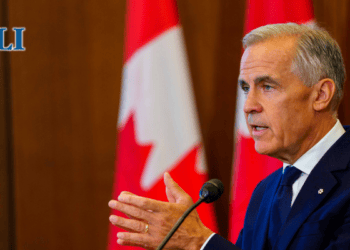
Source: The Hub

Related Posts

China is knocking at the trans-Pacific trade door—Canada must not swing it wide open: Ed Fast in The Hub
Indo-Pacific

China is knocking at the trans-Pacific trade door—Canada must not swing it wide open: Ed Fast in The Hub

April 28, 2026
Finnish data shows gender treatments increase psychiatric needs. Canada lags behind: Mia Hughes in the National Post
Gender Identity

Finnish data shows gender treatments increase psychiatric needs. Canada lags behind: Mia Hughes in the National Post

April 28, 2026
Canada’s internal trade barriers require legal reform, not political shortcuts
Domestic Policy

Canada’s internal trade barriers require legal reform, not political shortcuts

April 27, 2026

Newsletter Signup

  Thank you for Signing Up
  Please correct the marked field(s) below.
Email Address  *
1,true,6,Contact Email,2
First Name *
1,true,1,First Name,2
Last Name *
1,true,1,Last Name,2
*
*Required Fields

Follow us on

Macdonald-Laurier Institute

323 Chapel Street, Suite #300
Ottawa, Ontario, K1N 7Z2 Canada

613.482.8327

info@macdonaldlaurier.ca
MLI directory

Support Us

Support the Macdonald-Laurier Institute to help ensure that Canada is one of the best governed countries in the world. Click below to learn more or become a sponsor.

Support Us

  • Inside Policy Magazine
  • Annual Reports
  • Jobs
  • Privacy Policy

© 2023 Macdonald-Laurier Institute. All Rights reserved.

No Result
View All Result
  • Home
  • About
    • Who We Are
    • Who Makes MLI Work
    • Fifteenth Anniversary
  • Experts
    • Experts Directory
    • In Memoriam
  • Issues
    • Domestic Policy
      • Economic Policy
      • Justice
      • Rights and Freedoms
      • Assisted Suicide (MAID)
      • Health Care
      • COVID-19
      • Gender Identity
      • Canada’s Political Tradition
      • AI, Technology and Innovation
      • Media and Telecoms
      • Housing
      • Immigration
      • Agriculture and Agri-Food
      • Competition Policy
    • Energy Policy
      • Energy
      • Environment
    • Foreign Policy
      • Israel-Hamas War
      • Ukraine
      • Taiwan
      • China
      • Europe and Russia
      • Indo-Pacific
      • Middle East and North Africa
      • North America
      • Foreign Interference
      • National Defence
      • National Security
      • Foreign Affairs
    • Indigenous Affairs
  • Projects
    • CNAPS (Center for North American Prosperity and Security)
    • Justice Report Card
    • The Promised Land
    • Voices that Inspire: The Macdonald-Laurier Vancouver Speaker Series
    • Dragon at the door
    • Canada on top of the world
    • Letter to a minister
    • The Great Energy Crisis
    • DisInfoWatch.org
    • Managing Indigenous Prosperity
    • Judicial Foundations
    • Landmark Cases Council
    • Defending The Marketplace of Ideas
    • Reforming the University
    • Past Projects
      • Digital Policy & Connectivity
      • Double Trouble
      • Canada and the Indo-Pacific Initiative
      • The Transatlantic Program
      • COVID Misery Index
      • Speak for Ourselves
      • The Eavesdropping Dragon: Huawei
      • Talkin’ in the Free World with Mariam Memarsadeghi
      • An Intellectual Property Strategy for Canada
      • Munk Senior Fellows
      • A Mandate for Canada
      • Confederation Series
      • Fiscal Reform
      • The Canadian Century project
      • Fixing Canadian health care
      • Internal trade
      • From a mandate for change
      • Size of government in Canada
      • Straight Talk
      • Labour Market Report
      • Leading Economic Indicator
      • Centre for Advancing Canada’s Interests Abroad
      • Indigenous Prosperity at a Crossroads
  • Events
    • Upcoming Events
    • Past Events
      • MLI Dinners
      • Great Canadian Debates
  • Latest News
  • Libraries
    • Columns
    • Commentary
    • Papers
    • Books
    • Video
  • Donate

© 2023 Macdonald-Laurier Institute. All Rights reserved.