Tuesday, April 28, 2026
No Result
View All Result
  • Media
Macdonald-Laurier Institute
  • Home
  • About
    • Who We Are
    • Who Makes MLI Work
    • Fifteenth Anniversary
  • Experts
    • Experts Directory
    • In Memoriam
  • Issues
    • Domestic Policy
      • Economic Policy
      • Justice
      • Rights and Freedoms
      • Assisted Suicide (MAID)
      • Health Care
      • COVID-19
      • Gender Identity
      • Canada’s Political Tradition
      • AI, Technology and Innovation
      • Media and Telecoms
      • Housing
      • Immigration
      • Agriculture and Agri-Food
      • Competition Policy
    • Energy Policy
      • Energy
      • Environment
    • Foreign Policy
      • Israel-Hamas War
      • Ukraine
      • Taiwan
      • China
      • Europe and Russia
      • Indo-Pacific
      • Middle East and North Africa
      • North America
      • Foreign Interference
      • National Defence
      • National Security
      • Foreign Affairs
    • Indigenous Affairs
  • Projects
    • CNAPS (Center for North American Prosperity and Security)
    • Justice Report Card
    • The Promised Land
    • Voices that Inspire: The Macdonald-Laurier Vancouver Speaker Series
    • Dragon at the door
    • Canada on top of the world
    • Letter to a minister
    • The Great Energy Crisis
    • DisInfoWatch.org
    • Managing Indigenous Prosperity
    • Judicial Foundations
    • Landmark Cases Council
    • Defending The Marketplace of Ideas
    • Reforming the University
    • Past Projects
      • Digital Policy & Connectivity
      • Double Trouble
      • Canada and the Indo-Pacific Initiative
      • The Transatlantic Program
      • COVID Misery Index
        • Provincial COVID Misery Index
        • Beyond Lockdown
        • COVID and after: A mandate for recovery
      • Speak for Ourselves
      • The Eavesdropping Dragon: Huawei
      • Talkin’ in the Free World with Mariam Memarsadeghi
      • An Intellectual Property Strategy for Canada
      • Munk Senior Fellows
      • A Mandate for Canada
      • Confederation Series
      • Fiscal Reform
      • The Canadian Century project
      • Fixing Canadian health care
      • Internal trade
      • From a mandate for change
      • Size of government in Canada
      • Straight Talk
      • Labour Market Report
      • Leading Economic Indicator
      • Centre for Advancing Canada’s Interests Abroad
      • Indigenous Prosperity at a Crossroads
        • Aboriginal Canada and Natural Resources
  • Events
    • Upcoming Events
    • Past Events
      • MLI Dinners
      • Great Canadian Debates
  • Latest News
  • Libraries
    • Columns
    • Commentary
    • Papers
    • Books
    • Video
  • Donate
  • Home
  • About
    • Who We Are
    • Who Makes MLI Work
    • Fifteenth Anniversary
  • Experts
    • Experts Directory
    • In Memoriam
  • Issues
    • Domestic Policy
      • Economic Policy
      • Justice
      • Rights and Freedoms
      • Assisted Suicide (MAID)
      • Health Care
      • COVID-19
      • Gender Identity
      • Canada’s Political Tradition
      • AI, Technology and Innovation
      • Media and Telecoms
      • Housing
      • Immigration
      • Agriculture and Agri-Food
      • Competition Policy
    • Energy Policy
      • Energy
      • Environment
    • Foreign Policy
      • Israel-Hamas War
      • Ukraine
      • Taiwan
      • China
      • Europe and Russia
      • Indo-Pacific
      • Middle East and North Africa
      • North America
      • Foreign Interference
      • National Defence
      • National Security
      • Foreign Affairs
    • Indigenous Affairs
  • Projects
    • CNAPS (Center for North American Prosperity and Security)
    • Justice Report Card
    • The Promised Land
    • Voices that Inspire: The Macdonald-Laurier Vancouver Speaker Series
    • Dragon at the door
    • Canada on top of the world
    • Letter to a minister
    • The Great Energy Crisis
    • DisInfoWatch.org
    • Managing Indigenous Prosperity
    • Judicial Foundations
    • Landmark Cases Council
    • Defending The Marketplace of Ideas
    • Reforming the University
    • Past Projects
      • Digital Policy & Connectivity
      • Double Trouble
      • Canada and the Indo-Pacific Initiative
      • The Transatlantic Program
      • COVID Misery Index
        • Provincial COVID Misery Index
        • Beyond Lockdown
        • COVID and after: A mandate for recovery
      • Speak for Ourselves
      • The Eavesdropping Dragon: Huawei
      • Talkin’ in the Free World with Mariam Memarsadeghi
      • An Intellectual Property Strategy for Canada
      • Munk Senior Fellows
      • A Mandate for Canada
      • Confederation Series
      • Fiscal Reform
      • The Canadian Century project
      • Fixing Canadian health care
      • Internal trade
      • From a mandate for change
      • Size of government in Canada
      • Straight Talk
      • Labour Market Report
      • Leading Economic Indicator
      • Centre for Advancing Canada’s Interests Abroad
      • Indigenous Prosperity at a Crossroads
        • Aboriginal Canada and Natural Resources
  • Events
    • Upcoming Events
    • Past Events
      • MLI Dinners
      • Great Canadian Debates
  • Latest News
  • Libraries
    • Columns
    • Commentary
    • Papers
    • Books
    • Video
  • Donate
No Result
View All Result
Macdonald-Laurier Institute

China is knocking at the trans-Pacific trade door—Canada must not swing it wide open: Ed Fast in The Hub

Canada should not support China’s bid to join the Comprehensive and Progressive Agreement for Trans-Pacific Partnership.

April 28, 2026
in Foreign Affairs, Latest News, Columns, Foreign Policy, In the Media, Economic Policy, Indo-Pacific
Reading Time: 6 mins read
A A
China is knocking at the trans-Pacific trade door—Canada must not swing it wide open: Ed Fast in The Hub

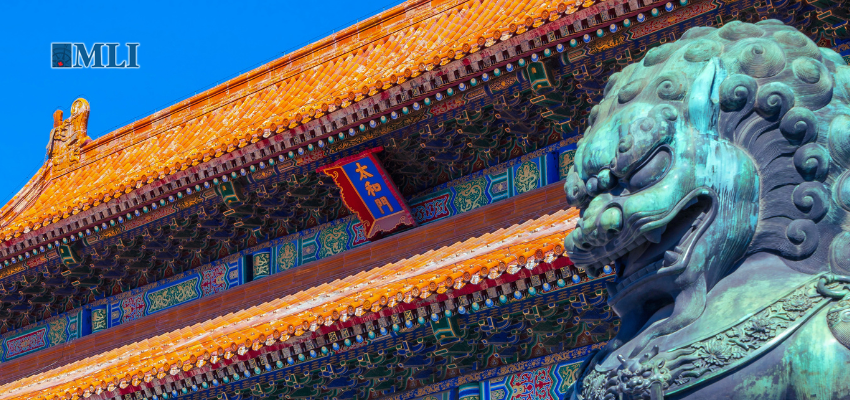
Image via Canva.

This article originally appeared in The Hub.

By Ed Fast, April 28, 2026

A Canadian parliamentary delegation returned last month from Beijing bearing glad tidings: China wants in on the Comprehensive and Progressive Agreement for Trans-Pacific Partnership (CPTPP). Senator Clement Gignac, co-chair of the Canada-China Legislative Association, reported that his Chinese counterparts were eager for Ottawa’s support in Beijing’s long-stalled bid to join the CPTPP. He even suggested that Canada had helped China join the World Trade Organization once before, so why not again?

With respect to Senator Gignac, this framing fundamentally misunderstands what the CPTPP is, what it was designed to do, and why China’s admission would undermine the very architecture that makes it valuable.

I know this because I was there when it was built.

As Canada’s Minister of International Trade from 2011 to 2015, I was integrally involved in the Trans-Pacific Partnership (TPP) negotiations—the agreement that would later become the CPTPP after the United States withdrew in 2017. I sat at the table with trade ministers from Japan, Australia, New Zealand, Singapore, Chile, Mexico, Peru, Vietnam, Malaysia, and Brunei. I know what we were trying to accomplish. And I know what we were trying to guard against.

The TPP was never merely a tariff-reduction exercise. It was a strategic initiative—one conceived in large part as a counterweight to China’s growing economic dominance in the Asia-Pacific region and its serial violation of the rules-based international trading order. Let us be honest about that, even if diplomatic convention sometimes discourages saying it plainly.

Beijing’s playbook: Flouting the rules

China joined the WTO in 2001, accompanied by solemn commitments to embrace market-based disciplines, protect intellectual property, and compete on a level playing field. Within a decade, it was clear those promises had been honoured more in the breach than in observance.

Beijing has used state-owned enterprises as instruments of industrial policy, flooding global markets with artificially subsidized goods in sectors from steel and aluminum to solar panels and electric vehicles. It has systematically stolen intellectual property through cyber-espionage and coercive technology transfer requirements imposed on foreign firms seeking access to the Chinese market. It has erected non-tariff barriers—regulatory harassment, discriminatory licensing regimes, arbitrary customs delays—that effectively nullify market-access commitments made under WTO agreements.

When the WTO Dispute Settlement Body has ruled against China, Beijing has minimally complied with the findings. When trading partners have pushed back on specific abuses, China has deployed economic coercion—cutting off exports of critical raw materials, imposing punishing tariffs, and leveraging market access as a geopolitical weapon.

Canada has been on the receiving end of exactly this treatment: China’s retaliatory suspension of Canadian canola imports in 2019 was a textbook example of trade as a cudgel rather than commerce.

This is the country now seeking to join a trade agreement built on enforceable rules.

What the CPTPP was designed to do

The TPP negotiations were painstaking precisely because we were trying to achieve something genuinely difficult: a high-standard trade agreement that would set enforceable rules across a diverse coalition of like-minded trading nations. “Like-minded” is the operative phrase. The partners around the table were countries that, whatever their political differences, shared a commitment to the rule of law, to market-based competition, to transparency in regulatory processes, and to meaningful enforcement mechanisms.

The agreement was carefully crafted to maximize the benefits of comparative advantage among countries that would actually play by the rules. Disciplines on state-owned enterprises, robust intellectual property protections, commitments on labour and environmental standards, and investor-state dispute settlement mechanisms were all designed not as abstract aspirations but as enforceable obligations with real consequences for non-compliance.

This architecture works because the partners trust that the commitments on the other side of the ledger are genuine. Admit a country whose governing philosophy is incompatible with those disciplines, and you do not expand the CPTPP—you hollow it out.

The WTO comparison doesn’t hold

Senator Gignac invoked Canada’s support for China’s WTO accession as a precedent for backing its CPTPP bid. The comparison flatters neither institution. China’s WTO accession was premised on the optimistic theory—now thoroughly discredited—that integration into the rules-based international order would gradually liberalize China’s economic and political system. After nearly a quarter-century of evidence, we know that this theory was wrong.

The WTO, for all its importance, is a large multilateral body with weakened enforcement mechanisms and a dispute resolution system that China has learned to game. The CPTPP is a smaller, more coherent agreement with higher standards and tighter disciplines. Admitting China on the basis of the WTO precedent would be to repeat the same mistake at a higher cost.

Moreover, the WTO decision was made at a moment when the geopolitical landscape looked very different. China today is not the China of 2001. It is a more assertive, more economically coercive, and more politically repressive state than the one that made WTO accession commitments. Its trade practices have grown more, not less, predatory. Its willingness to weaponize economic relationships for political ends has been demonstrated repeatedly and unmistakably.

The strategic stakes

It is worth pausing to note what is happening in Ottawa. At a moment when Canada is scrambling to diversify trade relationships away from an increasingly protectionist United States, the Carney government is warming to Beijing with notable speed. A new “strategic partnership,” a deal to import Chinese electric vehicles, a joint financial-sector statement, and now parliamentary delegations returning with Beijing’s wish list, including CPTPP membership.

Trade diversification is a legitimate and necessary policy objective. But not every trade relationship is equivalent, and not every market opening comes without strategic cost. Canada’s response to American protectionism should not be to outsource our strategic judgment to Beijing.

The CPTPP is one of Canada’s most valuable trading assets. When the agreement came into effect, it provided preferential access to 11 economies representing roughly 580 million people and 15.6 percent of global GDP. The CPTPP is anchored in disciplines that reflect Canadian values: transparency, rule of law, fair competition. Opening its doors to a country that treats those disciplines as optional would risk degrading the agreement that our negotiators worked so hard to build.
What Canada should actually do

Canada should not oppose China’s CPTPP aspirations as a matter of reflexive hostility. But we should insist, clearly and publicly, that the bar for accession is behavioural, not merely aspirational. China must demonstrate—through sustained, verifiable action, not verbal assurances—that it is willing and able to comply with CPTPP disciplines on state enterprises, intellectual property, labour standards, and trade remedy transparency.

That is a high bar. It should be. The agreement was designed that way.

In the meantime, Canada should be working to consolidate the CPTPP coalition, deepen engagement with existing partners, and explore accession by other like-minded economies. The United Kingdom’s recent joining is a welcome development in that direction. We should be strengthening the agreement’s disciplines, not diluting them to accommodate a country that has not earned that trust.

The TPP was built on a simple but profound insight: that trade works best when partners play by the same rules, and that enforceable rules are worth fighting for. That insight has not become less true because Washington has temporarily abandoned it. If anything, it has become more urgent.

Canada should not squander one of its greatest trade policy assets by opening the door to a country that spent the last two decades demonstrating its contempt for the very rules the CPTPP was designed to uphold.


The Hon. Ed Fast served as Canada’s minister of international trade from 2011-2015, leading free trade negotiations with the European Union, the Trans-Pacific Partnership countries, South Korea, and Ukraine. He is also a distinguished fellow at the Macdonald-Laurier Institute.

Source: The Hub

Related Posts

Canada’s free and independent press is (mostly) dead—now what?: Peter Menzies in The Hub
Media and Telecoms

The media is begging for even more money. Here’s why the government keeps giving it to them: Peter Menzies in The Hub

April 28, 2026
Finnish data shows gender treatments increase psychiatric needs. Canada lags behind: Mia Hughes in the National Post
Gender Identity

Finnish data shows gender treatments increase psychiatric needs. Canada lags behind: Mia Hughes in the National Post

April 28, 2026
Canada’s internal trade barriers require legal reform, not political shortcuts
Domestic Policy

Canada’s internal trade barriers require legal reform, not political shortcuts

April 27, 2026
Next Post
Canada’s free and independent press is (mostly) dead—now what?: Peter Menzies in The Hub

The media is begging for even more money. Here’s why the government keeps giving it to them: Peter Menzies in The Hub

Newsletter Signup

  Thank you for Signing Up
  Please correct the marked field(s) below.
Email Address  *
1,true,6,Contact Email,2
First Name *
1,true,1,First Name,2
Last Name *
1,true,1,Last Name,2
*
*Required Fields

Follow us on

Macdonald-Laurier Institute

323 Chapel Street, Suite #300
Ottawa, Ontario, K1N 7Z2 Canada

613.482.8327

info@macdonaldlaurier.ca
MLI directory

Support Us

Support the Macdonald-Laurier Institute to help ensure that Canada is one of the best governed countries in the world. Click below to learn more or become a sponsor.

Support Us

  • Inside Policy Magazine
  • Annual Reports
  • Jobs
  • Privacy Policy

© 2023 Macdonald-Laurier Institute. All Rights reserved.

No Result
View All Result
  • Home
  • About
    • Who We Are
    • Who Makes MLI Work
    • Fifteenth Anniversary
  • Experts
    • Experts Directory
    • In Memoriam
  • Issues
    • Domestic Policy
      • Economic Policy
      • Justice
      • Rights and Freedoms
      • Assisted Suicide (MAID)
      • Health Care
      • COVID-19
      • Gender Identity
      • Canada’s Political Tradition
      • AI, Technology and Innovation
      • Media and Telecoms
      • Housing
      • Immigration
      • Agriculture and Agri-Food
      • Competition Policy
    • Energy Policy
      • Energy
      • Environment
    • Foreign Policy
      • Israel-Hamas War
      • Ukraine
      • Taiwan
      • China
      • Europe and Russia
      • Indo-Pacific
      • Middle East and North Africa
      • North America
      • Foreign Interference
      • National Defence
      • National Security
      • Foreign Affairs
    • Indigenous Affairs
  • Projects
    • CNAPS (Center for North American Prosperity and Security)
    • Justice Report Card
    • The Promised Land
    • Voices that Inspire: The Macdonald-Laurier Vancouver Speaker Series
    • Dragon at the door
    • Canada on top of the world
    • Letter to a minister
    • The Great Energy Crisis
    • DisInfoWatch.org
    • Managing Indigenous Prosperity
    • Judicial Foundations
    • Landmark Cases Council
    • Defending The Marketplace of Ideas
    • Reforming the University
    • Past Projects
      • Digital Policy & Connectivity
      • Double Trouble
      • Canada and the Indo-Pacific Initiative
      • The Transatlantic Program
      • COVID Misery Index
      • Speak for Ourselves
      • The Eavesdropping Dragon: Huawei
      • Talkin’ in the Free World with Mariam Memarsadeghi
      • An Intellectual Property Strategy for Canada
      • Munk Senior Fellows
      • A Mandate for Canada
      • Confederation Series
      • Fiscal Reform
      • The Canadian Century project
      • Fixing Canadian health care
      • Internal trade
      • From a mandate for change
      • Size of government in Canada
      • Straight Talk
      • Labour Market Report
      • Leading Economic Indicator
      • Centre for Advancing Canada’s Interests Abroad
      • Indigenous Prosperity at a Crossroads
  • Events
    • Upcoming Events
    • Past Events
      • MLI Dinners
      • Great Canadian Debates
  • Latest News
  • Libraries
    • Columns
    • Commentary
    • Papers
    • Books
    • Video
  • Donate

© 2023 Macdonald-Laurier Institute. All Rights reserved.