Wednesday, April 22, 2026
No Result
View All Result
  • Media
Macdonald-Laurier Institute
  • Home
  • About
    • Who We Are
    • Who Makes MLI Work
    • Fifteenth Anniversary
  • Experts
    • Experts Directory
    • In Memoriam
  • Issues
    • Domestic Policy
      • Economic Policy
      • Justice
      • Rights and Freedoms
      • Assisted Suicide (MAID)
      • Health Care
      • COVID-19
      • Gender Identity
      • Canada’s Political Tradition
      • AI, Technology and Innovation
      • Media and Telecoms
      • Housing
      • Immigration
      • Agriculture and Agri-Food
      • Competition Policy
    • Energy Policy
      • Energy
      • Environment
    • Foreign Policy
      • Israel-Hamas War
      • Ukraine
      • Taiwan
      • China
      • Europe and Russia
      • Indo-Pacific
      • Middle East and North Africa
      • North America
      • Foreign Interference
      • National Defence
      • National Security
      • Foreign Affairs
    • Indigenous Affairs
  • Projects
    • CNAPS (Center for North American Prosperity and Security)
    • Justice Report Card
    • The Promised Land
    • Voices that Inspire: The Macdonald-Laurier Vancouver Speaker Series
    • Dragon at the door
    • Canada on top of the world
    • Letter to a minister
    • The Great Energy Crisis
    • DisInfoWatch.org
    • Managing Indigenous Prosperity
    • Judicial Foundations
    • Landmark Cases Council
    • Defending The Marketplace of Ideas
    • Reforming the University
    • Past Projects
      • Digital Policy & Connectivity
      • Double Trouble
      • Canada and the Indo-Pacific Initiative
      • The Transatlantic Program
      • COVID Misery Index
        • Provincial COVID Misery Index
        • Beyond Lockdown
        • COVID and after: A mandate for recovery
      • Speak for Ourselves
      • The Eavesdropping Dragon: Huawei
      • Talkin’ in the Free World with Mariam Memarsadeghi
      • An Intellectual Property Strategy for Canada
      • Munk Senior Fellows
      • A Mandate for Canada
      • Confederation Series
      • Fiscal Reform
      • The Canadian Century project
      • Fixing Canadian health care
      • Internal trade
      • From a mandate for change
      • Size of government in Canada
      • Straight Talk
      • Labour Market Report
      • Leading Economic Indicator
      • Centre for Advancing Canada’s Interests Abroad
      • Indigenous Prosperity at a Crossroads
        • Aboriginal Canada and Natural Resources
  • Events
    • Upcoming Events
    • Past Events
      • MLI Dinners
      • Great Canadian Debates
  • Latest News
  • Libraries
    • Columns
    • Commentary
    • Papers
    • Books
    • Video
  • Donate
  • Home
  • About
    • Who We Are
    • Who Makes MLI Work
    • Fifteenth Anniversary
  • Experts
    • Experts Directory
    • In Memoriam
  • Issues
    • Domestic Policy
      • Economic Policy
      • Justice
      • Rights and Freedoms
      • Assisted Suicide (MAID)
      • Health Care
      • COVID-19
      • Gender Identity
      • Canada’s Political Tradition
      • AI, Technology and Innovation
      • Media and Telecoms
      • Housing
      • Immigration
      • Agriculture and Agri-Food
      • Competition Policy
    • Energy Policy
      • Energy
      • Environment
    • Foreign Policy
      • Israel-Hamas War
      • Ukraine
      • Taiwan
      • China
      • Europe and Russia
      • Indo-Pacific
      • Middle East and North Africa
      • North America
      • Foreign Interference
      • National Defence
      • National Security
      • Foreign Affairs
    • Indigenous Affairs
  • Projects
    • CNAPS (Center for North American Prosperity and Security)
    • Justice Report Card
    • The Promised Land
    • Voices that Inspire: The Macdonald-Laurier Vancouver Speaker Series
    • Dragon at the door
    • Canada on top of the world
    • Letter to a minister
    • The Great Energy Crisis
    • DisInfoWatch.org
    • Managing Indigenous Prosperity
    • Judicial Foundations
    • Landmark Cases Council
    • Defending The Marketplace of Ideas
    • Reforming the University
    • Past Projects
      • Digital Policy & Connectivity
      • Double Trouble
      • Canada and the Indo-Pacific Initiative
      • The Transatlantic Program
      • COVID Misery Index
        • Provincial COVID Misery Index
        • Beyond Lockdown
        • COVID and after: A mandate for recovery
      • Speak for Ourselves
      • The Eavesdropping Dragon: Huawei
      • Talkin’ in the Free World with Mariam Memarsadeghi
      • An Intellectual Property Strategy for Canada
      • Munk Senior Fellows
      • A Mandate for Canada
      • Confederation Series
      • Fiscal Reform
      • The Canadian Century project
      • Fixing Canadian health care
      • Internal trade
      • From a mandate for change
      • Size of government in Canada
      • Straight Talk
      • Labour Market Report
      • Leading Economic Indicator
      • Centre for Advancing Canada’s Interests Abroad
      • Indigenous Prosperity at a Crossroads
        • Aboriginal Canada and Natural Resources
  • Events
    • Upcoming Events
    • Past Events
      • MLI Dinners
      • Great Canadian Debates
  • Latest News
  • Libraries
    • Columns
    • Commentary
    • Papers
    • Books
    • Video
  • Donate
No Result
View All Result
Macdonald-Laurier Institute

Canada needs to pay attention to China’s military purges before betting on Beijing: Joe Varner in the National Post

Sweeping purges in the PLA’s Rocket Force and nuclear command reveal deep instability Ottawa cannot ignore.

April 22, 2026
in Foreign Affairs, China: The dragon at the door, Columns, Foreign Policy, Latest News, In the Media, Joe Varner
Reading Time: 11 mins read
A A
Canada needs to pay attention to China’s military purges before betting on Beijing: Joe Varner in the National Post

Image via Canva.

This article originally appeared in the National Post.

By Joe varner, April 22, 2026

On Sunday morning, when Mark Carney declared that Canada’s historic closeness with the United States now represents “weaknesses,” he opened the door to a fundamental rethinking of Canadian foreign policy. But if diversification means turning toward China, Canadians deserve a clear-eyed assessment of the risks, not just the opportunities. That assessment becomes far more complicated when viewed against what is now unfolding inside China’s military leadership.

There is a tendency in Ottawa and other Western capitals to view China’s ongoing purge of senior military leadership as a familiar exercise in political control by Xi Jinping. That reading is too narrow. What is unfolding inside the People’s Liberation Army (PLA) is not simply discipline imposed from the top. It is an indicator of stress within the system itself. It raises fundamental questions about trust, reliability and the cohesion of China’s most sensitive military capabilities. At its core, this is about confidence, and the erosion of confidence inside a nuclear-armed great power carries consequences that extend far beyond China.

The breadth of those removed reinforces the point. Former defence minister Li Shangfu was abruptly dismissed after disappearing from public view, following an earlier investigation into his predecessor Wei Fenghe. China’s top general, Zhang Youxia, and vice chair of the powerful Central Military Commission and former head of the Armaments Department were also sacked.

Inside the PLA Rocket Force, the scale has been even more striking. Former commanders Li Yuchao, Wang Houbin and former political commissar Xu Zhongbo were removed alongside deputy commanders Liu Guangbin and Zhang Zhenzhong.

Additional senior officers tied to missile operations and procurement networks have been detained or placed under investigation, while parallel sweeps through the Equipment Development Department have targeted those responsible for weapons acquisition and oversight.

Five more generals may have been formally dismissed last week, along with other senior military leaders and government officials, including Yang Guang, Commander of the Rocket Force’s 64th Base, which controls China’s land-based nuclear deterrent. This is not a narrow campaign; it is a systemic disruption touching the core of China’s strategic deterrent.

A similar argument might be made about personnel changes under Defence Secretary Pete Hegseth, particularly toward officers associated with General Mark Milley or debates around DEI culture. But the difference is fundamental. In the United States, these moves occur within a system of civilian oversight and have not targeted the core of its strategic deterrent. In China, they have. When the most senior political leadership begins to question the reliability of its own missile forces, the implications are immediate.

Nuclear deterrence depends not only on capability, but on absolute confidence in that capability. If there are doubts about maintenance, fuel integrity, infrastructure, or the accuracy of internal reporting, then decision-making becomes more centralized and constrained, initiative declines and authority tightens at the top. The result is a system that is tactically cautious, but strategically fragile, where the margin for internal dissent narrows and the risk of miscalculation at the highest levels increases.

It is against this backdrop that the remarks delivered Sunday by Mark Carney take on greater weight. In calling for his government to be honest and upfront about the country’s intention to reduce its dependence on the United States and pursue a broader set of global relationships, the Prime Minister has opened a necessary conversation. Canada does need to think seriously about economic diversification, national security and strategic autonomy. But honesty must extend beyond intent, and it must also encompass the nature of the partners Canada is choosing to engage with, such as Beijing.
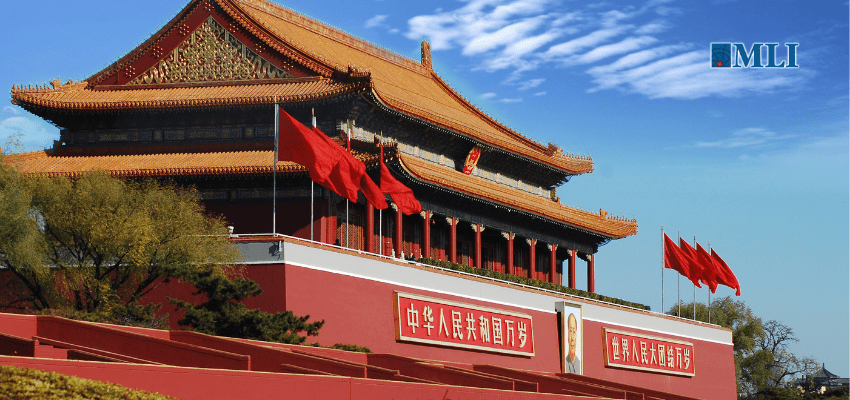
China is not a static economic opportunity. It is a system undergoing internal disruption at the highest levels of its military command. The removal of senior leadership from the Rocket Force and related structures points to uncertainty within the very institutions responsible for nuclear and conventional deterrence. For Canada, this raises a straightforward but uncomfortable question. What does it mean to pivot toward a state whose leadership is actively reshaping and purging the chain of command overseeing its most critical military capabilities?

There is also a practical dimension that cannot be ignored. Canadian patrol aircraft enforcing United Nations sanctions on North Korea have faced increasingly aggressive and unsafe intercepts by Chinese fighters. A reluctance to address these incidents openly, at a moment when clarity is essential, risks creating uncertainty about Canada’s willingness to defend its personnel and uphold its commitments.

Internal pressure is already shaping China’s military behaviour, and external ambiguity only makes it more volatile. The PLA purges point to eroding confidence, and in a nuclear-armed power that accelerates crises and shrinks the space for restraint.

If the government is serious about honesty with Canadians, then it must acknowledge this: a pivot to China is not just about trade, it is a strategic bet on a power whose internal stability can no longer be taken for granted.


Joe Varner is a senior fellow of the Macdonald-Laurier Institute and the Center for North American Prosperity and Security in Washington, D.C.


Source: National Post

Related Posts

Reclaiming control, restoring caution – Fixing Canada’s broken immigration system, Vol. 4: Michael Barutciski
Immigration

Reclaiming control, restoring caution – Fixing Canada’s broken immigration system, Vol. 4: Michael Barutciski

April 22, 2026
Information warfare and editorial bias in Canada’s Indo-Pacific news coverage: Stephen Nagy for Inside Policy
Back Issues

Information warfare and editorial bias in Canada’s Indo-Pacific news coverage: Stephen Nagy for Inside Policy

April 21, 2026
The care deficit: Peter Copeland in Fairer Disputations
Domestic Policy

The care deficit: Peter Copeland in Fairer Disputations

April 21, 2026
Next Post
Reclaiming control, restoring caution – Fixing Canada’s broken immigration system, Vol. 4: Michael Barutciski

Reclaiming control, restoring caution - Fixing Canada’s broken immigration system, Vol. 4: Michael Barutciski

Newsletter Signup

  Thank you for Signing Up
  Please correct the marked field(s) below.
Email Address  *
1,true,6,Contact Email,2
First Name *
1,true,1,First Name,2
Last Name *
1,true,1,Last Name,2
*
*Required Fields

Follow us on

Macdonald-Laurier Institute

323 Chapel Street, Suite #300
Ottawa, Ontario, K1N 7Z2 Canada

613.482.8327

info@macdonaldlaurier.ca
MLI directory

Support Us

Support the Macdonald-Laurier Institute to help ensure that Canada is one of the best governed countries in the world. Click below to learn more or become a sponsor.

Support Us

  • Inside Policy Magazine
  • Annual Reports
  • Jobs
  • Privacy Policy

© 2023 Macdonald-Laurier Institute. All Rights reserved.

This site uses cookies. By continuing to browse the site you are agreeing to our use of cookies.

Privacy Preference Center

Consent Management

Necessary

Advertising

Analytics

Other

No Result
View All Result
  • Home
  • About
    • Who We Are
    • Who Makes MLI Work
    • Fifteenth Anniversary
  • Experts
    • Experts Directory
    • In Memoriam
  • Issues
    • Domestic Policy
      • Economic Policy
      • Justice
      • Rights and Freedoms
      • Assisted Suicide (MAID)
      • Health Care
      • COVID-19
      • Gender Identity
      • Canada’s Political Tradition
      • AI, Technology and Innovation
      • Media and Telecoms
      • Housing
      • Immigration
      • Agriculture and Agri-Food
      • Competition Policy
    • Energy Policy
      • Energy
      • Environment
    • Foreign Policy
      • Israel-Hamas War
      • Ukraine
      • Taiwan
      • China
      • Europe and Russia
      • Indo-Pacific
      • Middle East and North Africa
      • North America
      • Foreign Interference
      • National Defence
      • National Security
      • Foreign Affairs
    • Indigenous Affairs
  • Projects
    • CNAPS (Center for North American Prosperity and Security)
    • Justice Report Card
    • The Promised Land
    • Voices that Inspire: The Macdonald-Laurier Vancouver Speaker Series
    • Dragon at the door
    • Canada on top of the world
    • Letter to a minister
    • The Great Energy Crisis
    • DisInfoWatch.org
    • Managing Indigenous Prosperity
    • Judicial Foundations
    • Landmark Cases Council
    • Defending The Marketplace of Ideas
    • Reforming the University
    • Past Projects
      • Digital Policy & Connectivity
      • Double Trouble
      • Canada and the Indo-Pacific Initiative
      • The Transatlantic Program
      • COVID Misery Index
      • Speak for Ourselves
      • The Eavesdropping Dragon: Huawei
      • Talkin’ in the Free World with Mariam Memarsadeghi
      • An Intellectual Property Strategy for Canada
      • Munk Senior Fellows
      • A Mandate for Canada
      • Confederation Series
      • Fiscal Reform
      • The Canadian Century project
      • Fixing Canadian health care
      • Internal trade
      • From a mandate for change
      • Size of government in Canada
      • Straight Talk
      • Labour Market Report
      • Leading Economic Indicator
      • Centre for Advancing Canada’s Interests Abroad
      • Indigenous Prosperity at a Crossroads
  • Events
    • Upcoming Events
    • Past Events
      • MLI Dinners
      • Great Canadian Debates
  • Latest News
  • Libraries
    • Columns
    • Commentary
    • Papers
    • Books
    • Video
  • Donate

© 2023 Macdonald-Laurier Institute. All Rights reserved.