This article originally appeared in Geopolitical Monitor.
By Stephen Nagy, November 17, 2025
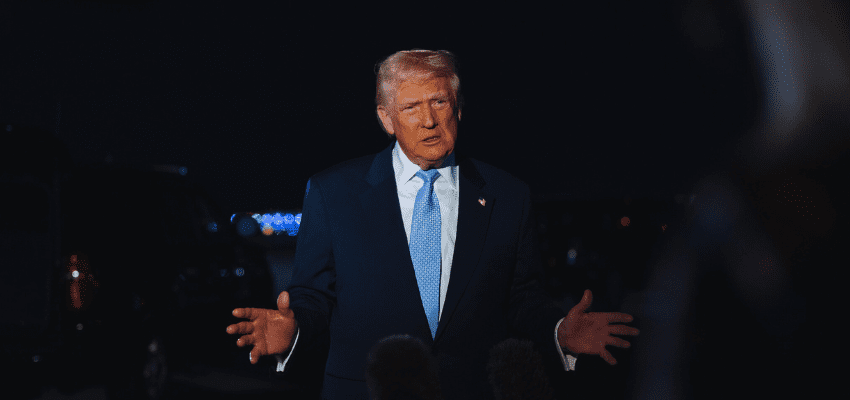
When President Trump declared his meeting with Xi Jinping a “12 out of 10” last month, most Canadian observers shrugged. Another Trump boast. Another US-China showdown. Another reminder of Canada’s seeming irrelevance in great power politics.
These pessimists are missing the plot entirely.
The 90-minute summit at a South Korean military base revealed a critical shift that makes Canada more strategically vital than any time since the Cold War.
Consider what happened at the meeting. Xi arrived wielding China’s rare earth export controls like a dagger. Trump responded with typical bluster, including a confusing post about nuclear weapons that left diplomats scrambling. China agreed to pause its export restrictions for a year. Trump promised lower tariffs. Headlines proclaimed Chinese tactical brilliance.
Within hours, North American rare earth stocks surged—including Canadian companies like Neo Performance Materials and Avalon Advanced Materials. Mining executives from Toronto to Vancouver started fielding calls from Washington. The Pentagon accelerated discussions about processing facilities in Saskatchewan.
“My phone hasn’t stopped ringing,” a senior executive at a Canadian critical minerals company told me. “The Americans suddenly realize we have what China’s threatening to withhold.”
Canada’s moment has presented itself. Can they seize it?
The summit illuminated three realities that should reshape Canadian strategy. First, America’s economic resurgence is real but incomplete. Yes, US GDP grew 3.8% in the second quarter. Yes, their technology sector remains dominant. However, a closer examination shows America’s vulnerabilities in critical supply chains run deeper than most realize. They need secure, reliable partners. Geography and geology make Canada irreplaceable.
Second, China’s economic miracle is stalling. The Rhodium Group’s forensic analysis suggests China’s actual growth is between 2.4% and 2.8%, not the official 5% its government claims. Beijing missed its nominal GDP targets by widening margins: 4.6% versus 6.9% planned in 2023, and 4.1% versus 7.4% in 2024. Demographics are destiny and China’s population has declined for the third straight year.
Third, and most importantly for Canada, the summit accelerated what Lee Kuan Yew predicted: the West’s ability to draw on a talent pool of billions of people from around the world “and recombine them in a diverse culture”—while China remains confined to its own borders.
This isn’t abstract theory. It’s Canada’s strategic opportunity.
Canada needs to start with critical minerals. It produces 22 of the 50 minerals the U.S. deems critical for economic and national security. We have some of the world’s largest rare-earth reserves. Unlike China, we can extract them without devastating environmental damage or forced labor by using the right technology and investments. America needs secure supplies for everything from F-35 fighter jets to Tesla batteries. Only Canada combines the deposits, democratic values, and integrated infrastructure to deliver them.
“The Americans are finally waking up,” says a former Canadian trade negotiator. “For 20 years, they chased cheap Chinese minerals. Now they need secure Canadian ones.”
But minerals are just the beginning. The deeper opportunity lies in what I call “strategic complementarity,” areas where Canadian capabilities perfectly fill American gaps.
Arctic sovereignty is an illustrative example. As climate change opens northern passages, both China and Russia are moving aggressively into the region. While America’s Arctic capabilities have atrophied, Canada’s capacity—out of necessity, and concerns about the environment—has not. Our Arctic offshore patrol ships, surveillance systems, and northern communities provide what Washington cannot: a persistent presence in the High North. The Trump-Xi summit occurred against the backdrop of a growing number of Chinese “research” vessels probing Arctic waters. Suddenly, NORAD modernization isn’t just about Russian bombers, it’s about Chinese encroachment.
Or consider energy transition. The United States leads in technology innovation but struggles with implementation. Canada excels at large-scale clean energy projects such as hydroelectric grids, carbon capture systems, and hydrogen production. As American states grapple with grid reliability while pursuing net-zero goals, Canadian expertise becomes invaluable. British Columbia’s clean electricity already powers California’s climate ambitions. Alberta’s hydrogen corridor could fuel America’s industrial heartland.
The contrast with China’s approach is stark. Beijing’s Made in China 2025 policy pursued technological self-sufficiency through massive state investment. The results? According to the Rhodium group, it had impressive capabilities in targeted sectors but at staggering cost. Local governments funded duplicate semiconductor fabs. State enterprises accumulated crushing debt. Innovation increased, efficiency plummeted.
Canada offers the opposite model: targeted excellence through market mechanisms and democratic accountability. We can’t match China’s scale, but we don’t need to. We need to be indispensable in specific domains.
This requires abandoning two comfortable myths. First, that geography alone guarantees American attention. It doesn’t. Washington has options: Australia for minerals, Mexico for manufacturing, Europe for technology. We must earn indispensability through strategic choices. Second, that middle power status means accepting whatever America offers. Wrong. The summit’s aftermath shows US desperation for reliable partners. Canada has leverage if we use it wisely.
Smart strategy requires three elements:
First, deepen integration where it matters most. Not just maintaining USMCA, but pioneering new frameworks for critical mineral development, Arctic cooperation, and technology standards. When America builds domestic rare earth processing, Canadian companies should be partners, not competitors. When AUKUS expands beyond submarines, Canada should be at the table.
“Integration doesn’t mean subordination,” notes a former Canadian ambassador to Washington. “It means making sure American success requires Canadian participation.”
Second, build “resilient redundancy” in strategic sectors. The rare earth crisis exposed dangerous dependencies. Canada should develop processing capabilities that serve both domestic needs and continental security. Same for pharmaceutical ingredients, semiconductors, and green technology components. Not to replace Chinese supply, but to provide alternatives when Beijing weaponizes trade.
The numbers support this approach. Canadian mining companies have identified $10 billion in critical mineral projects awaiting development. Federal and provincial support could unlock these reserves while ensuring environmental protection and Indigenous participation. The US Defense Department has already signaled interest in co-funding processing facilities.
Third, leverage Canada’s unique advantages in the democratic world. Our multicultural cities attract global talent that America’s immigration chaos repels. Our stable politics provide certainty that Washington’s polarization cannot. Our bilingual, diverse society offers bridges to Europe, Africa, and Asia that America struggles to build.
A concrete example is artificial intelligence. The Vector Institute in Toronto and MILA in Montreal have become global AI hubs, attracting researchers who might have gone to Silicon Valley a decade ago. As US-China technology competition intensifies, Canada’s ability to attract and integrate global talent becomes a continental asset.
The summit also revealed China’s growing fragility which paradoxically increases Canadian vulnerability. China’s debt exceeds 270% of GDP. Youth unemployment tops 20%. As growth slows and legitimacy erodes, Beijing may gamble on external aggression to rally domestic support. Taiwan is the obvious flashpoint, but Canada faces risks too.
Remember the two Michaels, the Canadians detained for nearly three years in retaliation for Meng Wanzhou’s arrest. As US-China tensions escalate, Canada will face similar pressure. We need strategies that support American interests while avoiding Chinese retaliation. This isn’t appeasement, it’s intelligent risk management.
The path forward requires confident pragmatism. When Trump posted his confusing nuclear testing threat, it revealed American unpredictability. When Xi paused rare earth restrictions, it exposed Chinese vulnerability. Canada’s stability becomes our competitive advantage but only if we act strategically.
Provincial leaders get this better than Ottawa. Quebec Premier François Legault has aggressively courted battery manufacturers, leveraging hydroelectric power and lithium reserves. Alberta Premier Danielle Smith promotes hydrogen exports to US markets. British Columbia builds LNG infrastructure serving both Asian and American needs. They understand what federal leaders sometimes forget: in a fragmenting world, reliable partners command a premium value.
The South Korean summit didn’t create these opportunities. It revealed them. For two decades, globalization’s tide lifted all boats, in the words of Xi Jinping. In that world, Canada could prosper by trading with everyone while choosing no one. That era has ended. The new reality demands choices, and geography provides clarity. We share a continent, values, and security interests with America. We cannot escape the implications.
But we can shape them. The summit showed America needs what Canada offers including critical minerals, energy security, Arctic sovereignty, and stable democracy. It also showed China’s limitations, impressive tactical capabilities constrained by systemic weaknesses. In between lies Canada’s opportunity not to choose sides, but to make ourselves indispensable to the side geography and values have already chosen for us.
As Lee Kuan Yew understood, small countries succeed by understanding large powers better than they understand themselves. The Trump-Xi summit revealed both powers’ core truths. America remains dynamic but needs partners. China projects strength but faces decline. Canada sits between them with assets both require.
The question isn’t whether we’ll matter in the great power competition. It’s whether we’ll matter on our own terms. The summit’s lesson is clear: in a world of weaponized interdependence, the countries that thrive won’t be the largest or strongest. They’ll be the ones others cannot afford to lose.
For Canada, that’s not an aspiration. It’s an achievable strategy. The South Korea summit wasn’t just about Trump and Xi. It was about the world they’re creating and Canada’s unprecedented opportunity to shape it by being at the table with the United States, not on the menu.
Stephen R. Nagy is a professor of politics and international studies at the International Christian University in Tokyo, and a senior fellow at the Macdonald Laurier Institute (MLI). The tentative title for his forthcoming monograph is “Navigating US-China Strategic Competition: Japan as an International Adapter Middle Power.”